
Trump Halts US-South Korea Drills to Court Kim Jong Un Amid Iran Quagmire
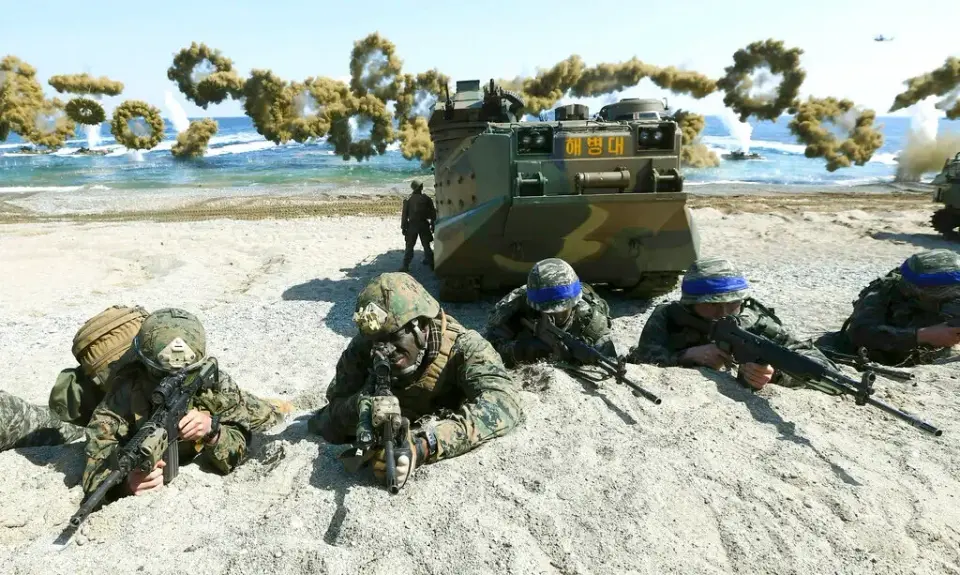
President Trump ordered a significant reduction in joint military exercises with South Korea, citing a desire to signal peace to North Korea and frustration over Seoul’s lack of support in the Iran conflict. The move, announced via Truth Social, cut the annual Ulchi Freedom Shield exercise from 10 days to five, drawing bipartisan criticism and raising concerns about US reliability in the Pacific.
Key points
- Trump instructed Defense Secretary Pete Hegseth to 'substantially reduce' joint drills, cutting the Ulchi Freedom Shield exercise from 10 days to five, ending on August 21.
- The decision was framed as a gesture to North Korea, with Trump claiming Kim Jong Un has been 'unthreatening and respectful' and that the drills send a 'hostile' signal.
- Trump also cited Seoul’s refusal to assist with US operations in Iran and slow progress on a $350 billion trade and investment framework as reasons for the pullback.
- Bipartisan lawmakers criticized the move, with Sen. Mark Kelly calling it 'shortsighted' and Sen. Thom Tillis warning it frees North Korean troops to support Russia in Ukraine.
- South Korean President Lee Jae Myung stated Seoul would boost its own defense spending and capabilities, framing the drills as defensive rather than provocative.
Background
This development follows a series of earlier reports in August 2026 where Trump first signaled the drill reduction and claimed Kim Jong Un had responded to his overtures. Prior coverage noted Seoul’s push to expand its independent military capabilities, including nuclear-powered submarines, in response to the US pullback. The current situation builds on these tensions, with the US now formally executing the reduced exercise schedule while North Korea has not publicly commented on the change.
How outlets are covering it
Fox News emphasizes the transactional nature of the decision, highlighting Trump’s frustration with trade delays and his desire to reengage Kim. The Washington Post frames the move as strategic confusion, noting the simultaneous redeployment of the USS George Washington to the Middle East. CNN focuses on the operational details, confirming the exercise was cut in half and noting South Korea’s agreement to adjust the schedule. The New York Times draws a parallel to Trump’s failed first-term diplomacy with North Korea, questioning whether he will again walk away empty-handed from nuclear negotiations.
Why it matters
The reduction in joint drills undermines the deterrence posture of the US-South Korea alliance, potentially emboldening North Korea and weakening US credibility in the Pacific. It also signals a shift in US foreign policy priorities, prioritizing diplomatic overtures to adversaries over traditional alliance commitments, with potential ripple effects for regional security and US reliability as a partner.
What to watch
The Pentagon is actively executing the reduced exercise schedule, while South Korea is expected to announce measures to bolster its independent defense capabilities. Diplomatic channels between Washington and Pyongyang may open, though Pyongyang has previously demanded the US abandon its denuclearization demands before resuming talks. The US may also seek to accelerate trade and investment agreements with Seoul to offset the military concessions.
- Inside the tension that drove Trump’s South Korea alliance from ‘historic new era’ to military pullback Fox News
- Opinion | Trump inverts his own foreign policy mantra The Washington Post
- North Korea Denounces U.S.-South Korea Military Drill Ignoring Trump’s Overtures To Kim Forbes
- Military drills between US and South Korea cut short at Washington’s request CNN
- Facing Quagmire in Iran, Trump Turns to a Familiar Face: North Korea’s Kim Jong-un The New York Times
Want the full story? Read the original reporting
Read on Fox News