
US-Venezuela Oil Pact Announced Amid Controversy Over Terms and Legitimacy
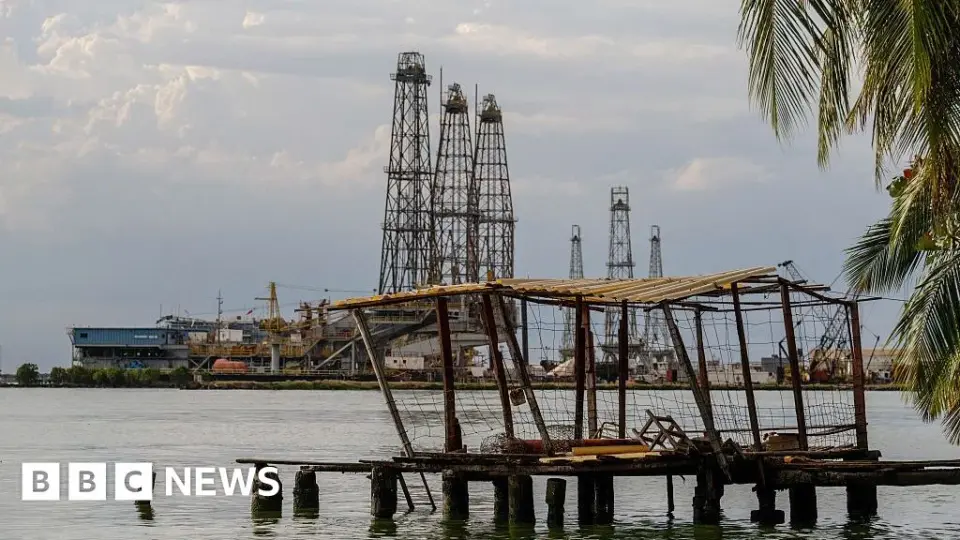
President Trump announced a 'historic' agreement with Venezuela to control over 65 billion barrels of oil reserves, claiming it will lower US gas prices. While the administration frames the deal as a win for both nations, critics and opposition figures in Venezuela condemn it as a predatory land grab. Details remain sparse, with the White House asserting no taxpayer cost, while reports suggest a potentially costly long-term stake in major oil fields.
Key points
- Trump stated the deal controls more than 65 billion barrels of Venezuelan proven oil reserves, doubling US reserves and lowering gas prices.
- Secretary of State Marco Rubio claimed the agreement brings nearly $100 billion in private investment and thousands of jobs to Venezuela.
- The deal was negotiated by Rubio and Defense Secretary Pete Hegseth with interim President Delcy Rodriguez, described as a partnership with private business at no cost to the US taxpayer.
- The agreement follows the January 2026 military operation that removed former President Nicolás Maduro from power.
- Venezuelan opposition leaders and analysts have criticized the deal as unconstitutional and a colonial-style land grab, arguing it contravenes the country's constitution.
Background
This development follows months of US pressure to revive Venezuelan oil production. In August 2026, independent US oil producers signed production contracts with Venezuela's state oil company, PDVSA, aiming to add up to 300,000 barrels per day of new production. Earlier reports indicated the US was negotiating a long-term stake in oil fields containing around 90 billion barrels, potentially involving a 100-year lease. The current announcement appears to formalize these discussions, though details remain limited.
How outlets are covering it
The BBC and the Trump administration present the deal as a mutually beneficial success, emphasizing economic gains for Venezuela and lower gas prices for Americans. In contrast, The Washington Post and The Guardian highlight significant controversy. The Post describes the potential US stake as 'costly and legally precarious,' while The Guardian reports widespread outrage from Venezuelan opposition figures who label the move a 'rapacious land grab' and 'predatory.' Critics argue the interim government lacks the legitimacy to sign such a deal, and some analysts compare the arrangement to historical colonial concessions, noting it may exclude other global competitors like China and Russia from Venezuelan oil markets.
Why it matters
The deal could reshape global oil supply dynamics by significantly increasing US access to Venezuela's vast reserves, potentially influencing global energy prices and geopolitical leverage. It also raises questions about the legality and sustainability of US foreign policy in Latin America, particularly regarding the 'Donroe Doctrine' and the treatment of Venezuelan sovereignty. The outcome may affect future US-Venezuela relations and the trajectory of Venezuela's political transition.
What to watch
Details of the agreement, including specific terms, costs, and private sector involvement, are expected to be released. The deal may face opposition from the US Congress and potential legal challenges in Venezuela. The interim government's ability to implement the deal and attract private investment will be closely watched, as will the reaction from Venezuelan opposition groups and international observers.
- US and Venezuela reach 'historic' oil deal, Trump says BBC
- Trump Administration Live Updates: Proposal Would Give Part of Yosemite to a Developer The New York Times
- Trump secures vast, potentially costly U.S. stake in Venezuelan oil industry The Washington Post
- Pentagon in Talks With Venezuelan Mogul for Massive Oil Deal Bloomberg.com
- Venezuelan opposition up in arms over reports US wants big stake in oil and gas The Guardian
Want the full story? Read the original reporting
Read on BBC