
Daraxonrasib Combo Halts Pancreatic Tumors in 90% of Patients
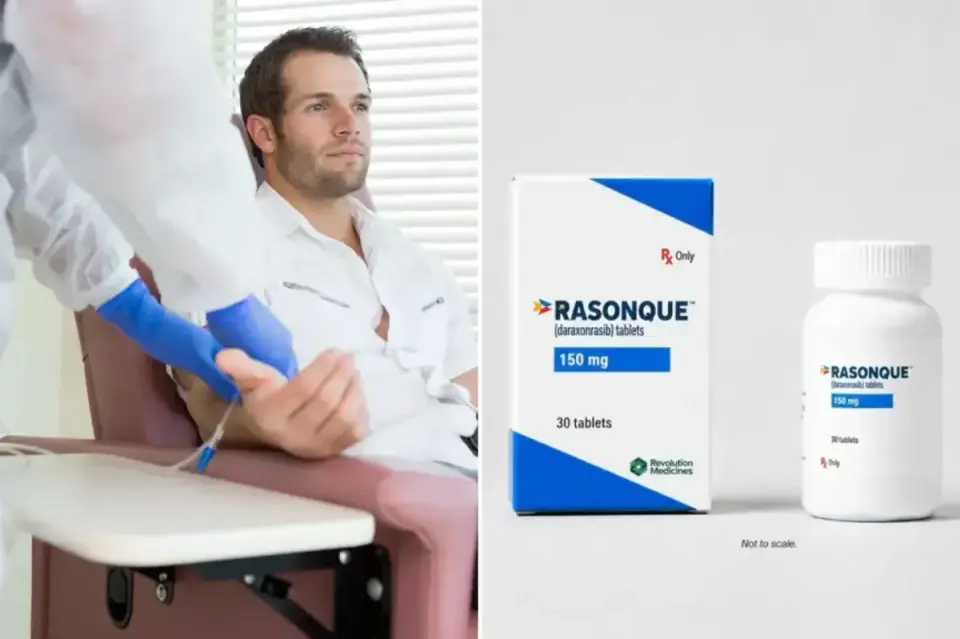
New trial data shows daraxonrasib combined with chemotherapy stops tumor growth in 90% of advanced pancreatic cancer patients, with 8% achieving undetectable disease. While hailed as a major breakthrough, experts caution it is not a cure and requires longer studies to confirm durability.
Key points
- Daraxonrasib, approved in August 2026, targets KRAS mutations that drive tumor growth.
- Combined with gemcitabine and nab-paclitaxel, it achieved a 90% tumor stabilization rate.
- 8.2% of patients had tumors become undetectable on scans after 18 months.
- Survival at one year reached 76.6%, significantly higher than chemotherapy alone.
- Side effects include severe skin toxicity, reported in 86% of patients.
Background
Pancreatic cancer remains the third-deadliest cancer, with a five-year survival rate of just 13.7%. Previous trials in October 2026 showed an 82% response rate for a chemo-free combination involving daraxonrasib. Recent studies also highlight distinct immune profiles in Black patients, suggesting potential disparities in treatment efficacy.
How outlets are covering it
The New York Post and BBC emphasize the 'massive breakthrough' nature of the results, highlighting the potential for tumor disappearance. The Guardian and Financial Times provide a more cautious view, noting that while the drug is promising, it is not a cure and requires longer follow-up to determine durability. All sources agree on the statistical improvements in survival and tumor response but differ in their emphasis on the drug's potential to replace first-line chemotherapy.
Why it matters
This data offers the first significant hope for improving survival in a cancer with historically poor outcomes. If confirmed in larger trials, daraxonrasib could become a standard first-line treatment, potentially extending life for thousands of patients annually.
What to watch
Regulators in the US and Europe are evaluating the drug for broader use. Larger clinical trials are underway to assess long-term efficacy and safety. Researchers are also exploring its application in other cancers with similar KRAS mutations.
- ‘Massive breakthrough’ as new pancreatic cancer treatment can make tumors disappear: ‘We’ve never seen such a thing’ New York Post
- Massive hope for pancreatic cancer pill after trial saw tumours vanish BBC
- Pill to treat pancreatic cancer hailed as ‘biggest breakthrough in decades’ The Guardian
- New pancreatic cancer drug halts tumour growth in 90% of patients Financial Times
- Breakthrough pancreatic cancer pill is ‘closest thing to a cure’ The Telegraph
Want the full story? Read the original reporting
Read on New York Post