
Rubin Observatory’s 3.2-Gigapixel Camera Reveals 650,000 Galaxies in COSMOS Field
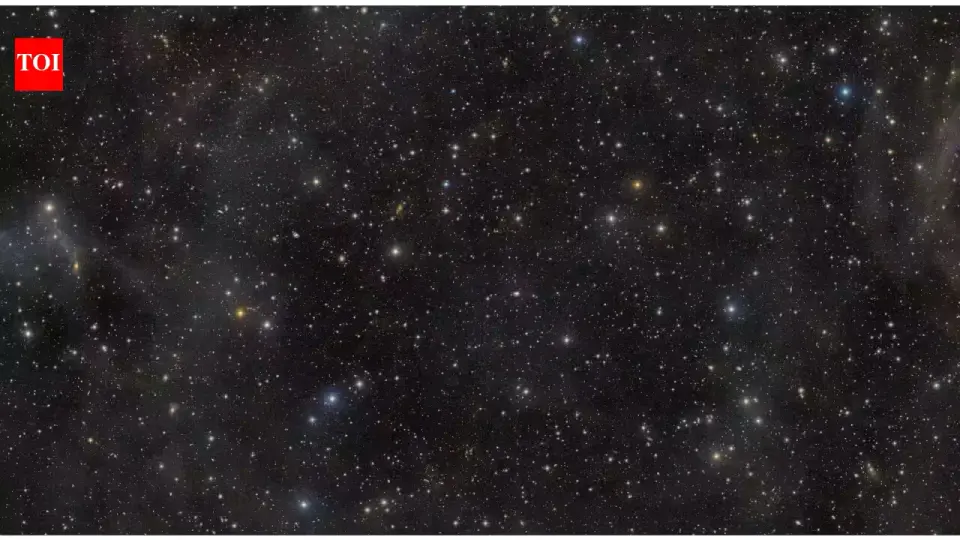
The Vera C. Rubin Observatory in Chile has released its first deep-field image from the Legacy Survey of Space and Time (LSST), capturing over 650,000 galaxies and 75,000 stars in the COSMOS field. This milestone, achieved using the world’s largest digital camera, marks the beginning of a decade-long survey that will map the sky 800 times over, aiming to detect 20 billion galaxies and 10 million supernovae.
Key points
- The image was created by stacking hundreds of exposures from the 3.2-billion-pixel LSST Camera, which is 64 centimeters on a side.
- The COSMOS field, first observed by Hubble in 2003, is chosen for its lack of foreground dust and stars, allowing a clear view of distant galaxies.
- This release, known as Early Data Preview 2 (EDP2), covers 3,000 square degrees of the southern sky and validates the camera’s precision.
- The full LSST survey will revisit each spot in the sky more than 800 times over ten years, creating a dynamic 'movie' of the universe.
- Future observations are expected to reveal fainter objects, including potentially Planet Nine and numerous near-Earth asteroids.
Background
The Vera C. Rubin Observatory began its decade-long survey in June 2026, following years of preparation. This new image builds on the legacy of the Hubble Deep Field from 1995, which revealed 3,000 galaxies in a tiny patch of sky, and the 2003 COSMOS observations by Hubble. While Hubble and Webb have gone deeper in specific spots, Rubin’s unique advantage is its wide field of view and repetitive imaging, designed to catch transient events like supernovae and moving asteroids.
How outlets are covering it
The Times of India reports the image contains over 500,000 galaxies and 50,000 stars, while the Rubin Observatory’s official release cites higher figures of 650,000 galaxies and 75,000 stars, likely due to different counting thresholds or processing methods. Scientific American emphasizes the broader scope of the LSST, highlighting that the survey will eventually catalog 20 billion galaxies and 10 million supernovae, framing the COSMOS image as a validation step rather than the final product. All sources agree on the technical specifications of the 3.2-gigapixel camera and the strategic importance of the COSMOS field for minimizing foreground interference.
Why it matters
This release confirms the operational success of the world’s largest digital camera and the precision of the Rubin Observatory. It sets the stage for a transformative era in astronomy, where the sheer volume of data will allow scientists to measure the expansion of the universe, track potentially dangerous asteroids, and potentially discover new planetary bodies, fundamentally changing our understanding of cosmic history and solar system dynamics.
What to watch
Astronomers will continue to refine the COSMOS field data as Rubin revisits the region more frequently than other areas. The full LSST survey will proceed through 2036, generating millions of images that will be analyzed for transient events, exoplanets, and dark matter distribution. The next major data releases will likely include deeper views that reveal fainter galaxies and finer details not visible in the current EDP2 release.
- The world’s largest digital camera captured more than 500,000 galaxies and 50,000 stars in one deep view The Times of India
- Rubin Observatory begins landmark 10-year timelapse of night sky Technology Org
- Rubin's COSMOS Rubin Observatory
- Spoiler alert! Here’s what astronomers will see in a first-of-its-kind ‘movie’ of the sky scientificamerican.com
- Rubin Looks Deep Into a Famous Cosmic Field NOIRLab
Want the full story? Read the original reporting
Read on The Times of India