Planet Nine, if it exists, is likely a massive sub-Neptune rather than a small rock, yet it remains undetected because extreme distance drastically reduces reflected sunlight. Recent surveys have ruled out 78% of its possible locations, but the Rubin Observatory’s new survey aims to resolve the debate by finding more distant objects.
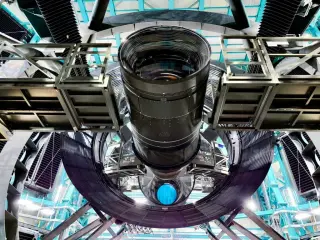
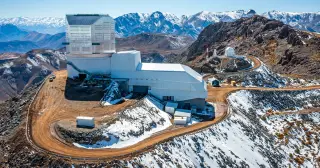
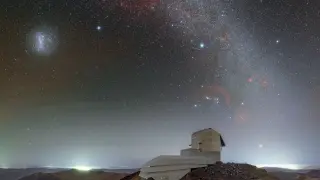
The Vera Rubin Observatory’s ten-year Legacy Survey of Space and Time began formal operations from Cerro Pachón, Chile, using a car-sized, 3-tonne camera to image the southern sky about every 40 seconds and revisit each field roughly 800 times over the decade. The 3,200-megapixel instrument, cooled to −100 C, feeds a massive pipeline that can issue millions of change alerts per night to brokers for quick follow-up, enabling study of supernovae, moving objects, variable stars, and other transients. Rubin combines an 8.4-meter telescope with a very wide field and runs four science programs—Solar System inventory, Milky Way mapping, time-domain astronomy, and dark matter/dark energy research—while data are processed at SLAC and distributed publicly to maximize participation over ten years.
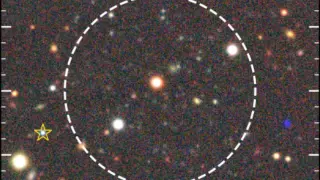
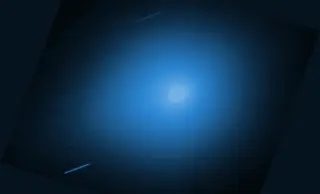
Scientists using Rubin Observatory’s Early Data Preview 2 have announced Aquarius IV, an ultra-faint Milky Way satellite about 355,000 light-years away with an apparent magnitude of 18.3. The object was first spotted in Rubin data and later confirmed in archival images from the Dark Energy Camera, illustrating Rubin LSST’s potential to uncover many more faint satellites. Whether Aquarius IV is truly an ultra-faint dwarf galaxy or an unusually large globular cluster remains provisional, pending further spectroscopy and peer review.
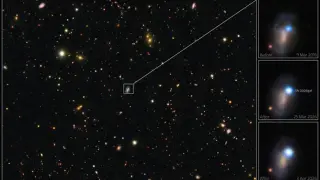
Astronomers worldwide recorded the first moments of a 500‑million‑light‑year‑distant Type Ic broad‑lined supernova from a Wolf–Rayet progenitor, catching the faint X-ray shock breakout and mapping the star’s pre‑explosion surroundings; the event showed jets but no observed gamma‑ray burst, suggesting a possible choking of the jet, with Rubin Observatory and other facilities continuing long‑term follow‑up observations.
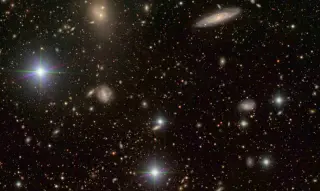
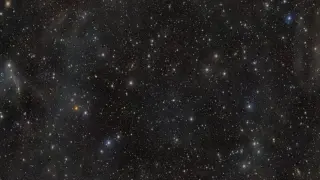
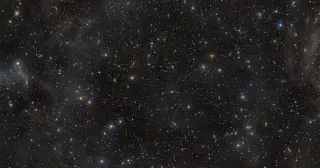
The Rubin Observatory released its first science image from the LSST, a deep view of the COSMOS field featuring more than 500,000 galaxies (and about 50,000 foreground stars) captured with the 3.2-gigapixel LSST Camera. Part of Early Data Preview 2, the image previews the decade-long Legacy Survey of Space and Time and will be followed by repeated observations to study galaxy evolution and transient events like supernovae, building what scientists describe as the most comprehensive cinematic record of the universe.
A new Rubin Observatory image of the COSMOS field captures more than 650,000 galaxies and 50,000 stars in a single deep view, thanks to its 3.2-gigapixel camera. Rubin will image this patch repeatedly over its decade-long LSST survey, enabling comparisons with Hubble and Webb and advancing studies of dark matter, dark energy, supernovae, and near-Earth asteroids.
Rubin Observatory’s 3.2-gigapixel LSST camera captured a deep-field image of the COSMOS patch, stacking hundreds of exposures to reveal more than half a million galaxies as the telescope begins its decade-long mission to repeatedly image the sky and study galaxy evolution and transient phenomena.
Astronomers using the Vera C. Rubin Observatory released a stacked 3.2‑gigapixel image of the COSMOS field—the deepest wide view of the sky to date—captured with the LSST Camera on the 8.4‑meter telescope. By stacking hundreds of exposures, the image reveals more than 500,000 galaxies and over 50,000 stars, with the foreground Milky Way stars providing contrast. This Early Data Preview 2 (EDP2) from Rubin’s Legacy Survey of Space and Time (LSST) marks the first data release from Rubin’s decade‑long survey and will enable studies of cosmic evolution and transient events like supernovae as more data are collected over time.
Rubin Observatory launches its ten-year Legacy Survey of Space and Time, using a 3.2 gigapixel camera to scan the southern sky repeatedly (about 800 visits per field) to create an ultra‑high‑definition, time‑resolved map that will probe dark energy and dark matter, track transient events, and reveal millions of solar-system objects; early months already yielded around 11,000 newly discovered asteroids.
The Vera C. Rubin Observatory is gearing up to begin the decade-long Legacy Survey of Space and Time (LSST), which will repeatedly image the southern sky with a 3.2‑gigapixel camera to detect small, fast‑moving solar-system bodies. Simulations predict the survey could add roughly 5 million new main-belt asteroids, about 40,000 trans‑Neptunian objects, and over 10,000 comets, with near-Earth objects more than tripling, though these are model yields, not guaranteed discoveries. Data Preview 2 is planned for July–September 2026 ahead of the formal survey start, enabling early testing of the predicted yields. The project will boost planetary defense and solar-system science but will not replace targeted follow-up observations for composition and dynamics.
In 2017, the first confirmed interstellar object, Oumuamua, passed through the Solar System on a hyperbolic path and showed a tiny non-gravitational push without a visible tail. Natural explanations (e.g., venting hydrogen or nitrogen ices) exist, and Avi Loeb's artificial-origin idea remains controversial; since then Borisov and ATLAS behaved like comets, but Oumuamua remains an unresolved puzzle, underscoring data limits and the hope that Rubin Observatory will help settle what it could not.
The Vera C. Rubin Observatory captured images of interstellar comet 3I/ATLAS during its science-validation phase—ten days before its official discovery—showing an active coma and implying Rubin could detect more interstellar visitors as its Legacy Survey progresses; coordinated observations with JUICE and Europa Clipper identified hydrogen, oxygen, and carbon in the coma, enabling comparisons with Solar System comets; the object is estimated to be 7–12 billion years old with a ~1 km nucleus traveling about 140,000 mph, and findings published in The Astrophysical Journal Letters help illuminate where such bodies form and how to spot them.
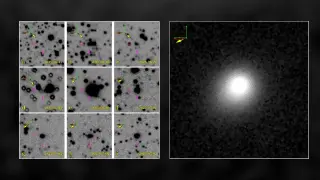
Astronomers found images of the interstellar comet 3I/ATLAS in Vera Rubin Observatory commissioning data from June 20, 2025, ten days before its official discovery by ATLAS on July 1, 2025. Rubin captured nine additional images between June 21 and July 2, with a clear coma, but a non-operational data pipeline during validation required a custom pipeline to extract the signals. The discovery hints Rubin LSST could detect about one interstellar comet per year. Joint observations by JUICE and Europa Clipper later detected hydrogen, oxygen, and carbon from 3I/ATLAS, with JWST data suggesting excess carbon dioxide; these findings help compare the comet’s origin to solar-system bodies. The nucleus is ~1 km wide and traveling ~140,000 mph, implying an age of several billion years and multiple stellar encounters. The study was published in The Astrophysical Journal Letters.
The Vera C. Rubin Observatory in Chile launches a decade-long all-sky survey that will produce the largest time-lapse of the night sky, generating millions of alerts each night as it uncovers giant asteroids (including ultra-fast rotators), tracks countless supernovas to help probe dark energy and the Hubble tension, and hunts for interstellar visitors, all while creating a vast data flood that scientists will need to manage and interpret.
AI from UC Santa Cruz has dramatically sped up James Webb data analysis and is now being applied to the Vera C. Rubin Observatory. The Neo model, a conditional GAN trained on Subaru and Hubble images, removes atmospheric blur and recovers fine details, boosting galaxy morphology measurements by about 2–10× and turning Webb-scale processing into days rather than years. When used on Rubin data, the technology aims to sharpen ground-based images so they rival space-based quality, helping maximize the science return from Rubin’s Chilean sky survey without replacing astronomers. The work is GPU-accelerated (NVIDIA) and underscores AI’s potential to accelerate discoveries across major observatories.