
Francis Halzen Wins 2026 Physics Nobel for IceCube Neutrino Discovery
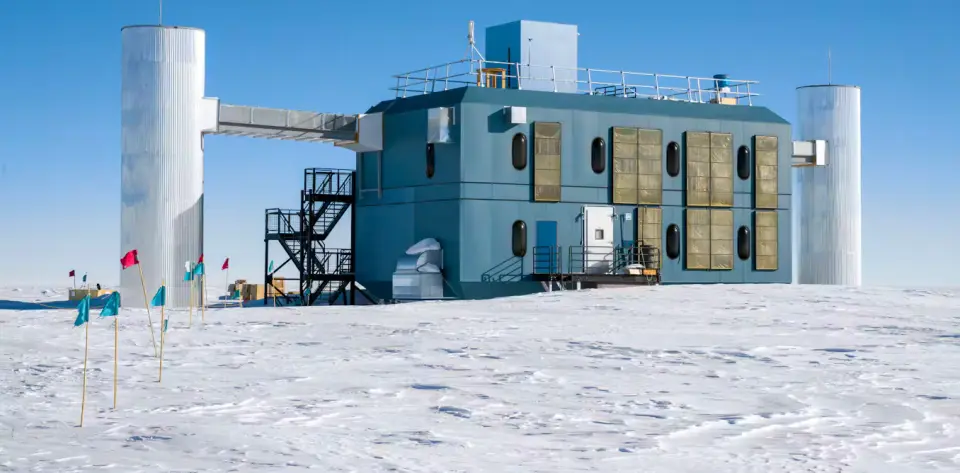
Francis Halzen of the University of Wisconsin–Madison has been awarded the 2026 Nobel Prize in Physics for his foundational role in developing the IceCube Neutrino Observatory. The award recognizes his 1988 proposal to use a cubic kilometer of Antarctic ice as a detector for high-energy neutrinos. In 2013, IceCube confirmed the existence of astrophysical neutrinos, opening a new era of multi-messenger astronomy. Halzen’s work allows scientists to trace cosmic events, such as supermassive black holes, that are invisible to traditional light-based telescopes.
Key points
- Francis Halzen, a professor at the University of Wisconsin–Madison, received the 2026 Nobel Prize in Physics for his contributions to the discovery of high-energy neutrinos of astrophysical origin.
- The prize specifically honors Halzen’s 1988 proposal to utilize the clear ice at the South Pole as a natural medium for the IceCube detector, which spans one cubic kilometer.
- In 2013, IceCube provided the first strong evidence for high-energy neutrinos originating from outside the solar system, a finding that won the Physics World Breakthrough of the Year Award.
- Neutrinos are electrically neutral and interact weakly with matter, allowing them to travel in straight lines from cosmic sources, unlike charged cosmic rays which are deflected by magnetic fields.
- The discovery enabled multi-messenger astronomy, combining neutrino data with light and gravitational waves to map violent cosmic environments like active galaxies and black holes.
Background
Our archive from October 6, 2026, noted that Halzen, who is 82 years old and Belgian-born, first proposed the IceCube concept in 1988. The prize carries a monetary value of 12 million Swedish kronor. This award marks the 23rd Nobel Prize associated with the University of Wisconsin–Madison, making Halzen the sixth physicist from the institution to receive the honor. The previous active faculty member to win a Nobel was Howard Temin in 1975.
How outlets are covering it
The Conversation emphasizes the technical mechanism of IceCube, detailing how neutrinos produce Cherenkov radiation in the ice, which sensors then detect to reconstruct the particle's path. They highlight the irony that the particles' weak interaction with matter is precisely what makes them useful as cosmic messengers. UW–Madison News focuses on the institutional and collaborative aspects, quoting Halzen on the unique support he received from the university’s engineering and faculty communities. They also provide a timeline of IceCube’s successes, including the 2017 detection of a neutrino from a black hole in the constellation Orion and the 2022 detection from a galaxy 47 million light-years away. While The Conversation frames the discovery as a fundamental shift in how we view the universe, UW–Madison News frames it as a triumph of the university’s research infrastructure and Halzen’s unconventional ideas.
Why it matters
The award validates the concept of multi-messenger astronomy, which relies on combining different cosmic signals to understand the universe. Because neutrinos can escape dense environments where light is absorbed, they provide a direct line of sight to the most energetic and violent regions of the cosmos, such as the hearts of distant galaxies. This breakthrough resolves a century-old mystery regarding the origin of high-energy cosmic rays, which had been difficult to trace since their discovery in 1936 due to their electric charge and deflection by magnetic fields.
What to watch
IceCube has recently undergone a significant upgrade, marking its first major expansion since its completion 15 years ago. This enhancement aims to keep the observatory at the forefront of neutrino astronomy for years to come. Scientists continue to use the detector to map the sources of high-energy neutrinos, further refining the multi-messenger approach to understanding cosmic accelerators and the behavior of matter in extreme environments.
- Nobel physics prize awarded for discovery of ‘ghostly messengers’ from the cosmos The Conversation
- University of Wisconsin–Madison Professor Francis Halzen named 2026 Nobel laureate in physics UW–Madison News
- Nobel winner Halzen says years of October 'misery' finally over Phys.org
- Nobel Prize in Physics Is Awarded to Francis Halzen for Work on Neutrinos The New York Times
- UW-Madison researcher wins Nobel Prize for work on neutrinos Channel 3000
Want the full story? Read the original reporting
Read on The Conversation