
Perseverance Uncovers Three Water Epochs in Mars' Ancient 'Wild West'
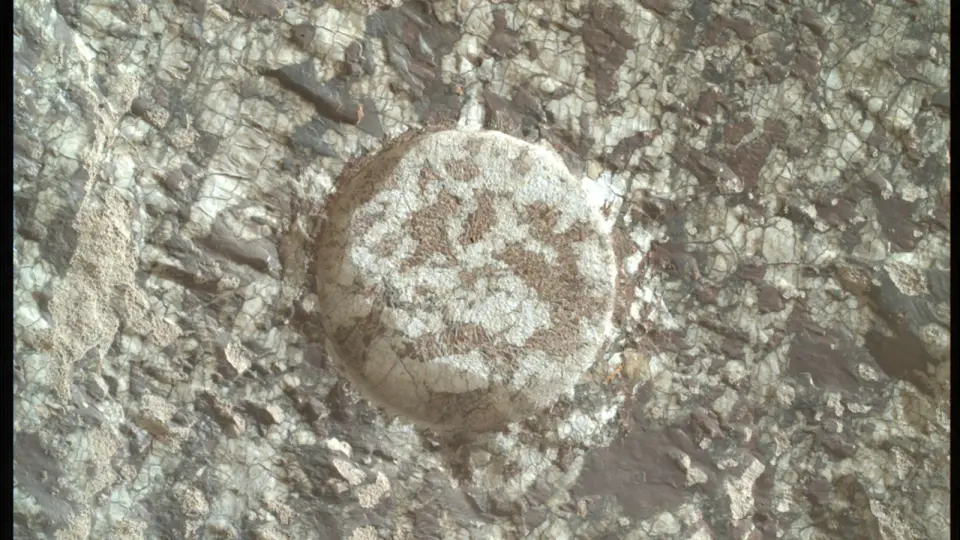
NASA's Perseverance rover has identified evidence of three distinct water-related events in the 'Lac de Charmes' region of Jezero Crater, challenging previous assumptions about the site's geological history. While orbital data suggested the area contained simple lake sediments, the rover found ancient igneous rocks altered by groundwater, lake water, and later hydrothermal activity. This discovery, detailed in a new study, indicates that the region served as a crossroads for multiple aqueous systems, providing crucial insights into early Martian climate and habitability.
Key points
- Perseverance explored 'Lac de Charmes,' a 'Wild West' frontier west of Jezero Crater's rim, characterized by some of the oldest rocks on Mars.
- The rover used SuperCam to analyze over 185 bedrock targets, revealing that the rocks interacted with water at least three separate times.
- The first episode involved carbon dioxide-rich groundwater, the second likely involved the ancient Jezero lake, and the third involved heated hydrothermal fluids.
- A repurposed processor, originally used for communication with the Ingenuity helicopter, enabled longer and more accurate drives for the rover.
- The findings suggest the Margin Unit was not shaped by a single lake environment but by a complex sequence of geological and hydrological events.
Background
Perseverance has been exploring Mars for over five years, having landed in Jezero Crater in 2021. The rover previously confirmed the presence of an ancient lake and discovered potential biosignatures in mudstones. The current exploration of the 'Lac de Charmes' region marks a shift toward investigating older, igneous rocks that predate the sedimentary formations found within the crater itself.
How outlets are covering it
Space.com and NASA Science highlight the rover's exploration of the 'Lac de Charmes' area, emphasizing the use of a repurposed processor for improved navigation and the discovery of igneous and impactite rocks. ScienceDaily focuses on the scientific implications of the three distinct water episodes, noting that the findings challenge the initial hypothesis that the Margin Unit contained only lake sediments. Nature provides broader context on Martian hydrology, discussing how delta morphology can indicate shifts between global oceans and localized lakes, though this study is separate from the Perseverance findings. The outlets agree on the significance of the new geological data but differ in emphasis: Space.com and NASA Science focus on the rover's operational achievements and terrain, while ScienceDaily emphasizes the scientific surprise and implications for habitability.
Why it matters
The discovery of multiple water episodes in the Margin Unit reshapes the understanding of early Martian climate and habitability. By revealing that the region was a crossroads for different aqueous systems, the findings provide a more complex picture of how water interacted with rocks on Mars, potentially influencing the preservation of biosignatures. This knowledge is crucial for interpreting data from other Martian sites and for future sample return missions.
What to watch
Perseverance is nearing the end of its exploration of the 'Lac de Charmes' region and is moving toward an area nicknamed 'Idubi,' where light-toned boulders have been spotted. The rover recently attempted to sample a boulder named 'Badger Peak' but failed due to its hardness. The team is now searching for similar rocks to sample and is investigating an outcrop named 'Gardenia,' which may be a breccia.
- Mars rover explores 'Wild West' on the Red Planet photo of the day for Oct. 1, 2026 Space
- NASA's Perseverance Mars rover finds groundwater, lakes, and hot fluids in one place ScienceDaily
- Mars Has Its Charmes NASA Science (.gov)
- Delta morphology reveals timings of early ocean regression and hydrologic shift on ancient Mars Nature
- Water systems on early Mars were complex and hot EarthSky
Want the full story? Read the original reporting
Read on Space