
Starship Flight 14 Reaches Orbit, Deploys 26 Starlink V3s Before Early Splashdown
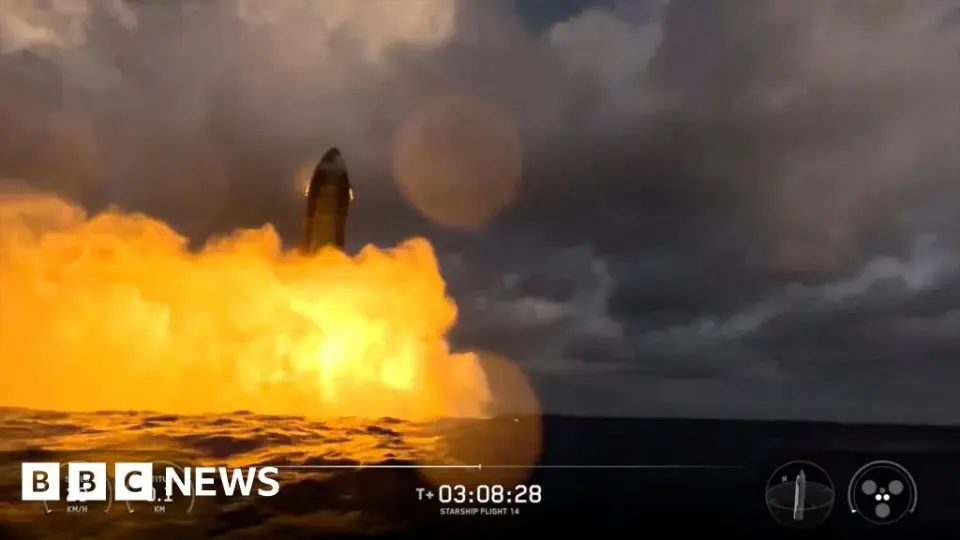
SpaceX’s 14th Starship test flight successfully reached low-Earth orbit, deploying 26 next-generation Starlink V3 satellites. The mission ended early due to engine concerns, resulting in a fiery splashdown in the Pacific.
Key points
- Starship Flight 14 launched from Starbase, Texas, on September 28, 2026, achieving orbital velocity for the first time.
- The vehicle deployed 26 Starlink V3 satellites, which are too large for Falcon 9 rockets and add 10 times the capacity of older models.
- SpaceX ended the mission early after approximately three hours, cutting it short of the planned 10-hour duration due to engine issues.
- The upper stage splashed down in the Pacific Ocean near Hawaii, breaking apart in a fireball as expected for water landings.
- One Raptor engine on the upper stage shut down prematurely during ascent, prompting conservative decision-making by flight controllers.
Background
This follows Starship Flight 13 in July, which was suborbital and resulted in the loss of Starlink V3 satellites. Earlier in September, Starship Flight 10 became the first to survive a splashdown, highlighting recovery challenges. SpaceX has been phasing out Falcon 9 launches for Starlink in favor of Starship, with new launch pads being prepared in Florida and Louisiana.
How outlets are covering it
BBC and Space.com emphasized the visual spectacle of the fiery splashdown and the successful deployment of satellites. Ars Technica provided detailed technical analysis, noting the premature shutdown of one Raptor engine and the conservative decision to abort the long-duration phase. Yahoo Finance’s content was largely obscured by technical errors, offering no substantive perspective. All sources agree on the core facts: orbital achievement, satellite deployment, and early termination due to engine concerns.
Why it matters
This flight marks a critical milestone for SpaceX, demonstrating Starship’s capability to reach orbit and deploy large, next-generation satellites. The success of Starlink V3 deployment is vital for expanding broadband capacity and supporting future military and commercial applications. However, the engine issues highlight ongoing challenges in the Raptor 3 design, which could impact future launch cadence and reliability.
What to watch
SpaceX is expected to launch another Starship flight in October, potentially from Starbase or a new pad in Florida. The company is working to integrate the deployed Starlink V3 satellites into the broader constellation, with customer-facing improvements expected in the coming months. Further testing of the Raptor 3 engine will be crucial to resolving reliability issues.
- Watch: Starship splashdown ends in fireball BBC
- SpaceX puts Starship megarocket in orbit for first time The Hindu
- SpaceX Starship test reaches Earth orbit, 26 Starlink satellites deployed Yahoo Finance
- SpaceX’s Starship goes orbital, deploying first next-gen Starlinks arstechnica.com
- Wow! Watch SpaceX's Starship megarocket deploy satellites into orbit for 1st time ever (photos, video) Space
Want the full story? Read the original reporting
Read on BBC