
SpaceX CRS-35 Launch Delivers Final Solar Arrays and Creates 'Jellyfish' Sky Phenomenon
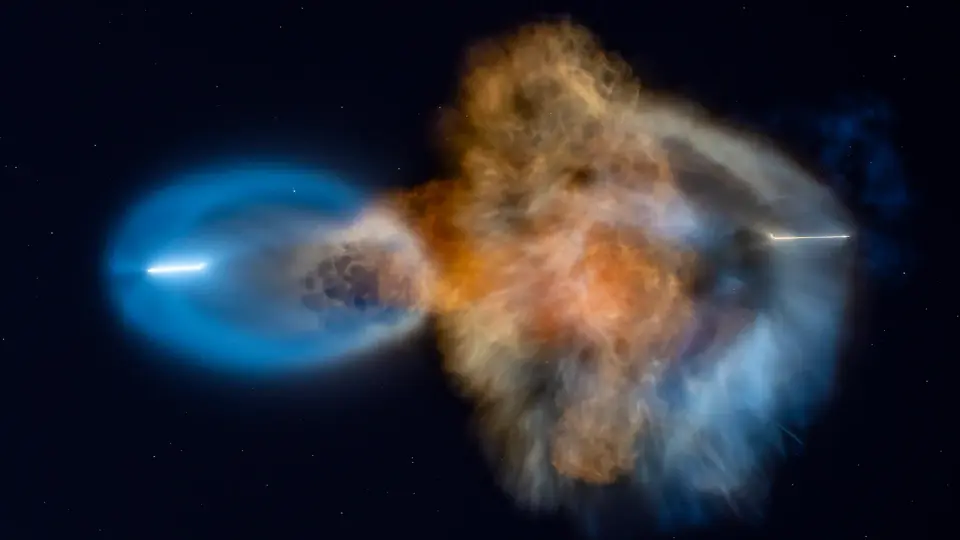
SpaceX launched its 35th Commercial Resupply Services (CRS) mission to the International Space Station (ISS) on October 13, 2026, from Cape Canaveral. The pre-dawn Falcon 9 liftoff carried over 6,300 pounds of cargo, including the final Roll-Out Solar Arrays (ROSA) and scientific experiments, to the station. The launch produced a visible 'space jellyfish' atmospheric effect across the US East Coast due to sunlight illuminating high-altitude rocket exhaust. The Dragon spacecraft is scheduled to autonomously dock with the ISS Harmony module on October 15, 2026.
Key points
- SpaceX launched the CRS-35 mission at 6:33 a.m. EDT on October 13, 2026, from Space Launch Complex 40 at Cape Canaveral Space Force Station.
- The Dragon cargo spacecraft carries over 6,300 pounds of supplies, including the final pair of International Space Station Roll-Out Solar Arrays (ROSA).
- The pre-dawn launch created a 'space jellyfish' phenomenon, where rocket exhaust expanded and was illuminated by sunlight in the upper atmosphere, visible across Florida and Virginia.
- The Dragon spacecraft is scheduled to autonomously dock with the ISS Harmony module at 11 a.m. EDT on October 15, 2026.
- Cargo includes experiments for artificial retinas, 3D heart tissue models, brain organoids for neurodegenerative disease research, and microgravity glass formation studies.
Background
This is the 35th mission under SpaceX's Commercial Resupply Services agreement with NASA. Previous coverage noted that SpaceX successfully launched 21 military data satellites for the Space Development Agency on October 9, 2026, following a delay due to a second-stage anomaly. The CRS-35 mission is part of ongoing efforts to augment the ISS power system and support scientific research ahead of future Artemis program missions.
How outlets are covering it
Space.com emphasized the visual spectacle of the 'jellyfish' effect and the public reaction to the pre-dawn launch. WKMG focused on the scientific explanation of the phenomenon, noting that sunlight illuminated the high-altitude exhaust while the ground remained dark, creating a glowing, bulb-shaped cloud with wispy trails. NASA provided detailed information on the cargo, highlighting the final Roll-Out Solar Arrays and specific scientific experiments, including artificial retinas and brain organoids, while confirming the docking schedule and the importance of the mission for the ISS power system and future deep space exploration.
Why it matters
The CRS-35 mission is critical for completing the ISS power system augmentation with the final Roll-Out Solar Arrays, which will boost available electricity for research, operations, and the station's safe deorbit. The scientific experiments carried, such as those for artificial retinas and neurodegenerative diseases, have direct implications for medical advancements on Earth. The 'jellyfish' phenomenon also highlights the visual impact of rocket launches on the atmosphere and public perception of space activities.
What to watch
The Dragon spacecraft is scheduled to autonomously dock with the ISS Harmony module at 11 a.m. EDT on October 15, 2026. NASA will stream rendezvous and docking coverage beginning at 9:15 a.m. EDT. Astronauts are planned to install the final Roll-Out Solar Arrays during a series of spacewalks later this fall. The Dragon spacecraft is expected to remain at the ISS until mid-November 2026 before returning to Earth with time-critical research and cargo, splashing down off the coast of California.
- Cosmic 'jellyfish' wows skywatchers after SpaceX launch | Space photo of the day for Oct. 14, 2026 Space
- PIN IT: SpaceX launch makes ‘space jellyfish’ effect in sky. Here’s the science behind it WKMG
- Watch SpaceX deliver more than 6,000 pounds of cargo to the ISS today Space
- NASA Science, Cargo Launch on 35th SpaceX Resupply Mission to Station NASA (.gov)
- What caused the lights in the sky over Indiana Tuesday morning? WTHR
Want the full story? Read the original reporting
Read on Space