
AMD Launches 256-Core EPYC Venice: Zen 6 Architecture Delivers 27% IPC Gain and PCIe Gen 6 Support
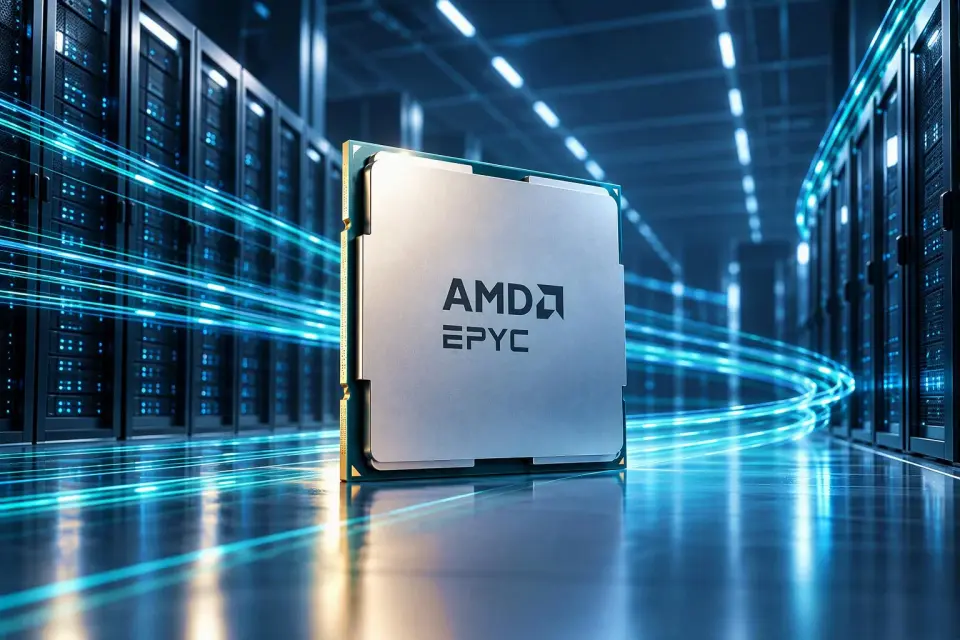
AMD has launched its sixth-generation EPYC 9006 'Venice' server processors, introducing the Zen 6 microarchitecture on TSMC's 2nm node. The new chips feature up to 256 cores per socket, a 27% average IPC uplift over Zen 5, and support for PCIe Gen 6 and MRDIMM memory. General availability began today, with Microsoft Azure offering preview instances.
Key points
- AMD's EPYC 9006 'Venice' processors are now generally available, featuring the Zen 6 and Zen 6C architectures on TSMC's 2nm N2P node.
- The flagship EPYC 9996 offers 256 cores and 512 threads per socket, while the high-frequency EPYC 9686F boosts to 5.3GHz.
- Zen 6 delivers a 27% average IPC uplift over Zen 5, with specific gains of 20% in enterprise workloads and 31% in AI tasks.
- The new platform supports PCIe Gen 6.0 and DDR5 MRDIMM memory at 12,800 MT/s, offering up to 1.6 TB/s bandwidth per socket.
- AMD claims Venice delivers up to 3.7x more performance than NVIDIA's Vera CPU and 2.2x more than Intel's Xeon 6980P in specific benchmarks.
Background
AMD's EPYC lineup has evolved through six generations since the first Naples launch in 2018. The previous generation, EPYC 9005 'Turin', featured Zen 5 architecture. AMD's data center division is projected to surpass Intel's revenue in Q4 2026, with Venice aiming to push AMD's x86 server CPU revenue share above 50%.
How outlets are covering it
Wccftech and TechPowerUp emphasize the architectural details of Zen 6, including the 27% IPC gain and expanded cache hierarchy. Data Center Knowledge highlights the business impact, noting AMD's strong demand and competition with NVIDIA and Intel. ServeTheHome focuses on the performance benchmarks and the strategic importance of Venice for AI infrastructure. All sources agree on the core specs and performance claims, but differ in emphasis: technical depth versus market positioning.
Why it matters
The launch of EPYC Venice marks a significant leap in server CPU performance, particularly for AI and HPC workloads. With 256 cores and advanced memory support, Venice positions AMD as a strong contender for server CPU market leadership, challenging NVIDIA and Intel in the rapidly growing AI infrastructure market.
What to watch
AMD expects the remaining three sixth-generation EPYC CPUs to launch in 2027. Client Ryzen processors powered by Zen 6 are also expected later. AMD is working with hardware partners to deploy Helion racks for agentic AI, with Meta and Microsoft Azure already preparing to use Venice-based platforms.
- AMD Zen 6 Architecture Brings A Phenomenal 27% IPC Increase Over Zen 5: Full Architecture Breakdown – Up To 256 Cores, 12.8 GT/s MRDIMMs, A New ISA & More Wccftech
- AMD Zen 6 Technical Deep Dive TechPowerUp
- AMD Launches Epyc SP7, Helion as AI Rack Demand Rises Data Center Knowledge
- AMD EPYC 9006 Results Are Here and AMD Delivers a Knockout Part Deux ServeTheHome
- With Zen 6, AMD’s next great gaming CPU could have it all PCWorld
Want the full story? Read the original reporting
Read on Wccftech