Tag

Zen 6

All articles tagged with #zen 6

AMD Unveils Zen 6 Venice EPYC: 256‑Core HPC Power on 2nm
technology1 month ago

AMD Unveils Zen 6 Venice EPYC: 256‑Core HPC Power on 2nm

AMD teased its 6th‑gen EPYC Venice CPUs based on Zen 6, led by a 256‑core flagship built for HPC and AI workloads. The chip combines eight CCDs with two large IO dies, and uses TSMC’s 2nm process to enable PCIe 6.0, UCIe, and DDR5 support, delivering AMD’s claimed ~70% gains in performance and efficiency and a 30%+ increase in thread density. Positioned for Helios AI racks to handle agentic AI workloads, Venice faces competition from Nvidia’s Vera systems as CPUs become more central to data‑center AI workflows.


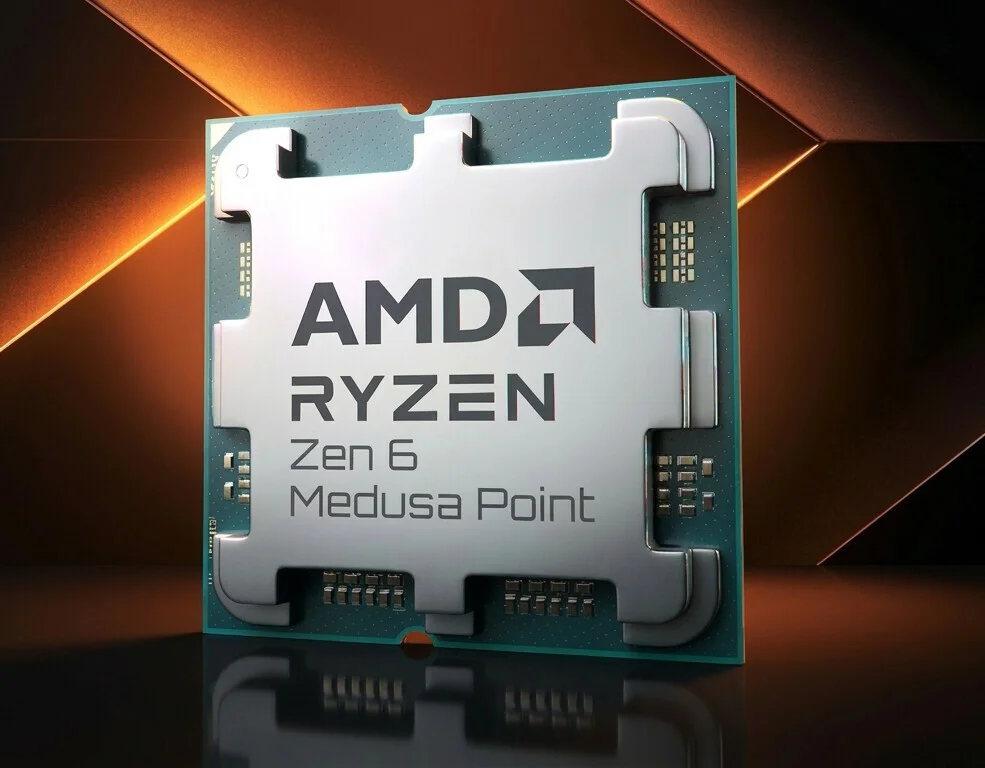
Medusa Point Zen 6 10-core Surges Ahead, Hits 5.4 GHz and Tops Zen 5 by ~35%
technology1 month ago

Medusa Point Zen 6 10-core Surges Ahead, Hits 5.4 GHz and Tops Zen 5 by ~35%

AMD's Medusa Point Zen 6 10-core engineering sample posted 3,329 points in single‑core and 16,555 in multi‑core on Geekbench at 5.4 GHz, signaling a notable uplift over Zen 5 Strix Point and clocking up to 5.37 GHz; the sample previously outpaced Ryzen AI 9 365 by roughly 29% and is now about 35% faster in multi‑core, though early Geekbench data and engineering samples should be treated cautiously ahead of an official launch.

AMD Extends AM5 with Zen 6/7 Through 2029, Delays Next Socket Until DDR6/PCIe Gen6 Prove Worthwhile
technology2 months ago

AMD Extends AM5 with Zen 6/7 Through 2029, Delays Next Socket Until DDR6/PCIe Gen6 Prove Worthwhile

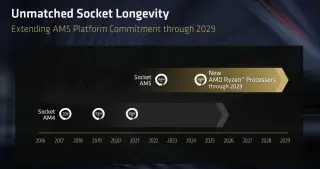
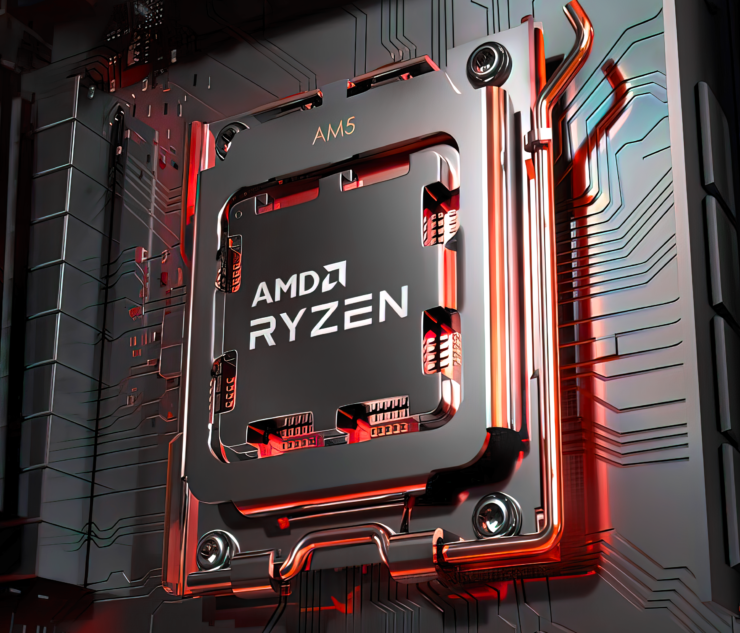
AMD confirms AM5 will host new Zen architectures (Zen 6 and Zen 7) and refreshed products through 2029, choosing platform longevity over a disruptive socket change until DDR6 and PCIe Gen6 deliver meaningful, cost-effective gains. The company outlines three factors for future transitions — industry standards, incremental performance improvements, and clear end-user value — and notes RAM price pressures and single-DIMM X3D gaming benefits as ways to ease current costs, while preserving stronger overclocking headroom for enthusiasts.

AM5 Extended to 2029: AMD Signals Zen 6 Roadmap Beyond the Current lineup
technology2 months ago

AM5 Extended to 2029: AMD Signals Zen 6 Roadmap Beyond the Current lineup

AMD announced at Computex 2026 that the AM5 platform will be supported through 2029, extending the long lifecycle promise seen with AM4 and indicating at least one additional microarchitecture (Zen 6) for AM5. While AMD did not name Zen 6 or exact launch dates, the timeline suggests Zen 6 could arrive around 2027 with AM5-era product lines continuing into 2029, aligning platform longevity with ongoing roadmap updates beyond Zen 5.

AMD’s Computex 2026 Preview: Zen 5 Refreshes, Zen 6 Medusa Point/Halo, and Ryzen AI MAX
technology2 months ago

AMD’s Computex 2026 Preview: Zen 5 Refreshes, Zen 6 Medusa Point/Halo, and Ryzen AI MAX

Ahead of Computex 2026, AMD is expected to unveil Zen 5-based desktop and mobile CPUs, tease Zen 6 with Medusa Point and Medusa Halo designs (including higher core counts and an FP10 socket with an RDNA 5 iGPU), and push Ryzen AI MAX variants. A new RDNA 5 GPU lineup is unlikely this year, though RX 9000 refreshes could appear, and AMD handhelds may face competition from Intel’s Arc G3.

Medusa Point APU Matches Strix Point Geekbench Scores at Half Clock
technology5 months ago

Medusa Point APU Matches Strix Point Geekbench Scores at Half Clock

AMD’s Medusa Point APU (Zen 6) shows promising Geekbench v6 results with a 10-core/20-thread engineering sample delivering about 2,300 single-core and 13,002 multi-core scores at a base 2.4 GHz (actual ~2.0–2.1 GHz). Surprisingly, it matches a Strix Point APU running at more than double its clock speed, with slightly lower single-core but higher multicore performance. The data suggests IPC gains and possible FP16/AVX-VNNI acceleration, though final performance will depend on later benchmarks; official launch is expected around CES 2027.

PS6 Leak Outlines Hybrid Handheld and Home Console With Zen 6, RDNA 5
technology5 months ago

PS6 Leak Outlines Hybrid Handheld and Home Console With Zen 6, RDNA 5

Leaked specs, via Moore’s Law is Dead, sketch a PS6 with a handheld Canis and a home console built on AMD Zen 6 CPUs and RDNA 5 GPUs on a 3nm process. Canis reportedly has 6 CPU cores and 16 RDNA 5 Compute Units with 192-bit LPDDR5X memory (~135mm²). The PS6 home console allegedly features up to 10 Zen 6 cores, a 52–42 CU RDNA 5 GPU at 2.6–3GHz, a 160-bit memory bus and 30–40 GB of GDDR7 for up to 640 GB/s bandwidth. Leaks claim 2.5–3x PS5 rasterization and 6–12x ray tracing, with PS6 initially lagging Microsoft’s Next Xbox. These are unconfirmed leaks.

Intel's Nova Lake-S Aims for CES 2027 Debut, Rivaling AMD's Olympic Ridge
technology6 months ago

Intel's Nova Lake-S Aims for CES 2027 Debut, Rivaling AMD's Olympic Ridge

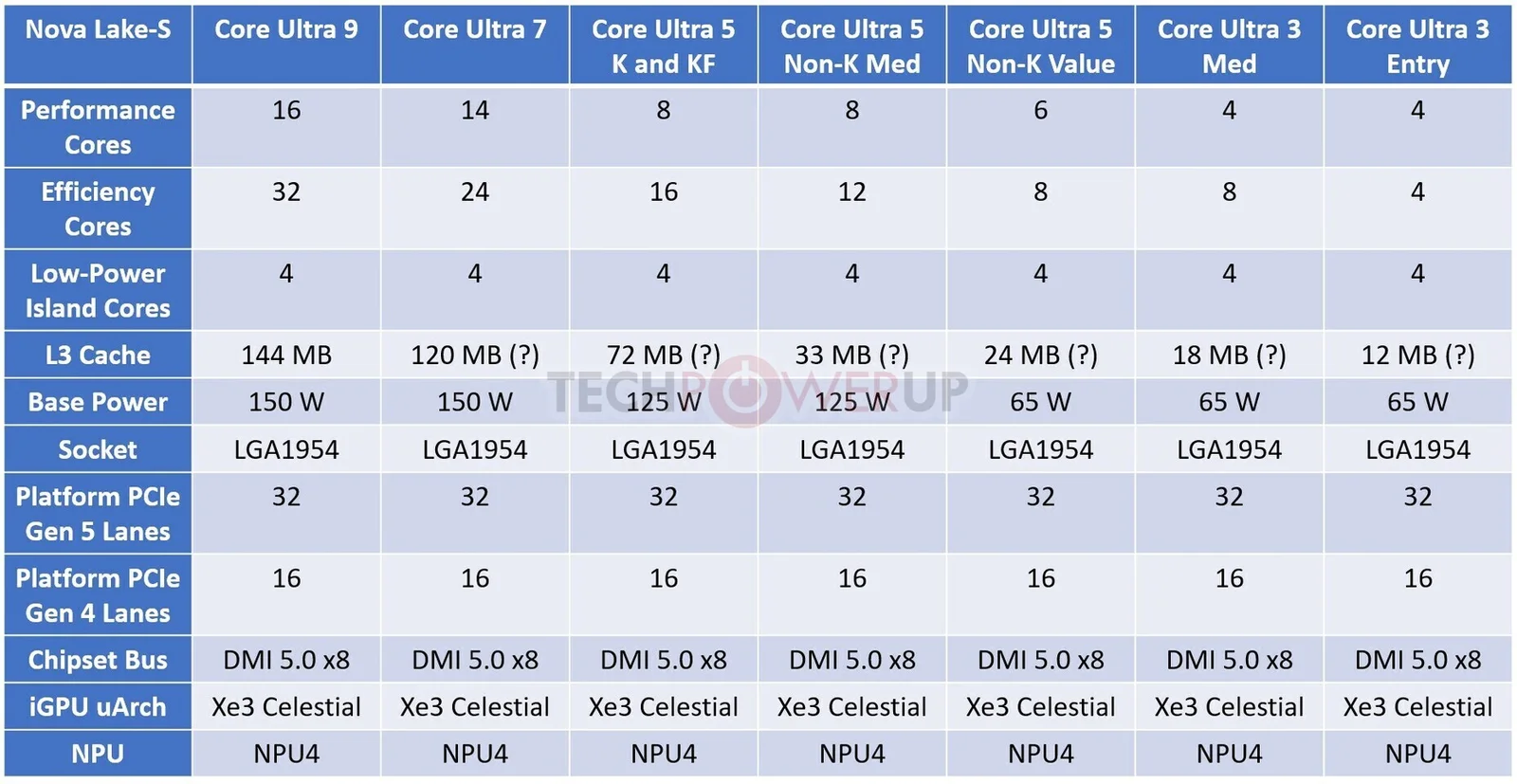
A leak suggests Intel's Nova Lake-S Core Ultra CPUs will launch at CES 2027, potentially alongside AMD's Zen 6 “Olympic Ridge,” pushing back from a late-2026 window; early rumors indicate Nova Lake-S could feature up to 52 cores (16 P-cores, 32 E-cores, 4 LP-cores) with AI improvements, but specifics remain unconfirmed amid ongoing silicon and DRAM shortages.

AMD's Zen 6 Ryzen 10000: 6–24 Core CPUs on 2nm AM5 Platform
technology6 months ago

AMD's Zen 6 Ryzen 10000: 6–24 Core CPUs on 2nm AM5 Platform

TechPowerUp reports AMD's Ryzen 10000 ‘Olympic Ridge’ will launch with Zen 6 cores in single-CCD SKUs (6/8/10/12 cores) and two-CCD SKUs (12/16/20/24 cores) on the AM5 socket, built on TSMC's 2nm N2 process. Each CCD can hold up to 48 MB of L3 cache (96 MB total for all cores), with potential 3D V-Cache enhancements, and AVX-512 support to match advanced x86 extensions.

AMD Zen 6 Medusa Point 28W Low-TDP Stepping Spotted in NBD Manifest
technology7 months ago

AMD Zen 6 Medusa Point 28W Low-TDP Stepping Spotted in NBD Manifest

A Medusa Point 28W Low-TDP (Medusa 1 A0) stepping for AMD's Zen 6 mobile lineup appeared in an NBD shipping manifest, confirming a 28W low-power tier alongside a 45W High-TDP line. The Low-TDP family targets Ryzen 5/7 with configurations up to 22 cores across mixed Classic/Dense/Low Power cores, shares the FP10 socket with the High-TDP family, and uses RDNA 3.5 graphics with 8 CUs. RDNA 5 is not expected until 2027, and the Medusa Point is seen as a successor to Krackan Point, potentially competing with budget Nova Lake mobile CPUs.