
Voyager 1 Confirmed at One Light-Day Distance, Signaling 48-Hour Communication Lag
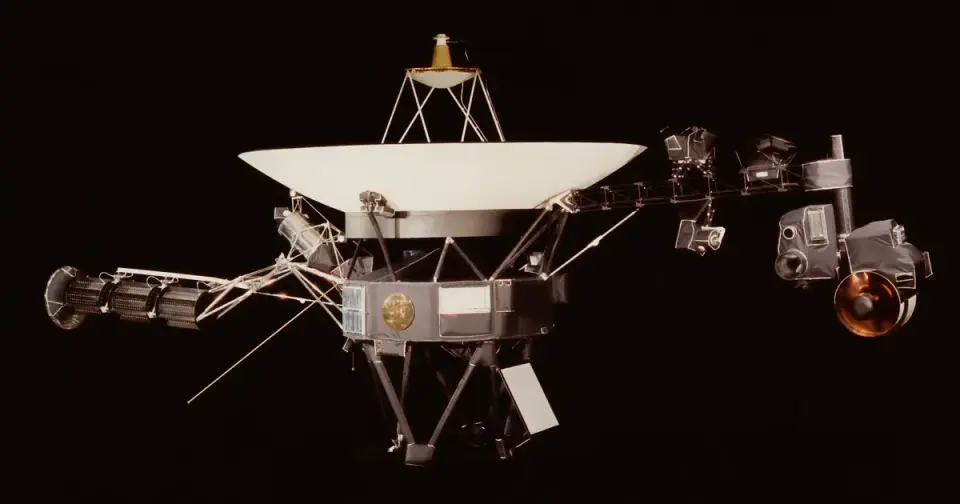
NASA’s Voyager 1 has officially reached a distance of one light-day from Earth, meaning radio signals now take 24 hours to reach the probe and another 24 hours to return. Confirmed by the Jet Propulsion Laboratory (JPL) on November 19, 2026, this milestone marks the farthest any human-made object has traveled. Despite a recent pause in science data transmission, the probe continues to send a carrier signal, allowing engineers to track its trajectory. The spacecraft, launched in 1977, is now over 16 billion miles away and traveling at 38,000 mph, continuing its mission to study interstellar space despite dwindling power reserves.
Key points
- Voyager 1 reached one light-day from Earth on November 18, 2026, confirmed by JPL on November 19.
- Radio signals now take 24 hours to reach the probe and 24 hours to return, creating a 48-hour communication lag.
- The probe is located approximately 16.1 billion miles (25.9 billion kilometers) from Earth.
- Science and engineering data transmission ceased on November 14, but the carrier signal remains active for trajectory confirmation.
- Voyager 1 is traveling at 38,000 mph (61,000 kph) and is powered by a decaying plutonium source.
- Voyager 2, launched earlier but on a slower trajectory, is not expected to reach this distance until 2035.
Background
Voyager 1 launched in September 1977 as part of a 'Grand Tour' of the outer solar system. It visited Jupiter in 1979 and Saturn in 1980, capturing the iconic 'Pale Blue Dot' image of Earth in 1990. In 2012, it became the first human-made object to cross the heliopause into interstellar space. Our previous coverage noted that NASA invited the public to celebrate the milestone with a global Morse code tribute. The probe carries a Golden Record containing sounds and images of Earth, intended as a message for any extraterrestrial civilization that might encounter it.
How outlets are covering it
NASA and JPL emphasize the engineering achievement of maintaining contact with a 49-year-old spacecraft, highlighting the success of recent power-saving measures that swapped instruments to extend operational life into the 2030s. JPL director Dave Gallagher praised the teams for overcoming challenges to keep the probe connected. In contrast, Scientific American notes the impending end of the mission, stating that both Voyager probes are expected to go dark by 2036 due to radioactive decay, with some experts suggesting the current power levels are precarious. Live Science focuses on the scientific legacy, quoting project scientist Linda Spilker on the unexpected discoveries Voyager has made, such as the volcanic activity on Io and the thin rings of Jupiter, which challenged previous assumptions. While all sources agree on the milestone's significance, they differ in emphasis: NASA celebrates the current achievement, Scientific American warns of the mission's finite lifespan, and Live Science reflects on its historical impact on planetary science.
Why it matters
This milestone underscores the enduring capability of human technology in the vastness of space and the ongoing effort to extend the life of aging spacecraft. It highlights the challenges of deep-space communication and the importance of conserving power for long-duration missions. The continued operation of Voyager 1 provides valuable data on interstellar space, helping scientists understand the boundary between the Sun's influence and the pristine interstellar medium. As the probe approaches the end of its operational life, this achievement serves as a testament to the ingenuity and perseverance of the scientists and engineers who have maintained the mission for nearly half a century.
What to watch
NASA engineers are investigating the cause of the science data transmission pause that began on November 14, while continuing to monitor the carrier signal. The probe is expected to remain operational until at least its 50th anniversary in 2027, with power-saving measures aimed at extending its life into the 2030s. Voyager 2 is not expected to reach the one-light-day mark until 2035. In the broader context of space exploration, other milestones such as SpaceX's Starship catch and the BepiColombo mission to Mercury are also being monitored, but Voyager 1's achievement remains a unique symbol of human exploration in interstellar space.
- NASA’s Voyager 1 Crosses Mind-Melting Milestone 49 Years After Launch HuffPost
- NASA’s Voyager 1 Makes History Reaching One Light-Day from Earth NASA Jet Propulsion Laboratory (JPL) (.gov)
- Three space milestones that sound like science fiction Scientific American
- Voyager 1's light-day milestone: 50 years of amazing solar system discoveries in photos Live Science
- A New Milestone for Life on Earth The Atlantic
Want the full story? Read the original reporting
Read on HuffPost