
NOAA Predicts Warmer North and Stormier South Amid Record El Niño
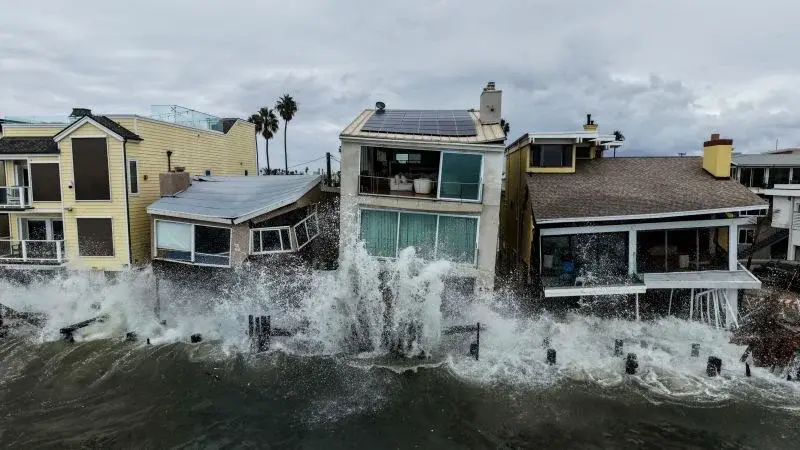
NOAA’s 2026-2027 winter outlook, released October 15, projects a warmer northern U.S. and wetter southern tier driven by a record-strength El Niño. Drought is expected to ease in the Southwest and Southeast, though flash flood risks remain high on dry soils.
Key points
- NOAA forecasts warmer-than-average temperatures across the Pacific Northwest, Midwest, and East Coast, with no regions predicted to be colder than normal.
- Wetter-than-average conditions are likely from the Southwest to the Southeast and along the East Coast, while the northern Rockies and Great Lakes may see drier winters.
- Drought conditions are expected to improve or end in the Southwest, Southern Great Plains, and Southeast, but may worsen in parts of the northern Rockies and eastern Washington.
- Ken Graham, director of NOAA’s National Weather Service, warned that heavy precipitation on dry soil could trigger destructive flash floods and mudslides.
- NOAA introduced a new Probabilistic Precipitation Portal and updated warning language for 'Particularly Dangerous Situation' blizzards and ice storms this season.
Background
This outlook follows earlier reports in September and October 2026 indicating the current El Niño is the strongest in recorded history, with ocean temperature anomalies exceeding 4.1°C. Previous coverage noted a historically strong polar vortex that may limit cold outbreaks, though the current forecast emphasizes a southward shift in the jet stream.
How outlets are covering it
CNN highlighted the 'super El Niño' framing, while CBS News and USA Today focused on the contrast between a wet South and dry North. NOAA provided the official technical outlook, emphasizing that the forecast does not specify snowfall amounts, only precipitation likelihood. All sources agreed on the warming trend in the North and increased storm risk in the South, but USA Today noted that AccuWeather’s private forecast aligns with NOAA’s general trends.
Why it matters
The forecast signals significant shifts in regional weather patterns, impacting agriculture, water resources, and emergency preparedness. Communities in drought-stricken areas may see relief, but those in the South face heightened risks of flooding and mudslides due to the combination of heavy precipitation and dry soil conditions.
What to watch
NOAA’s Weather Prediction Center will release its next three-month outlook on November 19. Local governments in the Southwest and Southeast are preparing for potential drought relief, while communities in the South are advised to plan for flash floods and mudslides. The Probabilistic Precipitation Portal will provide updated data on snow, ice, and rain thresholds for emergency managers.
- Super El Niño will determine which parts of US get rain and snow this winter CNN
- Winter may bring snow and rain to some drought-stricken U.S. states, new forecast shows CBS News
- Official winter weather forecast released. How cold will it be? USA Today
- El Nino looms large over U.S. Winter Outlook National Oceanic and Atmospheric Administration (.gov)
- Super El Niño fueled winter could unleash more storms, driving more active pattern into the South FOX Weather
Want the full story? Read the original reporting
Read on CNN