
Record King Tides and El Niño Waves Damage US Coasts, Collapse Pacifica Pier
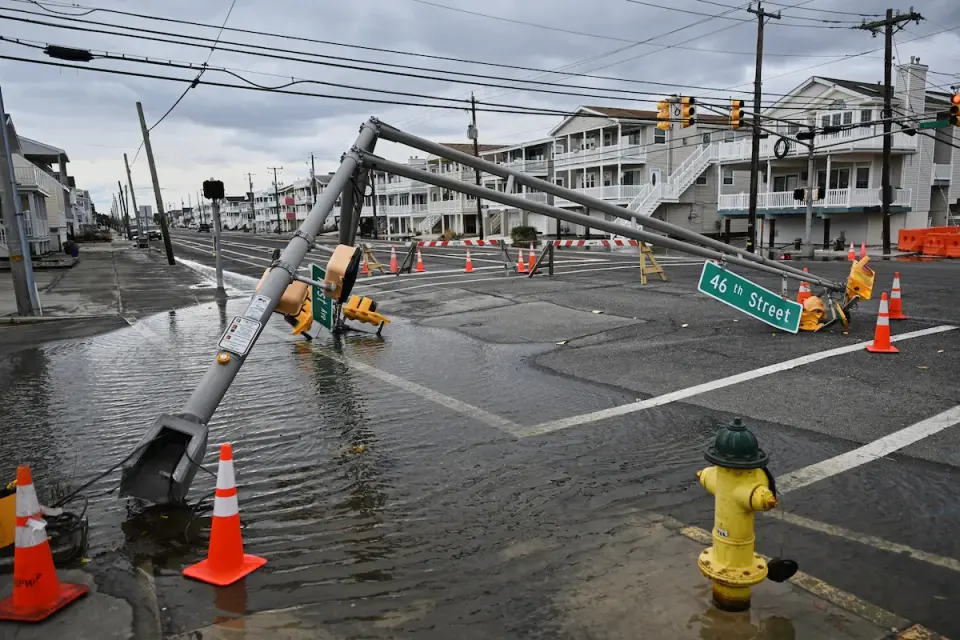
Record-breaking king tides, amplified by a powerful El Niño and a winter storm, struck both US coasts this week, causing severe flooding and infrastructure damage. On the West Coast, waves collapsed part of the historic Pacifica pier and set new high-water records in California, while a nor'easter battered the Mid-Atlantic, breaking tide records in Virginia. Officials warn that more extreme tides are expected in December and January.
Key points
- A combination of king tides, strong swells, and a winter storm with 60-70 mph winds and 20-foot waves sent water levels into record territory along the Mid-Atlantic coast, according to The Washington Post.
- Waters surged 1.5 feet beyond the previous record at the Wachapreague, Virginia tide station, surpassing a 2006 record set during Tropical Storm Ernesto, per NOAA preliminary data cited by The Washington Post.
- On the California coast, a record El Niño raised sea levels by more than a foot in some areas, and 20-30 foot waves caused part of the Pacifica Municipal Pier to collapse into the sea, according to The New York Times and ABC News.
- San Francisco recorded a high tide of 8.23 feet, breaking a 1982 record, while Santa Barbara and Los Angeles also set new all-time high tide records, according to ABC News.
- Macy's postponed its 100th annual Thanksgiving Day parade from Thursday to Saturday due to severe weather and dangerous gusts, marking the first time the event was delayed for weather, according to The Guardian.
Background
The 2026 El Niño is described as potentially the strongest in roughly 1,000 years, fueling a marine heatwave with sea surface temperatures more than 5°C above average along the California coast. This thermal expansion, combined with background sea-level rise and astronomical king tides, has created a 'stacking' of forces. California Governor Gavin Newsom declared a state of emergency for El Niño in September 2026 to accelerate permits and stage flood barriers. Previous archive coverage noted that these events are the first of three 2026 king tide cycles, with officials warning of a 'dress rehearsal' for more extreme conditions later in the winter.
How outlets are covering it
The Washington Post emphasizes the 'worst-case scenario' alignment of a winter storm and king tides on the Mid-Atlantic, highlighting the Virginia record. The New York Times focuses on the specific infrastructure loss in Pacifica, noting the pier had been crumbling and that a $2.25 million stabilization fund was recently approved. ABC News frames the event as a 'practice run' for December and January, citing San Mateo County supervisor Ray Mueller, and highlights the lack of options for Pacifica Mayor Christine Boles to prevent similar events. The Guardian provides a broader national view, linking the coastal flooding to the postponement of the Macy's Thanksgiving Day parade in New York due to hazardous wind conditions.
Why it matters
The event highlights the compounding risks of climate change, as record El Niño conditions amplify natural tidal cycles, leading to unprecedented coastal damage and infrastructure failures. The collapse of the Pacifica pier and record-breaking tides in Virginia and California demonstrate the immediate physical impact of these weather patterns, while the postponement of major public events like the Macy's parade illustrates the broader societal disruption caused by extreme weather.
What to watch
More intense king tides are expected in December and January, with forecasters predicting similar or higher water levels on Dec. 23-25 and Jan. 21-22. A strong Pacific storm is also expected to hit central California around Dec. 1, potentially bringing additional storm surge and heavy rain. The Maryland Transportation Authority has corrected an error in an emergency alert that mistakenly directed callers to a sex hotline, and construction for a new Chesapeake Bay Bridge is expected to begin as soon as 2032.
- Where high tides set records on both coasts this week The Washington Post
- Pacifica, Calif., Fears the Loss of Its Pier After a Section Collapsed Into the Sea The New York Times
- Marin officials absorb lessons from tidal defense before next torrent Marin Independent Journal
- As king tides pummel California coast, leaders fear what's next ABC News - Breaking News, Latest News and Videos
- King tides batter US coasts as storms threaten Thanksgiving celebrations The Guardian
Want the full story? Read the original reporting
Read on The Washington Post