
Bronze Leg Discovery Rewrites History of Roman Conquest in Scotland
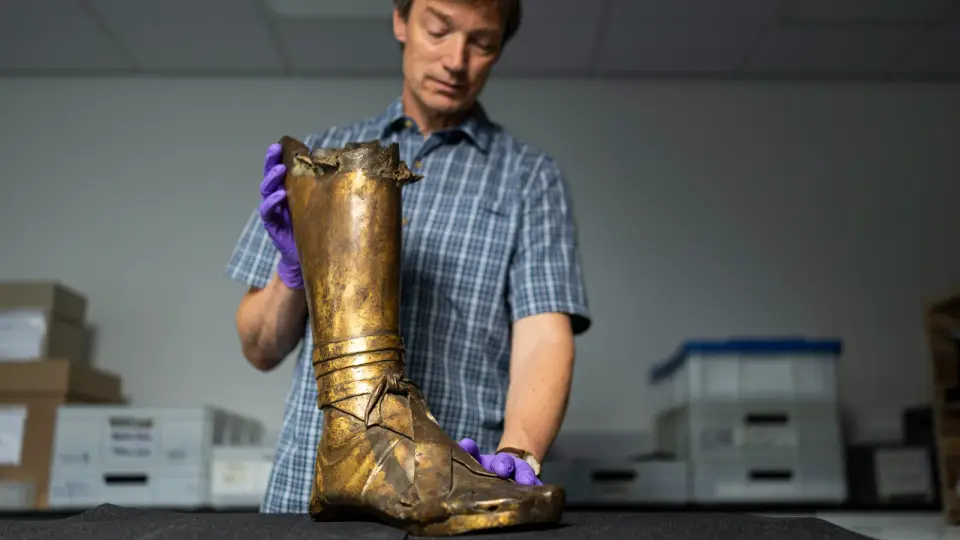
A bronze leg found in a Scottish bog in 1820 is now confirmed as part of a monumental statue of Emperor Antoninus Pius, dismantled by Romans during their withdrawal from Scotland. This discovery, featured in a new exhibition, challenges previous theories that the artifact was looted from England and suggests a more significant Roman cultural presence in the region.
Key points
- The 'Milsington leg,' a gold-covered bronze foot and calf, was discovered in a bog in 1820 and had been stored in a duke's storeroom for a century before recent analysis.
- Experts now believe the leg belonged to an equestrian statue of Emperor Antoninus Pius, erected around A.D. 140 in the Scottish Borders to celebrate his conquest of southern Scotland.
- Analysis revealed no cut marks on the bronze, indicating the statue was carefully dismantled by Romans during their retreat in the A.D. 160s, rather than being hacked off by locals or destroyed for scrap.
- The finding is part of the 'Roman Scotland: Life on the Edge of Empire' exhibition at the National Museum of Scotland, which opens on November 14, 2026.
- The exhibition also features other artifacts, including a reconstructed earthenware bowl from Inveresk and stone altars from a mithraeum, highlighting the scale of Roman occupation in Scotland.
Background
Previous assumptions suggested the bronze leg was looted from York, England, or hacked off by Scottish tribes. However, recent research into the Roman frontier has shifted the consensus toward a deliberate dismantling by Roman forces. This aligns with broader findings that Roman influence in Scotland was more extensive and culturally impactful than previously thought, influencing local Pictish art and political structures.
How outlets are covering it
Live Science and Gizmodo emphasize the careful dismantling of the statue, noting the absence of cut marks as evidence against violent destruction. The Guardian provides additional context on the statue's location near Hawick and its impact on Iron Age communities, while also highlighting other artifacts in the exhibition. The Telegraph source was inaccessible due to a security block, so its perspective could not be evaluated.
Why it matters
This discovery reshapes the understanding of Rome's second attempt to conquer Scotland, revealing a more deliberate and culturally significant presence than previously assumed. It also raises questions about the fate of the rest of the statue and the broader implications of Roman withdrawal on local societies.
What to watch
The 'Roman Scotland: Life on the Edge of Empire' exhibition will run from November 14, 2026, to April 18, 2027, at the National Museum of Scotland in Edinburgh. Researchers continue to investigate the fate of the remaining parts of the statue and the broader impact of Roman occupation on Scottish history.
- 1,800-year-old bronze foot found in bog was carefully taken from a giant Roman emperor statue in Scotland Live Science
- Bronze leg found in Scottish bog sheds new light on Roman occupation The Guardian
- Scientists Solved Mystery of Bronze Boot Pulled From Scottish Bog Gizmodo
- This superb exhibition about Roman Scotland is how history should be told The Telegraph
- Giant statue of Roman emperor once stood in southern Scotland BBC
Want the full story? Read the original reporting
Read on Live Science