Tag

Roman Empire

All articles tagged with #roman empire

Heatwave Exposes Roman Constantine Bridge Foundations in Bulgaria
archaeology18 days ago

Heatwave Exposes Roman Constantine Bridge Foundations in Bulgaria

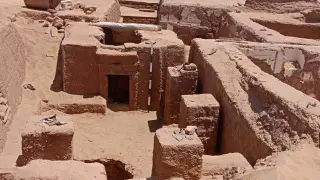
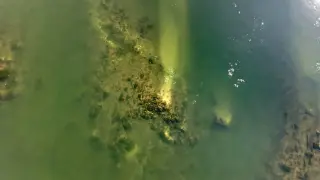
Severe Danube drought from record heatwaves has temporarily lowered water levels in Bulgaria, revealing exposed foundations of the ancient Constantine Bridge near Gigen. Built under Emperor Constantine I and inaugurated in 328 CE, the bridge spanned over 2 km and linked Ulpia Oescus with Sucidava; Pleven museum archaeologists used drones to document the visible remains, a rare chance to study a major Roman engineering feat in its riverine setting, though the structure was largely destroyed by around 367 CE.

Divers Uncover a 2,100-Year-Old Roman Shipwreck Off Sicily
human-history18 days ago

Divers Uncover a 2,100-Year-Old Roman Shipwreck Off Sicily

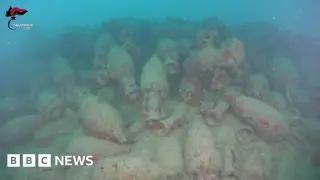
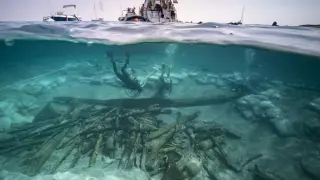
Two divers off Mazara del Vallo, Sicily, accidentally discovered a Roman-era shipwreck buried in a mound of amphorae about 21 meters deep. The cargo includes hundreds of amphorae (mostly Dressel 1A), two large lead anchors, and a lead pipe, dating the site to the 2nd–1st centuries BCE. Italian authorities have created a 3D survey and will continue investigations, highlighting ancient Mediterranean trade routes and cultural exchanges.

Two-thousand-year-old Roman shipwreck found off Sicily filled with amphorae
world21 days ago

Two-thousand-year-old Roman shipwreck found off Sicily filled with amphorae

Italian divers have uncovered a 2,000-year-old Roman shipwreck off Sicily near Mazara del Vallo at about 46 meters depth, its hull loaded with hundreds of well-preserved amphorae used for wine, olive oil or grain. Dating to the 2nd–1st century BC, the wreck is being safeguarded by Italy's culture ministry and the Carabinieri as experts investigate its cargo and significance.

Amateur detectorist uncovers remarkable Roman gold ring in Somerset
science2 months ago

Amateur detectorist uncovers remarkable Roman gold ring in Somerset

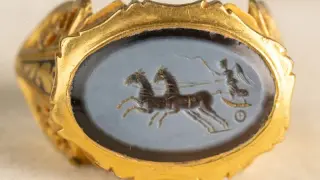
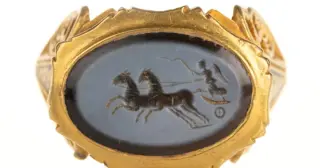
An amateur metal detectorist in Somerset uncovered a 48-gram gold Roman ring dating to around 297 AD, engraved with the goddess Victory on a two-horse chariot. The ring likely belonged to a wealthy Roman resident and will be displayed at The Museum of Somerset after acquisition by the South West Heritage Trust, which paid about £78,010 for the ring and coins found in the same field. The finder, Kevin Minto, shared his reward with a friend and used part of it to pay off his mortgage. Under UK law, treasure must be reported and the acquisition is overseen by the British Museum. The find highlights South Somerset’s Roman-era wealth and trade along routes like the Fosse Way.

Romans Used On-The-Go Coatings to Keep Ships Afloat, Study Finds
human-history4 months ago

Romans Used On-The-Go Coatings to Keep Ships Afloat, Study Finds

A Frontiers in Materials study of the Ilovik-Paržine 1 shipwreck shows Romans used zopissa—a pine tar and beeswax waterproof coating—applied in multiple phases, suggesting ships were regularly refurbished during voyages. Palynology tied the coating’s materials to diverse Adriatic environments, revealing a web of long-distance naval knowledge transfer around the Mediterranean.

Roman Fort Drain Unmasks Persistent Parasite Infections on the Frontier
science6 months ago

Roman Fort Drain Unmasks Persistent Parasite Infections on the Frontier

A team analyzing Vindolanda’s latrine drain found parasite eggs—Ascaris and Trichuris—and Giardia duodenalis in a subset of 58 sediment samples, with 28% testing positive. The findings show repeated exposure to contaminated water and food at a Roman frontier fort despite baths and aqueducts, indicating infections persisted across generations and that sanitation infrastructure wasn’t enough to prevent disease at isolated outposts; these patterns echo evidence from other forts and highlight potential zoonotic routes linked to diet.

Revolutionary Digital Map Reveals Extent of Ancient Roman Roads
history9 months ago

Revolutionary Digital Map Reveals Extent of Ancient Roman Roads

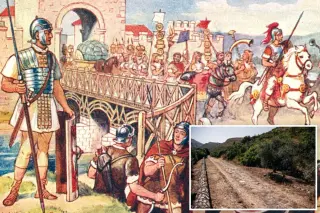
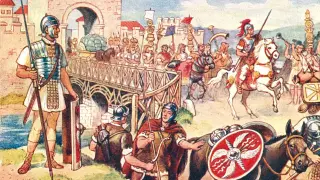
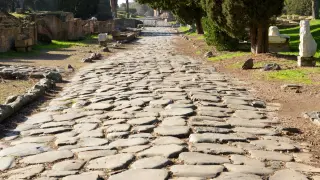
A team of international researchers has created a detailed map of the Roman road system around AD 150, covering over 300,000 km, which offers new insights into ancient Roman connectivity, travel, and influence, despite many roads still being uncertain in exact location. The visualization tool supports further research into Roman infrastructure and its long-term effects on the empire and beyond.