
Roman Villa Mosaic in Turkey Names Cat 'Emerald' and Dog 'Ocean'
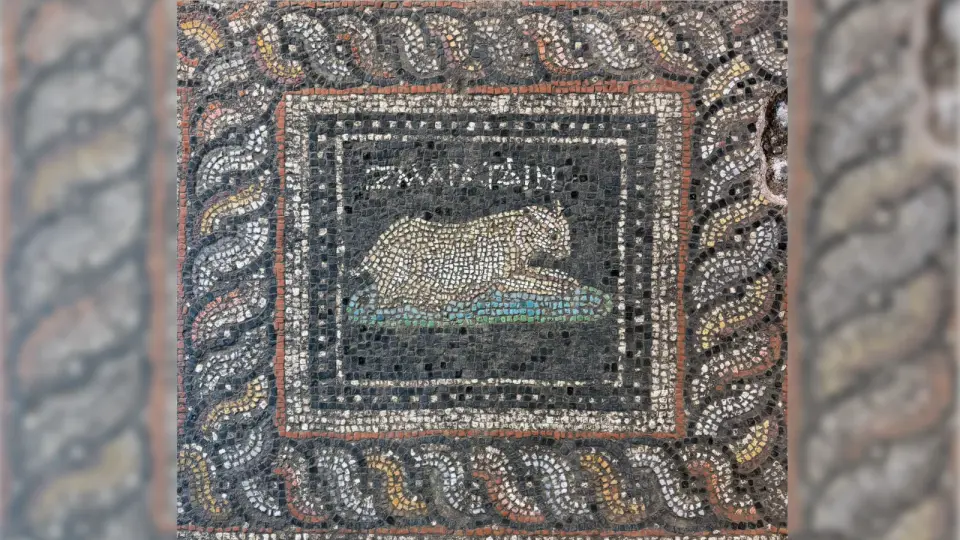
Archaeologists in Turkey uncovered a 1,800-year-old Roman villa mosaic featuring named household animals, including a cat called Emerald and a dog named Ocean, revealing insights into ancient domestic life.
Key points
- A Roman-era villa was recently excavated at the ancient city of Adramytteion on Turkey's Aegean coast, dating to the late second or third century A.D.
- The villa's main reception hall contained a large floor mosaic measuring approximately 5 by 3.6 meters, composed of 15 distinct panels.
- Two panels specifically depict a light-colored cat named 'Emerald' (Zmaragdin) resting on a cushion and a dog named 'Ocean' (Okeanos) in motion.
- The mosaic also includes mythological figures, likely Medusa and Pegasus, alongside other birds, fish, and felines, using a palette of ten different tile colors.
- Archaeologist Hüseyin Özgen suggests the named animals may have been pets or symbols of household identity, with 'Emerald' possibly linked to North African trade routes.
Background
This discovery adds to recent archaeological findings in Turkey, such as the lavish Roman villa found outside Rome's walls and private baths used by emperors, highlighting the complexity of domestic life in the Roman Empire. While previous archive items focused on modern pet food recalls and hurricane activity, this finding connects to broader historical trends of animal domestication and status symbols in antiquity.
Why it matters
The discovery provides rare evidence of how Romans personalized their living spaces with named animals, offering a glimpse into the emotional and social dynamics of ancient households. It also sheds light on trade connections, as the name 'Emerald' may reference the gemstone trade from Egypt, illustrating the economic reach of provincial Roman cities like Adramytteion.
What to watch
Archaeologist Hüseyin Özgen and his team will continue excavating and analyzing the Adramytteion site, with findings to be published in the Journal of Mosaic Research. Further research may reveal more about the villa's occupants and their trade networks.
Want the full story? Read the original reporting
Read on Live Science