
Rare 2,000-year-old ritual bath complex discovered near Jerusalem's Temple Mount
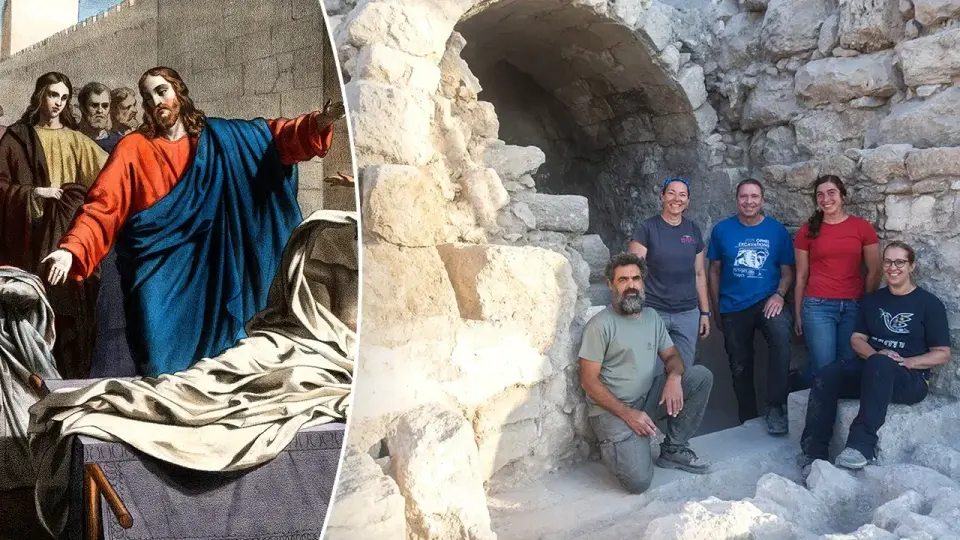
Archaeologists from the Hebrew University of Jerusalem have uncovered a remarkably well-preserved ritual bathing complex in the Ophel, located immediately south of the Temple Mount. Dating to the early first century A.D., the site features three large baths, a plastered pool, and an extensive water system. The discovery, announced in autumn 2026, offers rare insight into Second Temple-period pilgrimage and purification practices, with one bath retaining its original vaulted stone ceiling.
Key points
- The complex was found in the Ophel, near the Triple Gate, one of the main entrances to the Temple Mount.
- It includes three large ritual baths, a plastered pool, a paved plaza, and a water system, with one bath standing nearly 14 feet tall and retaining its original vaulted stone ceiling.
- The site dates to the early first century A.D. and likely served Jewish pilgrims undergoing ritual purification before visiting the Second Temple.
- Archaeologists found dozens of coins from the First Jewish Revolt against Rome, providing evidence of Jerusalem's destruction by Roman forces in 70 A.D.
- An older public purification facility, including a ritual bath from the first century B.C., was discovered beneath the main complex.
- The discovery sheds light on ancient Jewish purification practices that influenced the development of Christian baptism, according to theologian Candida Moss.
Background
This discovery follows a series of recent archaeological finds in Israel dating to the time of Jesus. In September 2026, a 25-ton ritual bath was extracted from Kiryat Gat, and in October 2026, a 300-meter section of the Lower Aqueduct, which supplied water to the Temple Mount, was uncovered near Jerusalem. These finds collectively enhance understanding of the infrastructure and religious practices of the Second Temple period.
How outlets are covering it
Fox News and Mezha.net emphasize the exceptional preservation of the complex, particularly the vaulted stone ceiling, and its significance for understanding Second Temple pilgrimage. CHVN Radio focuses on the broader context of water infrastructure, highlighting the recently uncovered aqueduct that supplied the Temple Mount. Candida Moss, cited by Fox News and Mezha.net, connects the discovery to the origins of Christian baptism, noting that ritual bathing was widespread among Jews in Judea and Galilee. Douglas Estes, cited by CHVN Radio, suggests Jesus and his disciples likely used water from the aqueduct, though no direct evidence confirms this.
Why it matters
The discovery provides rare physical evidence of ritual purification practices in Jerusalem during the Second Temple period, offering insights into the religious and cultural context of Jesus' time. It also highlights the engineering capabilities of ancient Jerusalem and the importance of water in Jewish religious life.
What to watch
The complex is expected to be preserved and studied further, with potential integration into public spaces or museums. Continued research may reveal more about the site's use and its connection to broader Second Temple-period practices.
Want the full story? Read the original reporting
Read on Fox News