Tag

Hebrew University

All articles tagged with #hebrew university

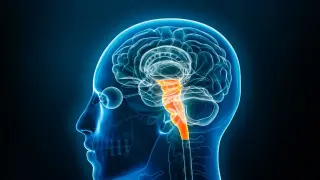
Hebrew University researchers propose brain stem, not cortex, as origin of consciousness
science1 day ago

Hebrew University researchers propose brain stem, not cortex, as origin of consciousness

Prof. Marshall Devor and Dr. Mark Baron argue that the brain stem, not the cerebral cortex, generates the basic subjective experience of consciousness. Published in The Neuroscientist, their theory suggests that while the cortex processes complex information, the brain stem filters signals and creates the 'Me Inside' feeling. Evidence from pain research and coma cases supports this view, as cortical damage often leaves pain intact, whereas brain stem injury causes loss of consciousness. This hypothesis challenges the prevailing focus on the cortex and calls for new imaging studies to test the role of the mesopontine tegmentum in subjective awareness.

Archaeologists Uncover Rarely Preserved First-Century Ritual Bathing Complex Near Jerusalem’s Temple Mount
archaeology16 days ago

Archaeologists Uncover Rarely Preserved First-Century Ritual Bathing Complex Near Jerusalem’s Temple Mount

Hebrew University archaeologists have revealed a remarkably intact ritual bathing complex in the Ophel, located south of Jerusalem’s Temple Mount. Dating to the early first century A.D., the site includes three large baths, a plastered pool, and an extensive water system. The complex, which retains its original vaulted stone ceiling, likely served pilgrims undergoing purification before visiting the Second Temple. The discovery also reveals evidence of the Roman destruction in 70 A.D., including coins from the First Jewish Revolt, and an older purification facility beneath the main structure.

Rare 2,000-year-old ritual bath complex discovered near Jerusalem's Temple Mount
archaeology17 days ago

Rare 2,000-year-old ritual bath complex discovered near Jerusalem's Temple Mount

Archaeologists from the Hebrew University of Jerusalem have uncovered a remarkably well-preserved ritual bathing complex in the Ophel, located immediately south of the Temple Mount. Dating to the early first century A.D., the site features three large baths, a plastered pool, and an extensive water system. The discovery, announced in autumn 2026, offers rare insight into Second Temple-period pilgrimage and purification practices, with one bath retaining its original vaulted stone ceiling.

Study: Social Presence Lowers Blood Sugar Spikes and Improves Metabolic Efficiency
health1 month ago

Study: Social Presence Lowers Blood Sugar Spikes and Improves Metabolic Efficiency

A new study in Science Advances shows that eating with a close companion reduces blood sugar spikes and improves metabolic efficiency compared to eating alone. Researchers found that social proximity lowers the physiological 'cost' of regulating body temperature and stress responses, suggesting human physiology is inherently social.

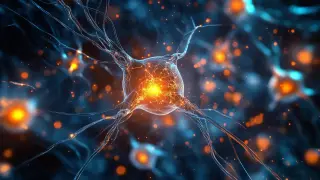
Study Finds Individual Human Neurons Act as Complex Biological Computers
science3 months ago

Study Finds Individual Human Neurons Act as Complex Biological Computers

Researchers at the Hebrew University of Jerusalem have demonstrated that individual human cortical neurons possess significantly higher computational complexity than those in other mammals. Published in the Proceedings of the National Academy of Sciences, the study suggests that human intelligence stems not just from the sheer number of neurons, but from the sophisticated processing capabilities of single cells. This finding challenges the traditional view of neurons as simple on-off switches and offers new insights into the biological basis of language and mathematics.

Hebrew University Study Reveals Uneven Cellular Aging, Offering New Path to Cancer Prevention
health-and-science3 months ago

Hebrew University Study Reveals Uneven Cellular Aging, Offering New Path to Cancer Prevention

A new study from the Hebrew University of Jerusalem demonstrates that biological aging is not uniform across the body. By analyzing single cells rather than tissue averages, researchers found that some cells age significantly faster than others due to uneven DNA methylation. This discovery challenges the traditional view of aging as a synchronized process and suggests that targeting specific 'elderly' cells could lead to new treatments for cancer and other age-related diseases.

health-and-wellness1 year ago

Enhancing T Cell Function with Mitochondria Boosts Cancer Immunotherapy

Researchers from Hebrew University of Jerusalem and international partners have discovered a method to enhance the immune system's ability to fight cancer by reprogramming T cells through the inhibition of the mitochondrial protein Ant2, which improves their energy production, resilience, and effectiveness against tumors, with potential for clinical application using drugs.

science3 years ago

Uncovering the Connection: Dinosaur-Era Ocean Swirls and Modern Climate Change

Israeli scientists from Hebrew University have discovered a previously unknown mechanism called "gyral circulation" that influenced Earth's climate over 60 million years ago during the Cretaceous period. By evaluating wind-driven circulation at the ocean's surface, the researchers found that the movement of Earth's continents during that time caused a slowdown in the large swirling ocean currents responsible for carrying warm water from the equator to the poles. This disruption in ocean regulation significantly increased temperature differences between the poles and the tropics. The study highlights the importance of oceanic processes in shaping contemporary climate systems and provides insights into modeling and predicting the impacts of climate change in the modern era.

Israeli Scientists Discover Neural Pathway to Combat Fentanyl Addiction
health3 years ago

Israeli Scientists Discover Neural Pathway to Combat Fentanyl Addiction

Researchers at the Hebrew University of Jerusalem have discovered that the claustrum, a thin sheet of neurons in the brain, plays a role in regulating the urge to consume the highly addictive opioid fentanyl. The study, conducted on mice, found that when the claustrum was activated, the mice immediately lost interest in fentanyl. The discovery could provide a path to treatment for the opioid crisis, which has caused over 100,000 annual drug overdose deaths in the US alone.