
EU pledges €180bn recovery and new firefighting fleet after record-breaking summer
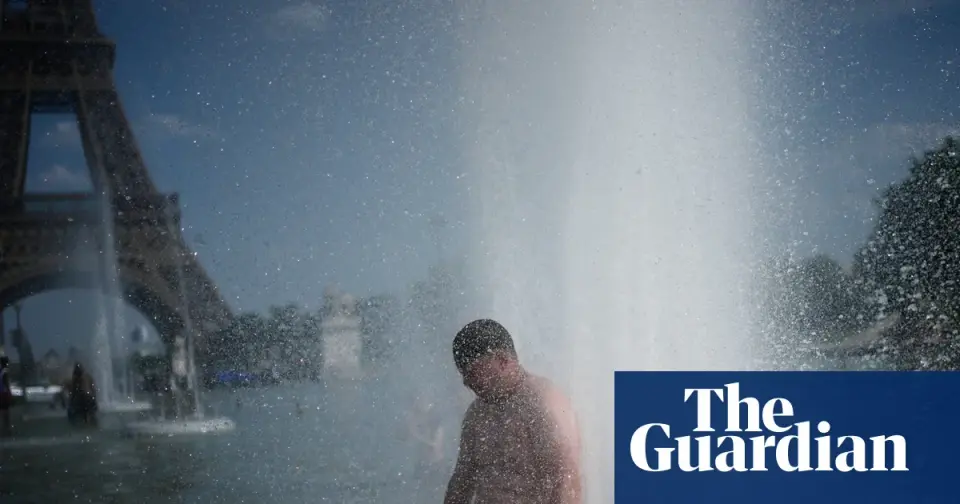
Europe’s 2026 summer, dubbed the 'summer of truth,' caused €180bn in damage and 35,000 deaths. Ursula von der Leyen announced a Heatwave Plan, a Climate Insurance Alliance, and a new firefighting fleet, but critics argue the response lacks concrete emissions cuts and prioritizes adaptation over mitigation.
Key points
- The EU estimates 2026 summer damage at €180bn, with 35,000 heat-related deaths and 660,000 hectares burned.
- Von der Leyen proposed a European Heatwave Plan, a Climate Insurance Alliance to address a 75% coverage gap, and a new firefighting fleet.
- Critics argue the Commission is cutting green funding and supporting fossil fuels, despite promises to electrify Europe.
- Polling shows 68-83% of Europeans in key nations view heatwaves as climate-related, yet political action remains tepid.
- The US and far-right parties continue to deny climate science or focus solely on adaptation, ignoring emissions reductions.
Background
This follows a series of earlier reports in August 2026 detailing historic droughts across Europe, including record-low levels in the Rhine and Danube, and the subsequent unveiling of a preliminary Heatwave Plan. The current developments represent the formal political response to these visible impacts, moving from emergency measures to long-term structural changes.
How outlets are covering it
The Guardian and Politico highlight a disconnect between the severity of the climate crisis and the EU's political response. While von der Leyen acknowledged the 'summer of truth,' Politico notes her speech lacked concrete solutions for energy stasis and biodiversity loss, focusing instead on adaptation. Greenpeace and the European Environmental Bureau criticize the Commission for cutting green funding and supporting fossil fuels. Conversely, industry groups like European Aluminium welcomed the focus on electrification but demanded concrete measures. The Guardian notes that while some nations like India and China are scaling renewables, the US and far-right parties in Europe are intensifying climate denial or focusing exclusively on adaptation, such as air conditioning, rather than mitigation.
Why it matters
The 2026 summer serves as a critical test for global climate policy. The €180bn economic damage and 35,000 deaths demonstrate that climate impacts are no longer theoretical but immediate economic and human security threats. The political response, or lack thereof, will determine whether Europe can achieve its net-zero targets or if it will face escalating costs and instability. The divergence between public concern and political action suggests a growing risk of policy paralysis in the face of accelerating climate change.
What to watch
The EU Commission will present a new framework for climate resilience next month, identifying 100 vulnerable territories. The Climate Insurance Alliance will be formally launched to address the 75% insurance gap. Von der Leyen has promised to 'double down' on low-carbon energy, but critics will watch for concrete measures to accelerate grid connections and reduce fossil fuel dependence. The UN climate summit, Cop31, will take place in November in Turkey, with Australia leading negotiations, raising questions about the global commitment to climate action.
- Burning forests, emptying rivers, €180bn in damage: Europe’s politicians face reckoning after ‘summer of truth’ The Guardian
- Von der Leyen offers diagnosis but no cure on EU’s ecological malaise politico.eu
- EU to launch climate insurance scheme after summer of extreme weather Yahoo
- EU plans new firefighting fleet after deadly summer heat wave Spectrum News NY1
- European Commission launches Climate Insurance Alliance Reinsurance News
Want the full story? Read the original reporting
Read on The Guardian