Tag

Energy Transition

All articles tagged with #energy transition

AI Power Demand and Energy Crisis Reshape 2026 Climate Week Agenda
climate-and-technology11 days ago

AI Power Demand and Energy Crisis Reshape 2026 Climate Week Agenda

This year's Climate Week in New York shifted focus from traditional emissions targets to the urgent challenge of powering AI data centers and navigating energy security crises. The Iran war and soaring fossil fuel costs accelerated global adoption of renewables, while AI infrastructure demands sparked debates over grid resilience and fossil fuel reliance.
Deep-Earth Hydrogen: The Race to Uncover a Cheap Clean-Energy Source
science-energy-climate25 days ago

Deep-Earth Hydrogen: The Race to Uncover a Cheap Clean-Energy Source

Scientists and investors are drilling for hydrogen gas trapped underground in dozens of countries, hoping to unlock a cheap, scalable green energy source. Early estimates suggest Earth may host trillions of tonnes of geologic hydrogen, but the size and extractability of deposits are still unproven and results could take months to years. If viable, underground hydrogen could accelerate the shift away from fossil fuels, but questions remain about how quickly hydrogen forms, migrates, persists, and economics—making it a high-stakes bet as campaigns like those in Kansas, Mali, and elsewhere gather data.

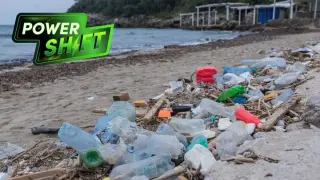
Turning Plastic Waste Into Clean Hydrogen With a Low-Temp Alkaline Process
technology2 months ago

Turning Plastic Waste Into Clean Hydrogen With a Low-Temp Alkaline Process

A study published in PNAS describes an alkaline thermal treatment (ATT) that converts mixed plastic waste into high-purity hydrogen at lower temperatures with negligible direct CO2 emissions, potentially tackling both plastic pollution and clean-energy needs. Lab tests on PET, PE, and PP show hydrogen yields comparable to pyrolysis/gasification, with a need for pre-treatment of some plastics. While promising, researchers caution that scalability, economic viability, and full life-cycle environmental impact still require further research, along with handling contaminated plastics and recycling the sodium hydroxide.

Pax Americana Fades as U.S. Empire Faces a Multipolar Reality
world4 months ago

Pax Americana Fades as U.S. Empire Faces a Multipolar Reality

Alfred W. McCoy argues that the United States is in imperial decline after decades of overreach, notably in Iran, with China and other powers rising economically and geopolitically; driven by a green-energy transition and strategic shifts, the U.S. is reeling toward a multipolar world where regional conflicts may intensify and liberal international ideals wane, even as humanitarian gains from the old order erode under Trump-era policies.

Global coalition charts fossil-free future as geopolitics shift
world5 months ago

Global coalition charts fossil-free future as geopolitics shift

At a Santa Marta summit, 59 governments agreed to develop roadmaps to end fossil-fuel dependence, launching a 'coalition of the willing' to accelerate a renewables-led transition amid volatile oil markets and a polarized US stance on climate; experts say the war in Iran is unexpectedly boosting renewables, with the IEA noting lasting changes to energy markets, though the UN process remains weak and major emitters are largely absent; the group plans annual meetings with Indigenous leaders and scientists to maintain momentum outside official climate talks.

Iran tensions push the world toward a faster renewable energy pivot
world5 months ago

Iran tensions push the world toward a faster renewable energy pivot

Amid rising energy prices and Iran tensions, the article argues the crisis is accelerating a global pivot from oil and gas to renewables, with surging EV and solar adoption (notably in India and Korea), energy-security shifts (UAE exits OPEC, Vietnam weighs renewables over LNG), and a geopolitical realignment that may outlast the current crisis, even as US policy under Trump slows clean-energy progress.

world5 months ago

Breakaway climate summit aims to turn talks into action on fossil fuels

Around 60 countries gathered in Santa Marta, Colombia for the world’s first climate summit outside the UN process, aiming to translate pledges into concrete steps to phase out fossil fuels and accelerate a clean-energy transition. Co-hosted by Colombia and the Netherlands, the six-day meeting highlighted practical roadmaps and financing tools while noting that the U.S. wasn’t invited and future progress depends on broader participation and alignment with COP debates; a follow-up summit is planned in Tuvalu to extend the coalition and push implementation.

Indigenous Leaders Urge Safeguards as World Moves to Phase Out Fossil Fuels
environment5 months ago

Indigenous Leaders Urge Safeguards as World Moves to Phase Out Fossil Fuels

At a global Santa Marta conference, Indigenous delegates warned that the shift away from fossil fuels must not become a pretext for looting Indigenous lands or minerals, emphasizing protection of forests and water and highlighting how renewables require mining of critical minerals. They also criticized ongoing fossil-fuel subsidies and urged a rights-centered, community-led approach to the transition, alongside broader health and ecological considerations beyond energy alone.

Global science panel to accelerate the fossil-fuel exit
world5 months ago

Global science panel to accelerate the fossil-fuel exit

Global experts launch a science panel to help countries accelerate departing from fossil fuels, as the Santa Marta climate action meeting unveils a Colombian roadmap for an energy transition aligned with 1.5C goals, including a projected 90% fossil-fuel reduction by 2050 and long-term economic benefits, contingent on sufficient investment and knowledge transfer.

From Frustration to Framework: Global Push to End Fossil Fuels Launches in Colombia
climate5 months ago

From Frustration to Framework: Global Push to End Fossil Fuels Launches in Colombia

Colombia and the Netherlands host the world’s first Transitioning Away from Fossil Fuels conference in Santa Marta (April 24-29), uniting 54 governments and civil society to outline national roadmaps for phasing out fossil fuels. Not a UN COP and not a binding agreement, the summit aims to coordinate diverse efforts, mobilize finance and debt relief for developing countries, and publish a scientist-led report to guide action as renewables expand and oil prices rise amid geopolitical tensions. Major emitters like China and the US are absent, but the gathering seeks a practical blueprint to accelerate the energy transition despite fossil-fuel inertia and potential climate tipping points.

world5 months ago

Colombia hosts a new climate summit to accelerate phasing out fossil fuels

A first-of-its-kind climate conference in Santa Marta, hosted by Colombia and the Netherlands, gathers about 60 countries to push for concrete steps to phase out fossil fuels outside the UN COP process, prioritizing practical transitions to renewables and infrastructure, while avoiding a binding treaty and noting the absence of the U.S. and China; the gathering aims to produce a report and advisory input to speed up the energy transition.

Colombia launches global push to move beyond fossil fuels at Santa Marta
environment5 months ago

Colombia launches global push to move beyond fossil fuels at Santa Marta

Colombia, with the Netherlands, is convening a 'coalition of the willing' at Santa Marta on 28–29 April to break the UN climate deadlock over phasing out fossil fuels. About 54 countries will attend, including some fossil-fuel producers and vulnerable developing nations, while major powers like the US, China, India and Gulf states are absent. The summit aims to craft concrete transition pathways, finance mechanisms, and technology transfer, and will include a planned second summit in Tuvalu next year, plus Indigenous and marginalised communities’ voices. Colombia has also halted new licensing for coal, oil, and gas as it pivots to renewables and other sectors.

Hungary’s new PM aims to cut Russia energy ties, but it won’t be cheap
world5 months ago

Hungary’s new PM aims to cut Russia energy ties, but it won’t be cheap

Peter Magyar’s victory signals a plan to reduce Hungary’s Russian energy dependence, but the shift will be costly and technically challenging due to reliance on Druzhba oil, Gazprom gas, and Rosatom nuclear power. Alternatives exist, like the Adriatic pipeline and the European grid, but they bring higher prices and require EU negotiations; Hungary is targeting ending Russian gas by 2035, not the EU’s 2027 deadline, and will likely press for structural funds to ease the transition.

War Tests Renewables Bets Across the Middle East, Country by Country
world6 months ago

War Tests Renewables Bets Across the Middle East, Country by Country

The war in the Middle East has underscored renewables’ value while revealing divergent national paths: oil exporters like Saudi Arabia, the UAE and Qatar push large renewable deployments even as they expand fossil-fuel infrastructure; energy-importing countries such as Turkey, Jordan and Morocco invest in solar and wind to cut costly imports, though inflation and tight finances threaten new projects; Iraq faces fiscal strain with limited renewable capacity, and conflict-damaged energy infrastructure in Yemen, Libya, and Syria worsens energy access. The situation also shapes the COP31 agenda, highlighting that transitions will be country-specific, driven by dependence on fossil fuels, fiscal health, and governance.