
COP31 Drafts Acknowledge 1.5°C Breach, Mandating Trillion-Dollar Carbon Removal
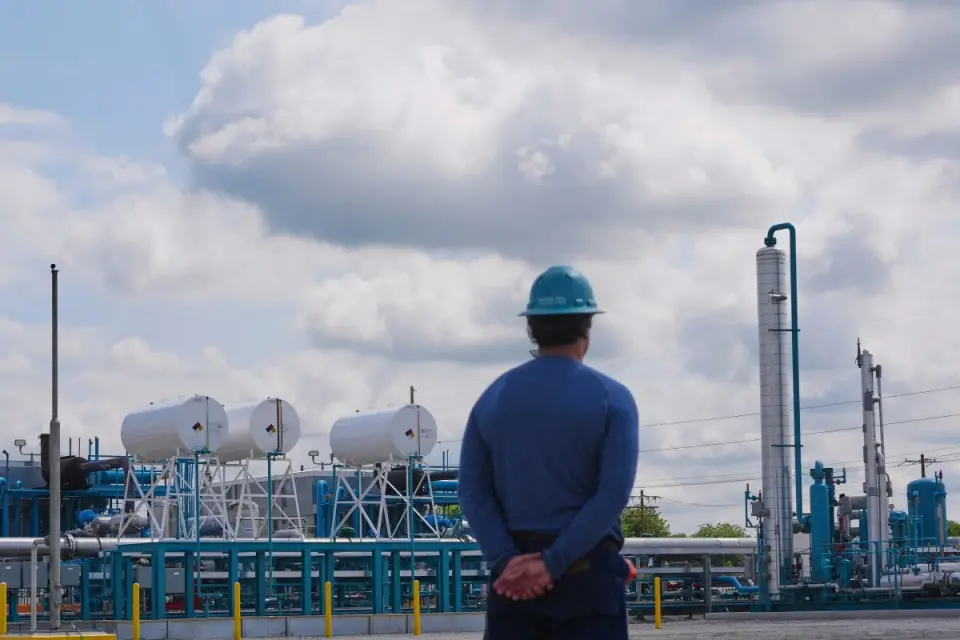
UN climate talks in Turkey are likely to conclude that the world has failed to limit warming to 1.5°C, necessitating massive carbon removal alongside deep emission cuts. Officials estimate this requires removing 320 billion metric tons of CO2 this century, a cost of $44–$66 trillion by 2100, relying on unproven technology.
Key points
- COP31 drafts acknowledge the failure to prevent 1.5°C warming, projecting a temporary overshoot to 1.8°C before returning to the threshold by 2100.
- UN Environment Programme Director Inger Andersen states 320 billion metric tons of CO2 must be removed this century, equivalent to eight years of global emissions.
- Berkeley Earth scientist Zeke Hausfather estimates carbon removal costs $22 trillion per 0.1°C reduction, totaling $44–$66 trillion by 2100 for the most optimistic overshoot scenario.
- Current mechanical carbon removal technology is insufficient, removing as much CO2 annually as fossil fuels emit in half an hour, though scaling to 5 billion metric tons by 2050 is hoped for.
- Denmark and Ethiopia lead a new 'Group of Negative Emitters' coalition, with Denmark targeting a 110% emission reduction to exceed net-zero goals.
Background
In October 2026, the UN Environment Programme officially conceded the 1.5°C target was lost, projecting a peak of 1.7–1.8°C. This followed the IMO’s adoption of an ocean carbon removal framework in November 2026 and EU political disputes over carbon taxes, highlighting the growing gap between climate goals and political feasibility.
Why it matters
The shift from prevention to remediation marks a pivotal change in global climate strategy, acknowledging that technological intervention, not just policy, is now required to mitigate catastrophic warming. This sets the stage for massive financial commitments and technological scaling, though experts warn that removal cannot substitute for immediate emission cuts.
What to watch
COP31 is scheduled to conclude in Turkey, with final communiqués likely formalizing the need for carbon removal. Nations are expected to accelerate fossil fuel phase-outs and invest in pilot-scale removal technologies, while the Group of Negative Emitters will push for stricter national targets.
Want the full story? Read the original reporting
Read on AP News