
Super El Niño Drives Indonesia’s 2026 Fire Season to 2015 Levels
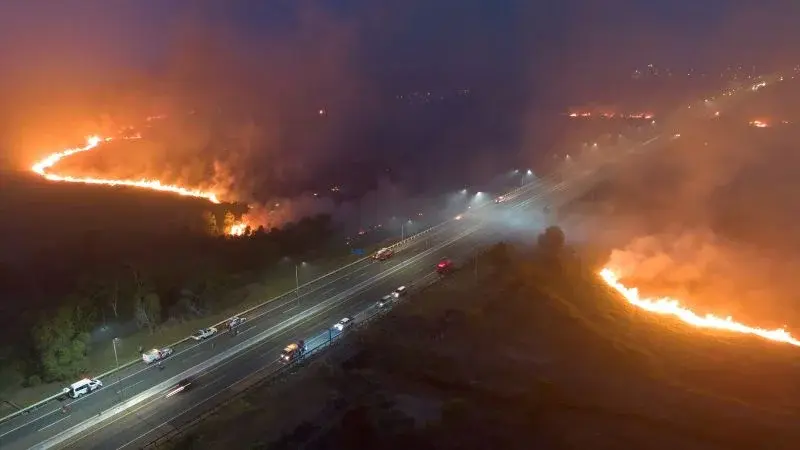
A 'super' El Niño has intensified drought conditions in Indonesia, triggering massive wildfires that have burned over 200,000 hectares of land, including critical peatlands. The resulting toxic smoke has caused over 50,000 respiratory infections in Indonesia and severe air quality issues in neighboring Malaysia, Singapore, and the Philippines. While the 2026 fire activity is currently comparable to the catastrophic 2015 season, experts warn that the fires may persist until the rainy season begins in November, releasing significant carbon emissions and threatening biodiversity.
Key points
- More than 200,000 hectares of land have burned, with over 23,000 fire hotspots detected by satellites in the past eight months, surpassing 2015 activity levels.
- The fires have released nearly 49 million tons of carbon in the last three weeks, exceeding the same period in 2015, according to Copernicus data.
- Over 50,000 respiratory infections have been linked to the fires in Indonesia, with over 12,000 cases among children under five, per the Health Ministry.
- Authorities have deployed more than 50 aircraft for cloud-seeding and water-bombing, while nine national parks have closed and thousands of schools have shifted to remote learning.
- Smoke has drifted into Malaysia, Singapore, and the Philippines, with Malaysia reporting a 259% rise in asthma cases.
- Volunteer firefighters, including indigenous Dayak and Banjar people, are battling underground peat fires that are difficult to extinguish and prone to reignition.
Background
Indonesia has experienced severe wildfires in previous El Niño years, notably in 1997 and 2015. The 2015 season burned approximately 2.6 million hectares, cost up to $28 billion, and may have caused 100,000 premature deaths across the region. Recent efforts to dam irrigation canals and restore wetlands have aimed to mitigate fire risk, but the current 'super' El Niño is testing these measures. The fires are exacerbated by decades of peatland drainage for plantations, which lowers water tables and creates flammable conditions.
How outlets are covering it
CNN emphasizes the scale of the 2026 fire season, noting it is 'very similar' to 2015 in magnitude, with over 200,000 hectares burned and 23,000 hotspots detected. NASA highlights the difficulty of detecting underground peat fires via satellite, noting that thick smoke can obscure thermal anomalies, and points out that 2026 emissions are roughly 10% of the 2015 total so far. BBC focuses on the human toll, detailing the efforts of volunteer firefighters and the health impacts, including two volunteer deaths and over 50,000 respiratory infections. BBC also critiques the historical scapegoating of indigenous communities for fires, attributing the root cause to industrial peatland drainage. All sources agree that El Niño is intensifying the fires, but differ in emphasis: CNN and NASA focus on the environmental and carbon impact, while BBC highlights the human and social dimensions.
Why it matters
The 2026 fire season underscores the compounding effects of climate change and human activity on global carbon cycles. Peatland fires release ancient carbon, contributing to greenhouse gas emissions that further drive climate change. The transnational smoke crisis affects public health across Southeast Asia, highlighting the need for sustained international cooperation and improved firefighting strategies. The persistence of underground fires until the rainy season poses ongoing risks to biodiversity and air quality.
What to watch
The fire season is expected to continue into October and November, with rains potentially offering the only effective means of extinguishing the fires. Authorities are monitoring fire activity closely and deploying resources for cloud-seeding and water-bombing. Researchers are developing new satellite detection methods to identify understory fires. Long-term efforts to restore wetlands and improve firefighting capacity will be critical in mitigating future fire seasons.
- Super El Niño-fueled fires destroyed huge tracts of this country before. They’re happening again CNN
- Indonesian wildfire emissions surge to world's highest, data shows Reuters
- Peatland Fires Darken Skies in Indonesia NASA Science (.gov)
- More schools close in Indonesia due to worsening haze from forest fires 10TV
- The volunteers risking their lives to defuse Indonesia's wildfire 'carbon bombs' BBC
Want the full story? Read the original reporting
Read on CNN