
UN Warns Record-Breaking El Nino Will Supercharge Global Climate Crisis
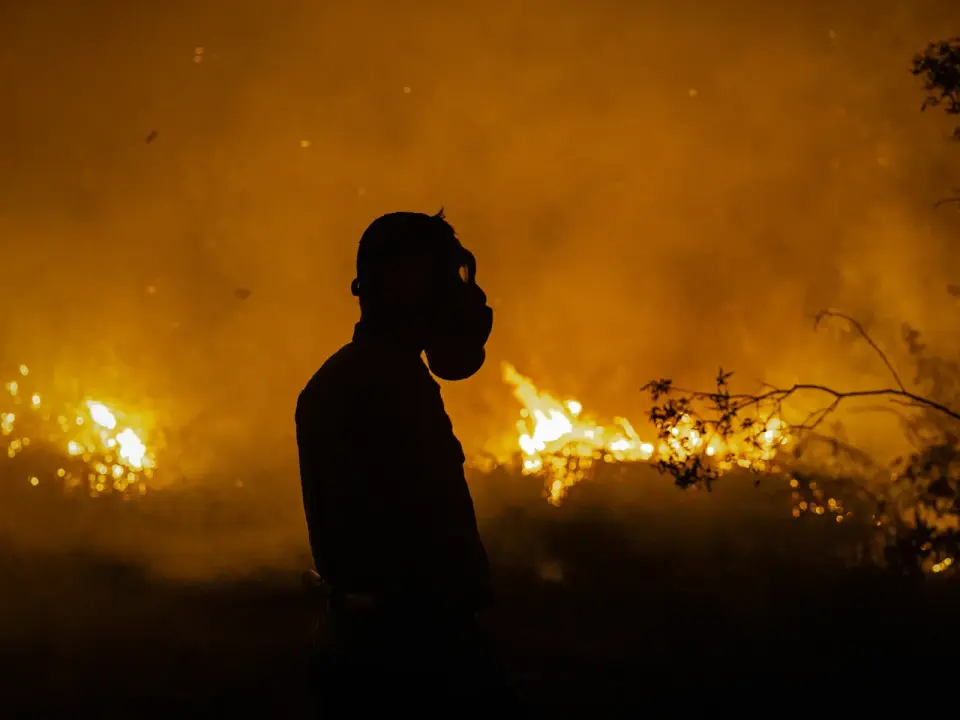
The World Meteorological Organization (WMO) has issued a stark warning that a rapidly intensifying El Nino event is set to dominate global weather patterns through 2026 and into 2027. Central Pacific sea-surface temperatures are projected to exceed 2.9 degrees Celsius above normal, a level that scientists describe as historically unprecedented for this stage of the cycle. UN Secretary-General Antonio Guterres characterized the event as 'inside the house and turning up the heat,' arguing that it is amplifying existing climate change impacts. The WMO forecasts severe consequences, including heatwaves, droughts, and floods, across Africa, Europe, Asia, and the Americas. While the phenomenon is natural, its interaction with human-induced warming is creating 'uncharted territory' for global weather systems, prompting urgent calls for immediate action on fossil fuel expansion and enhanced early-warning systems to protect vulnerable populations.
Key points
- Central Pacific sea-surface temperatures are projected to soar more than 2.9 degrees Celsius above normal, with some models suggesting this El Nino could break all-time intensity records when it peaks in late fall 2026.
- The WMO forecasts above-normal temperatures across nearly all land areas, with the most intense heat signals expected in Africa, southern Europe, the Indian subcontinent, East Asia, and South America.
- Rainfall patterns will shift dramatically: higher-than-normal rainfall is expected in southern Europe, central Asia, and parts of South America, while significant drought risks loom for India, Indonesia, Australia, and southern Africa.
- UN Secretary-General Antonio Guterres has called for an immediate halt to new coal, oil, and gas projects, stating that fossil fuel expansion is 'fanning the flames' of the crisis and that the current situation is 'only a warm-up act.'
- The WMO emphasizes that forecasts alone do not prevent hazards; governments must translate early warnings into concrete action, including improved early-warning systems and anticipatory humanitarian funding to protect vulnerable communities.
Background
This development follows earlier warnings in 2026 that a 'super' El Nino was likely, with NOAA forecasters previously assigning a high probability of strong conditions through December 2026. Recent extreme weather events, including record-breaking heatwaves in the UK and devastating wildfires in France and Spain, have already demonstrated the compounding effects of climate change. Additionally, earlier in July, researchers recorded Earth's coldest temperature in years at Antarctica, highlighting the complex and non-uniform nature of global climate trends even as El Nino drives overall warming.
How outlets are covering it
While all sources agree on the severity of the El Nino event, they emphasize different aspects of the crisis. Al Jazeera and AP News focus heavily on the political dimension, highlighting Guterres' demand for an end to fossil fuel expansion and his criticism of the 'deliberate campaign' by the industry to deny climate risks. The Guardian provides a more detailed meteorological breakdown, noting that while the WMO avoids the term 'super El Nino,' the event is significantly stronger than usual, with specific concerns about India's monsoon failure. UN News shifts the focus to the humanitarian impact, detailing how El Nino affects different regions differently (floods in East Africa vs. drought in Southern Africa) and highlighting the success of anticipatory funding models that have already reached millions of people. AP News also notes the scientific uncertainty, stating that while models predict record intensity, this is not guaranteed, and that the heat released by the ocean will persist even after the El Nino ends.
Why it matters
The intensification of El Nino represents a critical tipping point for global climate stability, potentially leading to record-breaking temperatures and severe food insecurity. The convergence of El Nino with long-term global warming threatens to exacerbate existing humanitarian crises, particularly in regions already vulnerable to drought and flooding. The UN's call for immediate action on fossil fuels and enhanced early-warning systems underscores the urgency of addressing the root causes of climate change to mitigate the impacts of this and future El Nino events.
What to watch
In the coming months, the WMO will continue to monitor the El Nino's progression, with the peak expected in late fall 2026. Governments and humanitarian agencies are expected to implement anticipatory action plans, including cash transfers and drought-resistant farming support, to mitigate the impacts of the event. The UN will likely continue to pressure nations to halt new fossil fuel projects and invest in climate resilience infrastructure. Scientists will also continue to track the long-term effects of the El Nino on global temperatures and weather patterns, with the potential for record-breaking heat in the Northern Hemisphere next summer.
- Powerful El Nino to intensify heat on ‘a planet already on fire’: UN Al Jazeera
- India’s monsoon rains in danger as UN chief warns planet is ‘on fire’ The Guardian
- UN weather agency warns strong El Nino to intensify from August Reuters
- UN, scientists warn that strong El Nino will add fuel to ‘a planet already on fire’ AP News
- The climate pattern putting millions at risk: El Niño explained UN News
Want the full story? Read the original reporting
Read on Al Jazeera