
COP31 Leaders Warn of 'Overworld' Collapse as US Absence and Fossil Fuel Profits Deepen Climate Crisis
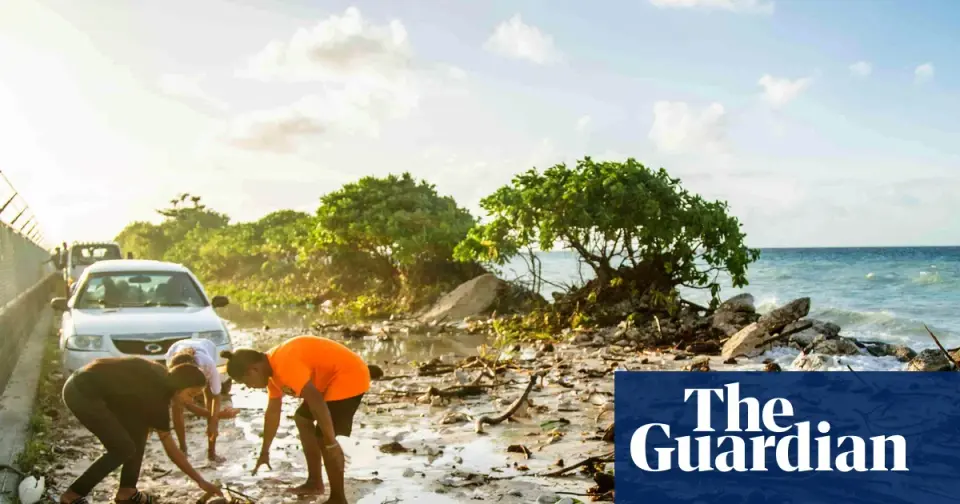
At the COP31 summit in Antalya, Turkey, world leaders and UN officials warned that failing to act urgently on climate change will render the current world unrecognizable. The summit, co-hosted by Turkey and Australia, featured impassioned speeches from Pacific Island nations and UN Secretary-General António Guterres, who called for a windfall tax on fossil fuel profits. The United States, the world’s largest historical emitter, skipped the talks for the second consecutive year, a move criticized by California Governor Gavin Newsom, who attended to promote state-level climate leadership. Despite the urgency, major emitters like China and Europe were absent, and the summit focused on implementing existing pledges rather than new binding agreements, amid record-breaking global temperatures and a strengthening El Niño.
Key points
- UN Secretary-General António Guterres accused the fossil fuel industry of delaying climate action and called for a windfall tax on profits from the Iran war, stating that 'fossil fuels must go the way of the dinosaurs.'
- Marshall Islands President Hilda Heine warned that overshooting the 1.5°C Paris target is 'a debt of heat' borrowed against future generations, citing visible coral bleaching in her home island.
- The United States skipped COP31 for the second year in a row, with President Trump refusing to send a delegation, a move criticized by California Governor Gavin Newsom, who attended to highlight state-level climate policies.
- Major leaders including China’s Xi Jinping, France’s Emmanuel Macron, and Germany’s Friedrich Merz were absent, with some attending an AI conference in Ireland instead, leaving the summit with a 'threadbare' attendance of 91 national leaders.
- Turkey’s President Recep Tayyip Erdoğan called for action over promises but celebrated the discovery of two new oilfields with an estimated 135 million barrels of in-situ potential just days before the summit.
- The UN Environment Programme confirmed that overshooting the 1.5°C limit is now inevitable, with the world on track for 2.6°C to 2.8°C warming even if all current pledges are met.
Background
COP31 opens in Antalya, Turkey, co-hosted by Australia, amid record-breaking global temperatures and a strengthening El Niño event. The summit follows a WMO report confirming 2026 is on track to be one of the warmest years on record, with global temperatures averaging 1.47°C above pre-industrial levels. Previous coverage noted that the US has withdrawn from the UN climate convention, and the IPCC faces a funding crisis, raising concerns about scientific guidance for negotiators. The summit focuses on implementing existing pledges rather than new agreements, with debates centered on climate finance and fossil fuel phase-outs.
How outlets are covering it
The Guardian and Al Jazeera emphasized the urgency of climate action, with Guterres and Pacific Island leaders warning of catastrophic consequences if fossil fuels are not phased out. The New York Times highlighted the US absence as a critical gap in global climate efforts, noting that other nations are trying to fill the void. The Los Angeles Times focused on California Governor Gavin Newsom’s attendance as a contrast to the federal government’s inaction, framing California’s climate leadership as a proxy for the US. Perspectives diverged on the effectiveness of the summit, with some leaders calling for immediate action and others noting the lack of new binding agreements. The Guardian and Al Jazeera criticized the fossil fuel industry’s influence, while the New York Times and Los Angeles Times focused on the political implications of the US absence and state-level leadership.
Why it matters
The COP31 summit underscores the growing gap between climate pledges and actual action, with the world on track to overshoot the 1.5°C Paris target. The absence of major emitters like the US and China, and the continued expansion of fossil fuel production, highlight the challenges of achieving global climate goals. The summit’s focus on implementing existing pledges rather than new agreements, combined with record-breaking temperatures and a strengthening El Niño, raises concerns about the effectiveness of international climate efforts. The political dynamics, including the US absence and state-level leadership, reflect the broader tensions between national interests and global climate responsibilities.
What to watch
The summit is expected to focus on implementing existing pledges, with debates centered on climate finance and fossil fuel phase-outs. Turkey’s push for electrification, with a target of raising electricity’s share of global energy consumption to 35% by 2035, may lead to discussions on the role of fossil fuels in the transition. The absence of major emitters and the lack of new binding agreements suggest that progress may be limited, with the focus shifting to national-level actions and state-level leadership. The summit’s outcomes will be closely watched for signs of progress or further delays in addressing the climate crisis.
- ‘The world we know is over’ without urgent climate action, leaders tell Cop31 The Guardian
- The United States Is Skipping COP31 in Turkey The New York Times
- ‘Climate crisis is outrunning us,’ UN chief Guterres says at COP31 Al Jazeera
- Newsom travels to Turkey for climate conference, blasts Trump as a ‘no-show’ Los Angeles Times
- Money, targets, ambition: Can global leaders put their money where their mouth is on climate? DW.com
Want the full story? Read the original reporting
Read on The Guardian