
Super El Niño Forecasted to Cause 857,000 Global Heat Deaths by March 2027
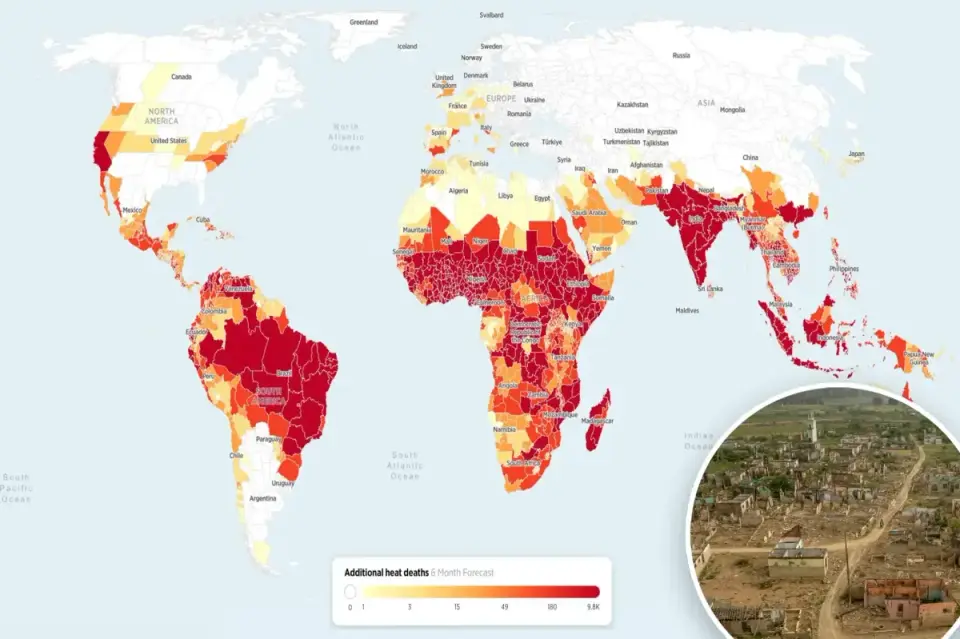
A new study projects that the current Super El Niño will cause 857,400 additional heat-related deaths globally between June 2026 and March 2027. Nigeria, India, and Indonesia face the highest risks, with sea surface temperatures in the Pacific already reaching record highs.
Key points
- The Climate Impact Lab estimates 857,400 additional heat deaths from June 2026 to March 2027, a significant increase from previous projections.
- Nigeria is projected to suffer the most casualties, with 56,000 additional deaths, followed by India (55,200) and Indonesia (29,300).
- Sea surface temperatures in the Niño 3.4 region are 3.4°C above normal, with the World Meteorological Organization warning of potential temperatures six times higher than a typical El Niño.
- The phenomenon is expected to last nine to 12 months, causing droughts in some regions and heavy rainfall in others, impacting agriculture and water supplies.
- Experts advise preventive measures such as staying hydrated, using drought-tolerant crops, and monitoring official weather forecasts to mitigate risks.
Background
This development follows recent extreme weather events, including Super Typhoon Champi and record-breaking rainfall at Iguazú Falls, both linked to the current El Niño. The Climate Impact Lab’s new 'El Niño Heat Mortality Tracker' provides a detailed map of regions most at risk, building on earlier warnings from the World Meteorological Organization about the unprecedented strength of the current event.
How outlets are covering it
The New York Post highlights the global scale of the crisis, emphasizing the 857,400 death toll and the record-breaking sea surface temperatures. Punch Newspapers focuses on the local impact in Nigeria, particularly in Gombe State, where experts warn of drought, crop failure, and heat-related illnesses. SwitSalone broadens the perspective to West Africa, noting that while Sierra Leone is not in the top five for deaths, it faces risks to agriculture and food security. TVC News provides a comprehensive overview of El Niño’s effects in Nigeria, stressing the importance of preparedness and the variability of impacts across different regions. All sources agree on the severity of the event but differ in their focus, with some emphasizing global mortality and others highlighting regional agricultural and health risks.
Why it matters
The Super El Niño poses a significant threat to global health and food security, with the potential to cause hundreds of thousands of additional deaths. The uneven distribution of risks, with developing nations bearing the brunt, underscores the need for international cooperation and local preparedness. Understanding the specific impacts on agriculture, water supplies, and public health is crucial for mitigating the effects of this climate phenomenon.
What to watch
The Climate Impact Lab will update its forecasts monthly, providing more detailed projections for the next six months. Governments and communities are expected to implement preventive measures, including improved early-warning systems, water conservation techniques, and public health initiatives. The World Meteorological Organization will continue to monitor sea surface temperatures and provide updates on the El Niño’s development, with a focus on reducing the impact of extreme weather events.
- Apocalyptic Super El Niño map shows where most people will die from record-breaking calamity New York Post
- Expert warns Gombe, other states of severe heat, drought risks Punch Newspapers
- El Niño Could Claim 451,000 Lives Worldwide: What This Means for Sierra Leone SwitSalone
- El Niño: Meaning, Causes, Coping Mechanism Of Climate Phenomenon TVC News
- El Niño: Early Warning Must Lead To Early Action Follow official weather and flood warnings. Drink adequate safe water. Reduce strenuous activity during the hottest periods. Pay attention to children, older persons and people with existing health conditions. K Facebook
Want the full story? Read the original reporting
Read on New York Post