
Israel kills Hamas Rafah commander two months after predecessor's death as ceasefire stalls
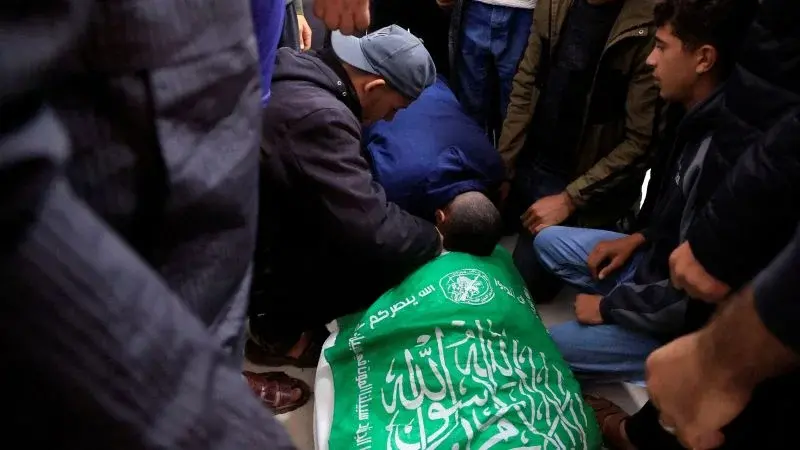
Israeli forces killed Samir Abu Younis, the commander of Hamas’s Rafah Brigade, in a strike in southern Gaza on Saturday. Abu Younis, who joined the armed wing in 1991, was identified by both sides as a key planner of the October 7, 2023, attack. His death occurs just two months after his predecessor was killed, highlighting continued Israeli operations despite a US-brokered ceasefire. The strike took place in the Al-Mawasi camp, causing a fire and injuries. This incident follows a deadly attack on Nasser Hospital in Khan Younis earlier this week, which killed six people. While Israel maintains it targets Hamas leadership to demilitarize Gaza, the Board of Peace remains unable to implement its 20-point peace plan. Over 1,600 people have died in Gaza since the ceasefire began in October 2025, and humanitarian conditions worsen with winter rains flooding displacement camps.
Key points
- Samir Abu Younis, commander of Hamas’s Rafah Brigade, was killed in an Israeli strike in Al-Mawasi, southern Gaza, on Saturday.
- Abu Younis had held the position for only two months, replacing Nael Abu Obeid, who was killed in September; his predecessor Mohammad Sabaneh was killed in May 2025.
- Hamas’s Al-Qassam Brigades confirmed his death, stating he was a central figure in planning the October 7, 2023, attack, while the IDF described him as a senior terrorist leader.
- The strike occurred days after an Israeli attack on Nasser Hospital in Khan Younis killed six people, including a doctor and a child, amid claims of targeting another Hamas commander.
- The Board of Peace, overseeing the ceasefire, has made no progress on its 20-point plan, with the Palestinian technocratic committee and international security force yet to deploy.
- More than 1,600 people have been killed in Gaza since the October 2025 ceasefire, and heavy rains have flooded tens of thousands of tents, exacerbating the humanitarian crisis.
Background
This development follows a pattern of Israeli strikes targeting Hamas commanders despite a nominal ceasefire that began in October 2025. Previous archive coverage noted the killing of Abu Younis’s predecessors and the deadly strike on Nasser Hospital in early November 2026, which killed six people and injured dozens. The ongoing conflict has resulted in over 74,650 deaths in Gaza since the war began in 2023, with the current ceasefire failing to halt violence or implement governance reforms.
How outlets are covering it
CNN and BBC agree on the core facts of Abu Younis’s death and his role in the October 7 attack. However, they differ in emphasis: CNN highlights the broader stagnation of the US-brokered peace process and the Board of Peace’s failure to implement its plan, while BBC focuses on the immediate tactical details, such as the strike hitting a tent in the Al-Mawasi camp and the IDF’s claim of mitigating civilian harm. Both outlets report on the recent Nasser Hospital strike, but CNN provides more detail on the victims, including a surgeon and a child, whereas BBC notes the arrival of three injured people and a body at the hospital. Israel’s Defense Minister Israel Katz frames the strikes as necessary for demilitarization, while Hamas condemns the killing as a 'cowardly assassination.'
Why it matters
The killing of Abu Younis underscores the fragility of the current ceasefire and the continued Israeli military campaign against Hamas leadership. It highlights the failure of international peace mechanisms, such as the Board of Peace, to enforce stability or implement governance reforms in Gaza. The incident also exacerbates the humanitarian crisis, with ongoing strikes and winter rains displacing nearly two million people and damaging critical infrastructure like hospitals. The pattern of rapid command replacements suggests Hamas is maintaining its operational capacity despite significant losses, complicating any path to lasting peace.
What to watch
Israel is expected to continue targeting Hamas commanders, as stated by Defense Minister Israel Katz, until Gaza is demilitarized. The Board of Peace may face further pressure to implement its 20-point plan, including the deployment of a Palestinian technocratic committee and an international security force, though no timeline has been set. Humanitarian aid may increase as winter rains worsen conditions in displacement camps, but Israel has refused to allow heavy equipment for rubble removal, citing the need for Hamas disarmament. The situation in Gaza remains volatile, with near-daily strikes and a deteriorating humanitarian outlook.
- Israel kills senior Hamas commander in Gaza two months after killing his predecessor as ceasefire stagnates CNN
- Israel kills a top Hamas commander as Jordan sentences 3 in church attack, and other Mideast news AP News
- Saudi Arabia Intercepts Two Ballistic Missiles Launched By Yemen's Houthis | LIVE BLOG i24NEWS
- Israeli strike in Gaza kills senior Hamas commander The Hill
- Israel kills Hamas commander in strike on Gaza camp, officials say BBC
Want the full story? Read the original reporting
Read on CNN