
Ukraine's 422nd Regiment Maintains Middle-Strike Edge Amid Russian Countermeasures
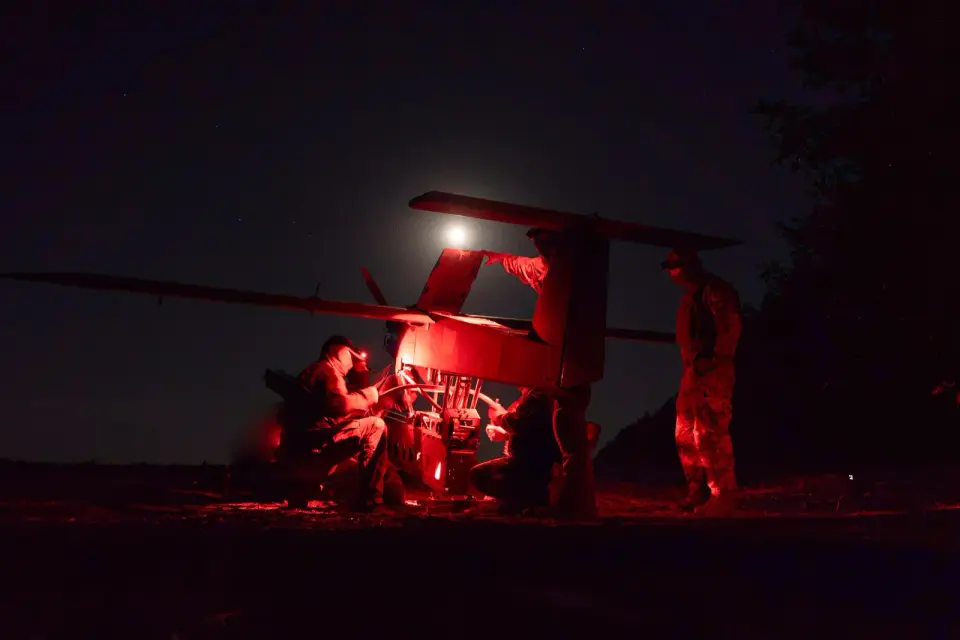
Ukraine's 422nd Unmanned Systems Regiment continues to dominate the 'middle strike' range (35-300km) using Starlink-enabled Hornet and Zozulia drones. While Russia deploys mobile fire teams and electronic jammers to counter these strikes, Ukrainian units maintain operational control by targeting Russian countermeasures first. The conflict is accelerating toward greater autonomy, with both sides integrating AI for navigation and target identification, though human oversight remains a stated priority for Ukraine.
Key points
- The 422nd Regiment, part of Ukraine's Ground Forces, operates three classes of middle-strike drones: Ram-2X, Bulava, and the US-made Hornet.
- Hornet drones, costing approximately $5,000 and equipped with Starlink terminals, are used to control the E58 highway, disrupting Russian logistics to Crimea.
- Zozulia drones carry 50kg warheads to strike static targets like substations up to 300km behind the front line, achieving meter-level accuracy.
- Russia has responded by deploying mobile fire groups and the Peresvet-M electronic warfare system to jam Starlink signals in key areas.
- Ukraine's defense ministry states that while AI assists in navigation and target identification, humans retain the final decision on engagement to limit collateral damage.
Background
This development follows Ukraine's broader expansion of drone strikes in 2026, including deep strikes on Russian refineries and the Moscow region. Earlier reports indicated Kyiv was scaling production to tens of millions of drones annually to offset limited missile stockpiles. The current focus on 'middle strikes' represents a tactical refinement aimed at strangling Russian logistics in occupied southern Ukraine, complementing the wider 'deep strike' campaign against Russian energy infrastructure.
How outlets are covering it
The Kyiv Independent emphasizes the tactical success of the 422nd Regiment in maintaining fire control despite Russian adaptations, highlighting the effectiveness of the Hornet drone. The Conversation focuses on the ethical and technical risks of the accelerating race toward fully autonomous drones, noting that while Ukraine maintains human-in-the-loop policies, the technology is moving toward systems that can operate without direct operator control. Business Insider highlights the practical driver for autonomy: Ukrainian soldiers requesting systems that reduce mental load and allow one operator to control multiple drones, a shift necessitated by heavy Russian electronic warfare. The Financial Times headline suggests the era of AI warfare has arrived, though the article content is paywalled, limiting specific details on its analysis.
Why it matters
The ability to sustain middle-strike operations is crucial for Ukraine's long-term strategy to degrade Russian logistics and force a negotiated end to the war. As both sides integrate AI and autonomous features, the balance of power may shift from sheer volume to the speed of technological adaptation and the resilience of communication networks like Starlink. The ethical implications of reduced human control in targeting present a significant risk for civilian safety and international norms.
What to watch
Ukraine aims to expand its autonomous drone capabilities, with former Defense Minister Mykhailo Fedorov predicting a future where autonomous drones fight other autonomous drones. Russia is expected to continue developing its Rassvet satellite internet system and electronic warfare jammers to counter Starlink. The outcome will depend on which side can faster integrate new technologies while maintaining operational effectiveness and ethical constraints.
- As Russia adapts to Ukraine's middle strikes, elite drone units stay ahead of the curve The Kyiv Independent
- Russia-Ukraine war is accelerating the dangerous race toward fully autonomous drones theconversation.com
- The era of AI warfare has arrived Financial Times
- Ukraine's soldiers want drones that do more on their own so one operator can control more at once Business Insider
- Kyiv has the tech brilliance to force Russia to the table — if Trump would stop backing the Kremlin | Trudy Rubin Inquirer.com
Want the full story? Read the original reporting
Read on The Kyiv Independent