
Germany's €12 Billion Long-Range Strike Arsenal: A Multi-Phase Push to Deter Russia
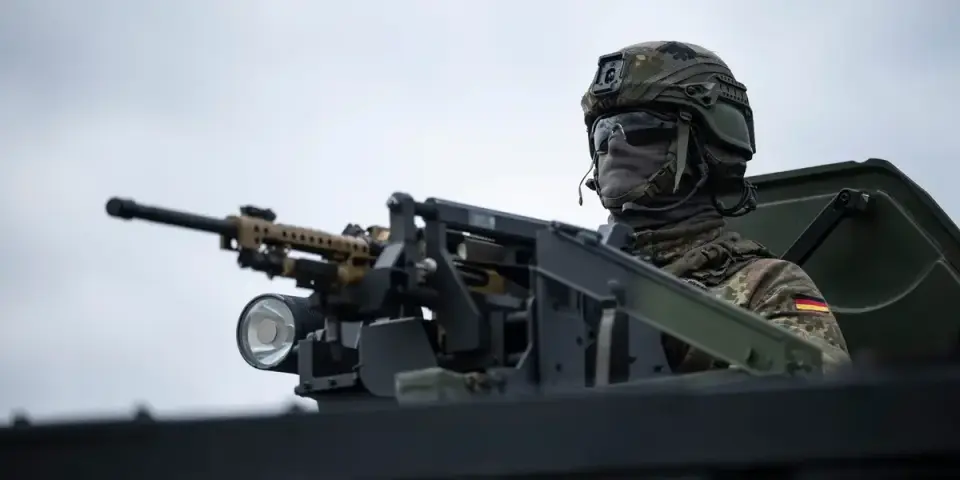
Berlin is planning a €12 billion ($14 billion) program to acquire long-range conventional weapons, aiming to strike targets deep behind enemy lines. The strategy involves a phased approach: low-cost cruise missiles by 2027, US Tomahawks by the end of the decade, and advanced hypersonic weapons developed with the UK by the mid-2030s.
Key points
- The German defense ministry has estimated a need for nearly €12 billion to build a new arsenal of long-range weapons, though the funds have not yet been approved by the Bundestag.
- The plan consists of four parts, prioritizing a low-cost, mass-producible cruise missile for fielding in 2027, with candidates including Covenant Industries' Anthem and Ukrainian-made BARS and Flamingo missiles.
- Chancellor Friedrich Merz announced an agreement with the US to acquire Tomahawk cruise missiles and Typhon launchers, aiming for initial capability by the end of the decade to bridge the gap until European systems are ready.
- Germany and the UK are jointly developing a high-end cruise missile and a hypersonic glide weapon under the Trinity House Agreement, with a targeted initial capability by the middle of the next decade.
- The hypersonic weapon project accounts for nearly €9 billion of the total estimate, while the cruise missile development is budgeted at €1.8 billion, reflecting a shift toward diversified, multi-tiered strike capabilities.
Background
This rearmament effort follows a broader European trend of increasing defense spending to counter perceived Russian threats, as noted in recent NATO discussions. It also aligns with broader Western industrial policy shifts toward rapid production of low-cost weapons, similar to US strategies for deterring China. Germany's recent budget tightening, including cuts to climate subsidies, highlights the fiscal pressures of this massive military expansion.
How outlets are covering it
While Business Insider and Politico present the plan as a necessary, strategic response to deter Russia and close capability gaps, the News.by outlet frames it as a provocative move that brings Germany closer to war. Critics, such as the BSW party, argue that the debt-financed rearmament and support for Ukraine increase the risk of conflict with Russia. The official German stance, however, emphasizes that these conventional weapons are intended to maintain deterrence 'below the nuclear threshold' and ensure that Russian forces are not safe behind the front lines.
Why it matters
This €12 billion program represents a fundamental shift in German defense doctrine, moving from a single European missile reliance to a multi-tiered arsenal. It signals a significant escalation in European military preparedness against Russia, potentially altering the strategic balance in Europe and influencing NATO's overall defense posture in the 2030s.
What to watch
The next steps involve the Bundestag's approval of the budget, finalization of contracts with missile suppliers for the 2027 low-cost missiles, and continued joint development with the UK for hypersonic weapons. The success of this plan will depend on industrial capacity and political will to sustain the high level of defense spending.
- Inside Germany's roughly $14 billion plan to deter Russia with a new arsenal of deep-strike missiles Business Insider
- Germany plans a €12B missile program to deter Putin politico.eu
- BSW: Merz Is Pushing Germany Closer to War News.by
- Germany’s long-range forecast: unsettled The International Institute for Strategic Studies
- Germany Invests €12 Billion in Its Own Cruise and Hypersonic Missiles Militarnyi
Want the full story? Read the original reporting
Read on Business Insider