
Bangladesh Garment Sector Halts Production as Wage Disputes Escalate
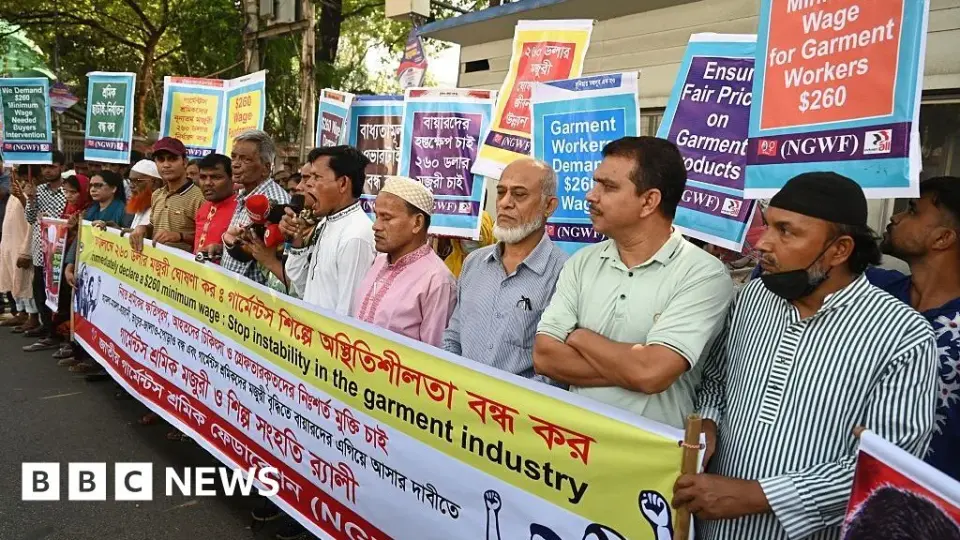
Bangladesh’s garment industry faces a severe production halt as 147 factories remain closed due to labor unrest over minimum wage increases. Factory owners have threatened to withdraw from government-led wage negotiations unless security is restored, while unions urge workers to return to jobs pending a January pay raise. Experts criticize the current ad-hoc negotiation model, calling for a permanent, data-driven wage commission to replace street protests.
Key points
- 147 factories employing roughly 300,000 workers are non-operational across Savar, Ashulia, Narayanganj, and Gazipur.
- BGMEA and BKMEA warned they will not participate in Minimum Wage Board talks on November 16 without guaranteed security for industrial units.
- Workers demand a 140% increase in the minimum wage, raising it from 12,500 takas to 33,000 takas, to combat high inflation.
- A government committee agreed in principle to a pay rise effective in January, though the exact amount remains under negotiation.
- Trade unions have called for calm, urging workers to avoid 'subversive activities' that could jeopardize ongoing talks.
Background
This crisis occurs against a backdrop of high inflation and rising global energy prices. Bangladesh is the world’s second-largest clothing exporter, with 4 million workers in 4,000 factories generating over 80% of the country’s foreign exchange earnings. Recent unrest has followed a pattern of industrial disputes where street protests have become the primary mechanism for wage negotiation, a trend critics argue erodes trust between labor and management.
How outlets are covering it
Factory owners, represented by BGMEA and BKMEA, characterize the unrest as anarchy driven by a small faction of agitators and outsiders, noting that the majority of workers wish to return to work. They cite unsafe conditions as the reason for closures, despite labor laws prohibiting arbitrary shutdowns. Conversely, labor unions and rights activists emphasize the economic necessity of the wage hike, citing rising living costs and the lack of a transparent, scientific basis for wage determination. While owners focus on security and operational continuity, unions and economists like those from the Centre for Policy Dialogue argue that the current system is fundamentally flawed, relying on bargaining rather than data, and that a permanent wage commission is needed to prevent future confrontations.
Why it matters
The closure of 147 factories threatens the livelihoods of 300,000 workers and disrupts supply chains for major global retailers. If the dispute escalates, it could impact Bangladesh’s status as a competitive manufacturing hub, particularly against rivals like India and Pakistan. The outcome of the November 16 negotiations will determine whether the industry returns to normalcy or faces prolonged instability, with potential long-term effects on foreign exchange earnings and international trade relationships.
What to watch
Factory owners will monitor the situation until November 15. If normalcy is restored, they will submit formal wage proposals at the Minimum Wage Board meeting on November 16. If unrest persists, the associations may take 'tough organizational decisions.' The government is expected to deploy law enforcement to restore order, while unions continue to urge restraint pending the committee’s final decision on the January pay rise.
- Clothing factories shut in Bangladesh as workers strike over pay BBC
- Behind Bangladesh's garment boom, workers cut food, healthcare as wages fall short Reuters
- RMG owners warn of withdrawing from wage board talks in absence of factory security Just News BD
- Textile unions call for a return to calm in Bangladesh FashionNetwork USA
- Bring data and discipline to garment wage setting The Daily Star
Want the full story? Read the original reporting
Read on BBC