
Satellite imagery confirms severe damage to Saudi pipeline, threatening global oil supply
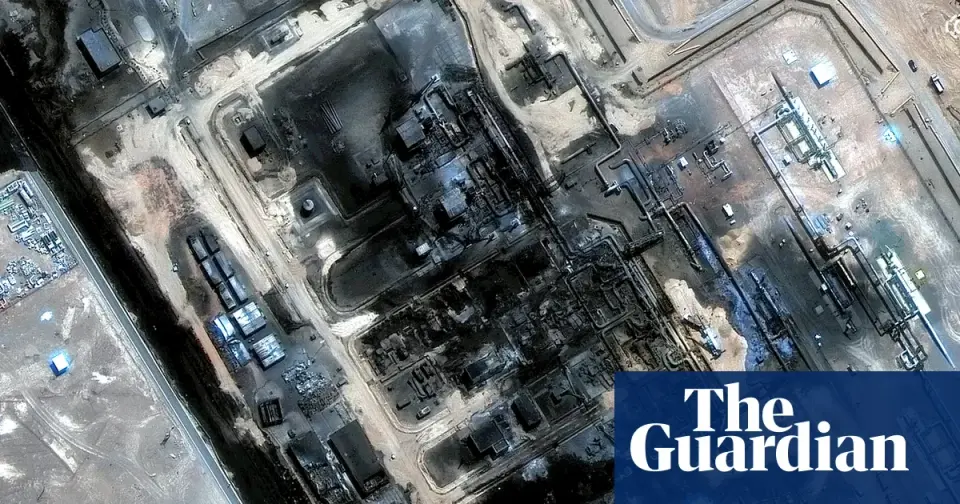
Satellite images reveal extensive damage to Saudi Arabia's critical East-West pipeline following drone strikes, threatening to cut off 4% of global oil supply within days. Brent crude has surged past $108 per barrel as repair timelines remain uncertain and diplomatic efforts to resolve the Strait of Hormuz crisis are postponed.
Key points
- Satellite photos released Sunday show a pumping station on the 1,200km East-West pipeline is charred and badly damaged after Friday's drone attacks.
- Saudi Arabia faces running out of export stocks within five to seven days if the pipeline is not restarted, potentially removing 4% of global supply.
- Brent crude prices rose 3.4% to $108 per barrel, a level not seen since May, while US diesel prices hit a record above $6 per gallon.
- A diplomatic meeting between Iran and Gulf Arab states in Oman was postponed, with officials citing the need for consensus amid escalating tensions.
- Houthi forces in Yemen have captured the strategic Perim Island in the Bab al-Mandeb strait, expanding their control over key shipping routes.
Background
This development follows a series of escalating energy disruptions in the Middle East. In September 2026, Saudi Arabia first shut the East-West pipeline after initial drone strikes, causing oil prices to spike. Earlier in the month, Houthi attacks on Saudi energy sites had already pushed Brent crude near $99 per barrel. The current crisis represents a significant escalation, as the pipeline had been serving as a crucial bypass for the Strait of Hormuz, which has been effectively closed due to the ongoing conflict involving Iran and the US.
How outlets are covering it
The Guardian and CNBC emphasize the immediate physical damage and the urgent timeline for repair, noting that Saudi Arabia has not disclosed the full extent of the damage or the expected downtime. Industry sources cited by The Guardian suggest repairs could take up to six weeks, while others believe partial pumping could resume sooner. CNN highlights the political dimension, noting that President Trump has suggested Iran is likely responsible for the attack, despite Saudi Arabia blaming militants in Iraq. The AP News source, though largely obscured by technical code, aligns with the broader narrative of mounting threats from Iran and Yemen's Houthis, underscoring the strategic vulnerability of Saudi oil infrastructure. There is a clear divergence in attribution of blame, with Saudi Arabia pointing to Iraqi militants and the US administration suspecting Iranian involvement.
Why it matters
The disruption of the East-West pipeline threatens to remove a significant portion of global oil supply, potentially exacerbating inflation and energy costs worldwide. The uncertainty surrounding repair timelines and the postponement of diplomatic talks in Oman suggest that a resolution to the broader regional conflict is unlikely in the near term. This could lead to prolonged volatility in oil markets and further strain on global economies already grappling with high fuel prices.
What to watch
Watch for official statements from Saudi Arabia regarding the extent of the damage and the expected timeline for repairs. Monitor developments in the diplomatic talks between Iran and Gulf Arab states, which may resume in the coming days. Additionally, observe any further Houthi military actions in the Bab al-Mandeb strait, which could further disrupt oil flows and escalate the regional conflict.
- Satellite images show extent of damage to major Saudi pipeline, amid global oil supply fears The Guardian
- Oil prices rise after Saudi Arabia shut down critical pipeline that bypasses Strait of Hormuz cnbc.com
- Saudi Arabia has few options as it faces mounting threats from Iran and its allies AP News
- Oil Jumps as Shutdown of Saudi Pipeline Deepens Energy Crisis bloomberg.com
- Trump says Iran likely responsible for attack that shut vital Saudi oil pipeline CNN
Want the full story? Read the original reporting
Read on The Guardian