
Hormuz Tanker Strikes Persist Amid Failed Diplomacy and Sanctions
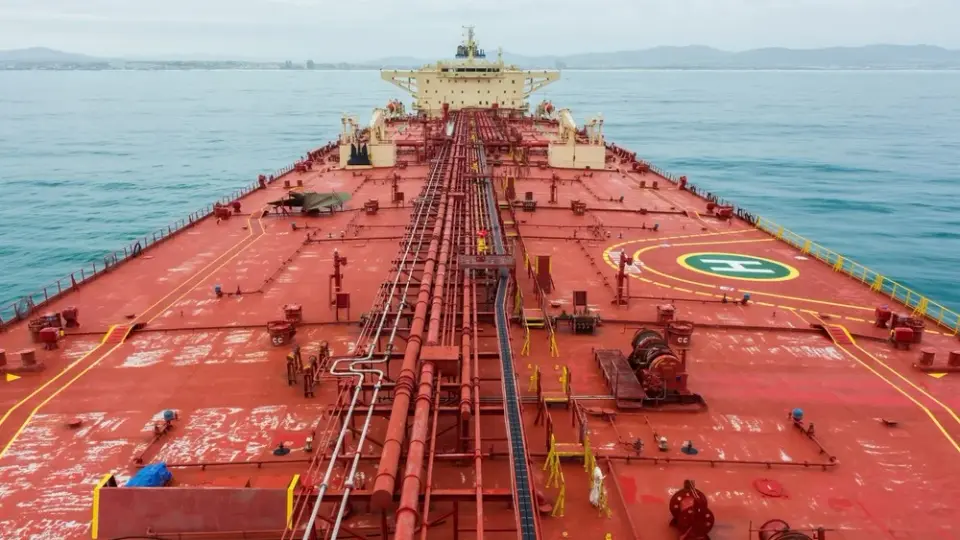
A second tanker was struck in the Strait of Hormuz within 48 hours, confirming that shipping risks remain high despite diplomatic efforts. While Iran and Oman discuss a temporary corridor, vessel traffic remains far below pre-war levels. Oil prices have fallen for three consecutive days, reflecting market optimism that the conflict is shifting from kinetic attacks to economic pressure, though physical disruptions continue.
Key points
- UK Maritime Trade Operations (UKMTO) confirmed a projectile struck a tanker in the Strait of Hormuz on Tuesday, following a similar attack off Oman on Monday.
- The targeted vessel was an Aframax carrying 704,000 barrels of jet fuel under a Liberian flag; it reached Fujairah despite the damage.
- Ship-tracking data from Kpler shows only five commodity vessels moved through the strait on Tuesday, well below the 10-day average of 15 and a fraction of pre-war levels.
- Crude oil prices hovered near $82 per barrel, marking a third straight day of losses, as traders focus on U.S. sanctions rather than immediate supply shocks.
- The USS Theodore Roosevelt Carrier Strike Group is expected to deploy to the Middle East for a minimum seven-month deployment.
Background
This incident follows a series of attacks in August 2026, including strikes on ADNOC tankers and other vessels near Oman. Previous coverage noted that while the U.S. and Iran had a memorandum of understanding in June, it has since expired, leading to renewed tensions. The current situation is part of a broader pattern where physical attacks coincide with diplomatic deadlocks and U.S. economic pressure campaigns.
How outlets are covering it
OilPrice.com emphasizes the physical reality of the crisis, noting that despite diplomatic talks between Iran and Oman, attacks continue and traffic remains depressed. They highlight that 65% of oil exports from the strait are destined for China. Fox News frames the situation through the lens of U.S. strategy, focusing on 'Operation Economic Outcast' and the deployment of the USS Theodore Roosevelt. Fox notes that oil prices are falling because the conflict is shifting to a 'less kinetic stage' of financial pressure, whereas OilPrice points to the persistent physical risk to shipping lanes.
Why it matters
The continued strikes in the Strait of Hormuz threaten global energy supply chains, particularly for China, which relies heavily on these routes. The divergence between falling oil prices and rising physical attacks indicates market uncertainty regarding the effectiveness of sanctions versus the durability of shipping disruptions. A prolonged closure or continued attacks could trigger inflationary pressures and supply shortages globally.
What to watch
Watch for the outcome of Iran-Oman talks regarding a temporary shipping corridor. Monitor the deployment of the USS Theodore Roosevelt and the impact of U.S. Treasury sanctions on Iranian oil revenue. Track vessel traffic data to see if the 'interim' reopening leads to a sustained increase in transits or if attacks continue to deter shipping companies.
- Another Tanker Struck as Hormuz Shipping Crisis Deepens Crude Oil Prices Today | OilPrice.com
- Oil prices remain low; Strait of Hormuz at center of Iran, Oman negotiations Fox News
- New Tanker Strike in Hormuz as Iran Vows Retaliation for U.S. Economic Offensive WSJ
- Yemen's Houthis say they attacked ship off Saudi Arabia's Yanbu Reuters
- Houthi strikes threaten to pull Yemen into Middle East war DW.com
Want the full story? Read the original reporting
Read on Crude Oil Prices Today | OilPrice.com