
Antarctic Ice Loss Committed Despite Emission Cuts, New Study Finds
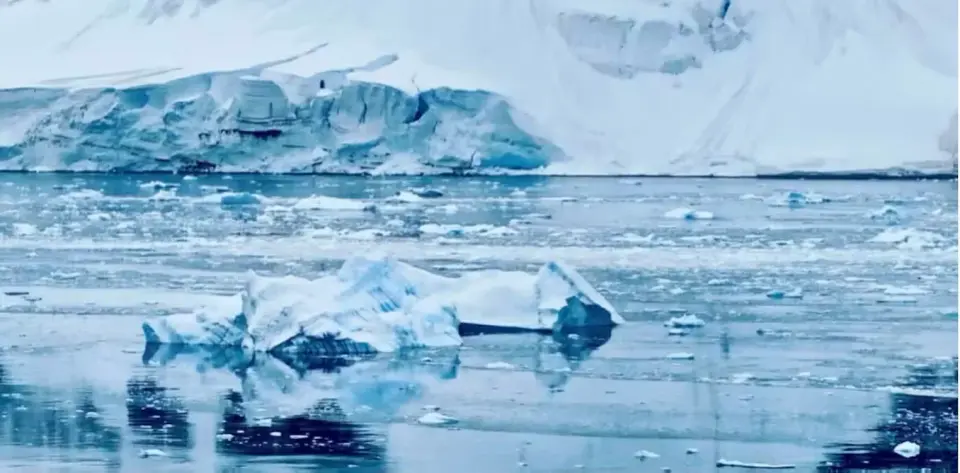
A new study in Nature Geoscience confirms that Antarctica is committed to net ice loss this century, even if global warming is limited to 1.5 degrees Celsius. While extra snowfall cannot offset melting, high emissions could trigger a domino effect adding up to 25.4 cm to sea levels by 2100, threatening coastal communities.
Key points
- Antarctica’s ice loss is locked in for the 21st century, with a 92% probability of net mass loss even under the most ambitious Paris Agreement scenarios.
- Under very high emissions, a cascading failure of ice shelves could add up to 25.4 cm to global sea levels by 2100, potentially flooding homes for over 10 million people.
- The study used machine learning to analyze hundreds of thousands of scenarios, finding that current satellite data supports the inevitability of ice loss.
- Three key uncertainties remain: how ice shelves melt, how ice slides over bedrock, and how the surrounding ocean warms.
- Antarctic winter sea ice has hit its third-lowest peak on record, signaling a systemic change in the climate system.
Background
Recent coverage has highlighted the rapid decline of Antarctic sea ice, with 2026 marking the fourth consecutive year of record-low winter peaks. While a brief snowfall anomaly in 2025 added mass to the ice sheet, experts noted this was temporary and did not alter the long-term trajectory of ice loss. The current study builds on these observations to provide a more definitive projection for the century.
How outlets are covering it
The Conversation and Rutgers University emphasize the inevitability of ice loss and the critical role of emissions in determining the speed of that loss. The Guardian highlights the immediate 'now problem' of sea ice decline, linking it to broader climate instability. The Nature article provides the technical framework, noting that while ice loss is committed, the magnitude of sea-level rise remains highly sensitive to emissions scenarios and modeling assumptions. All sources agree that extra snowfall will not save the ice sheet, but they differ in emphasis: The Conversation focuses on the 'locked in' nature of the loss, while The Guardian stresses the current observable changes in sea ice extent.
Why it matters
The findings have direct implications for coastal planning and infrastructure investment. With 1 billion people living in coastal areas, the certainty of Antarctic ice loss means that sea-level rise is no longer a future possibility but a present reality. The study’s identification of key uncertainties helps prioritize future research and adaptation strategies, ensuring that resources are allocated to the most impactful areas of climate science and policy.
What to watch
Researchers will continue to refine models by incorporating missing processes, such as ice cracking and subglacial water flow. Policy makers will use the new projections to update adaptation plans for coastal communities. The focus will shift to reducing emissions to limit the 'domino effect' of ice shelf collapse, while also improving measurements of ice-shelf melt and sliding laws to sharpen future predictions.
- Antarctica’s ice loss is locked in, and extra snowfall won’t save it – that’s bad news for low-lying coastal areas elsewhere The Conversation
- Antarctic winter sea ice falls to third-lowest level on record as scientists warn of ‘now problem’ The Guardian
- Committed Antarctic Ice Sheet mass loss by the end of the twenty-first century Nature
- U. researchers publish paper expecting Antarctica to continue losing ice through 2100 The Daily Targum
- How Cutting Emissions May Limit Antarctic Ice Loss and Protect Coastlines Rutgers University
Want the full story? Read the original reporting
Read on The Conversation