
Delhi Air Quality Hits Severe Levels Post-Diwali Despite Firecracker Restrictions
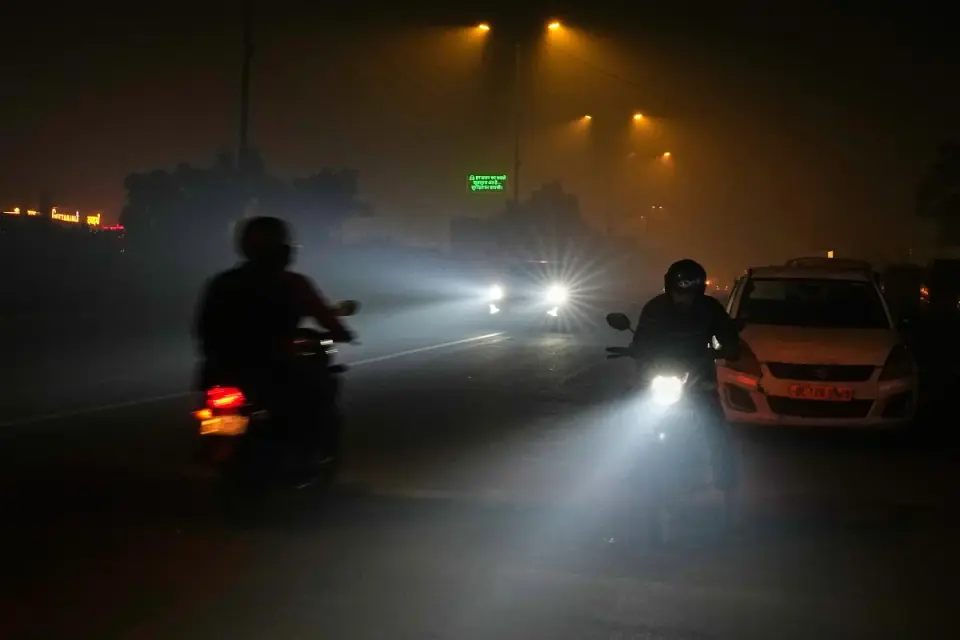
New Delhi faced severe air pollution on Monday following Diwali celebrations, with the Air Quality Index exceeding 350 in several areas. Despite Supreme Court restrictions limiting firecrackers to approved 'green' varieties, widespread use contributed to hazardous smog levels. The crisis is compounded by crop burning in neighboring states and unfavorable weather conditions that trap pollutants. Health experts criticize current government measures as temporary, urging long-term solutions like cleaner energy and stricter vehicle emission controls.
Key points
- Air Quality Index exceeded 350 in parts of New Delhi on Monday morning, reaching the severe category.
- Supreme Court restrictions limited firecrackers to approved 'green' varieties for specific three-hour windows on Saturday and Sunday.
- Residents reported health issues such as throat irritation and eye itching due to the smog.
- Pollution is worsened by crop-residue burning in Punjab and Haryana, vehicle emissions, and stagnant atmospheric conditions.
- Public health expert Shweta Narayan described government interventions as 'knee-jerk' and 'temporary' responses to pressure.
Background
New Delhi and its metropolitan region, home to over 30 million people, regularly rank among the world's most polluted areas during winter. Previous coverage noted that Diwali 2026 began with severe air quality issues, with one monitoring station recording an AQI of 1,521 on Diwali night despite restrictions. The annual crisis typically peaks in late October and November due to cooler temperatures and low wind speeds.
Why it matters
The recurring annual pollution crisis highlights the inadequacy of short-term regulatory measures in addressing systemic environmental and public health challenges. The severe health risks posed to millions of residents underscore the urgent need for long-term structural changes in energy policy and industrial regulation.
What to watch
Authorities have implemented measures such as limits on construction activity and restrictions on diesel generators, but these have not prevented the return of severe pollution. Environmentalists advocate for long-term solutions, including cleaner energy adoption and stricter controls on vehicle emissions, to prevent the annual crisis.
Want the full story? Read the original reporting
Read on AP News