
Global mangrove forests shift from net loss to net gain after 2010
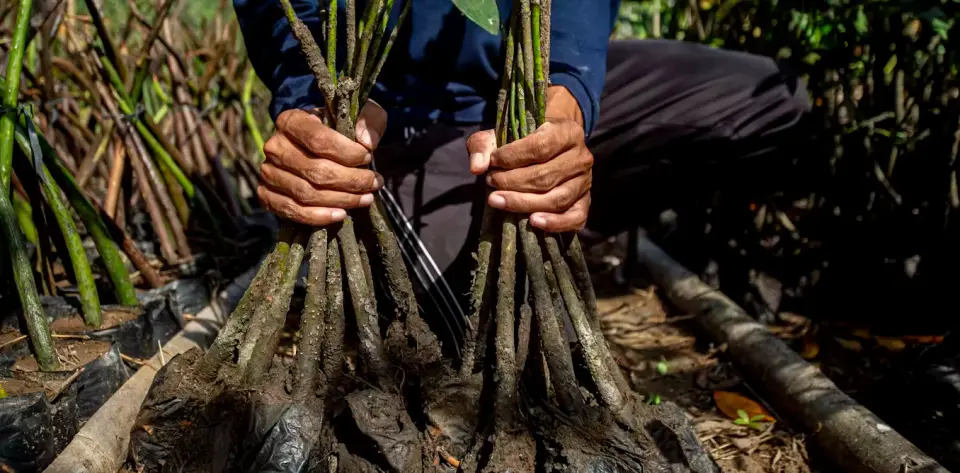
Global mangrove forests have reversed decades of decline, shifting from net loss to net gain around 2010. A study analyzing four decades of satellite data shows that while overall area remains slightly below 1980 levels, expansion in new tidal flats and regeneration in former sites have offset previous destruction. This recovery supports coastal protection and carbon storage, though canopy thinning in existing forests remains a concern.
Key points
- Mangrove extent shifted from net loss to net gain globally around 2010, with total area in 2023 approximately 0.5% below 1980 levels.
- Expansion is driven primarily by natural seaward growth on newly formed mud flats, facilitated by sediment accumulation from rivers.
- Mangroves store roughly four times more carbon than other land-based forests and provide habitat for species like barramundi and proboscis monkeys.
- Despite area gains, canopy thinning and degradation in existing forests remain widespread, driven by human activity and extreme weather.
- Myanmar and Indonesia, former hotspots of loss, have stabilized mangrove protection following the 2004 tsunami and 2008 cyclone Nargis.
Background
Mangroves were historically cleared for rice paddies, oil palm plantations, and aquaculture, losing over 12,000 square kilometers between the 1980s and 2010. Recent coverage highlights the critical role of forests in climate resilience, including studies on aspen groves acting as firebreaks and the impact of heat on tree growth, underscoring the broader importance of forest ecosystems in mitigating climate risks.
How outlets are covering it
The Conversation emphasizes the regional variations in recovery, noting that Australia's expansion is partly due to mangroves moving inland on floodplains, which threatens freshwater ecosystems for Traditional Owners. Earth Day highlights the economic value of mangroves, citing US$894 billion in ecosystem services and protection for 15 million people from flooding. Both sources agree that while area is increasing, canopy degradation remains a significant issue, with Earth Day attributing this to tropical cyclones and The Conversation pointing to harvesting and pollution.
Why it matters
The recovery of mangroves is crucial for climate mitigation and coastal protection, as they store significant carbon and buffer against storms. However, the uneven nature of this recovery and ongoing canopy thinning mean that continued conservation efforts are necessary to ensure these ecosystems can fully recover and provide their vital services to coastal communities and biodiversity.
What to watch
Further research is needed to understand the mechanisms driving mangrove expansion and to guide restoration efforts. Organizations like the Global Mangrove Alliance are working to raise awareness and support policies that strengthen mangrove protection. Long-term monitoring will be essential to track the health of newly established forests and ensure they develop into resilient, mature ecosystems.
- The world’s mangrove forests are bouncing back. That’s good news for our coasts and climate The Conversation
- Global Mangrove Alliance Releases 16-Nation Policy Case Study Collection ecomagazine.com
- Restoring mangroves, opening the door to coastal resilience in Côte d'Ivoire and Ghana habitat.org
- Mangroves: Critical habitats under threat Anna Maria Island Sun
- After Decades of Decline, Mangroves Are Finally Growing Back Earth Day
Want the full story? Read the original reporting
Read on The Conversation