
Peru grants stingless bees legal rights, a global first for insects
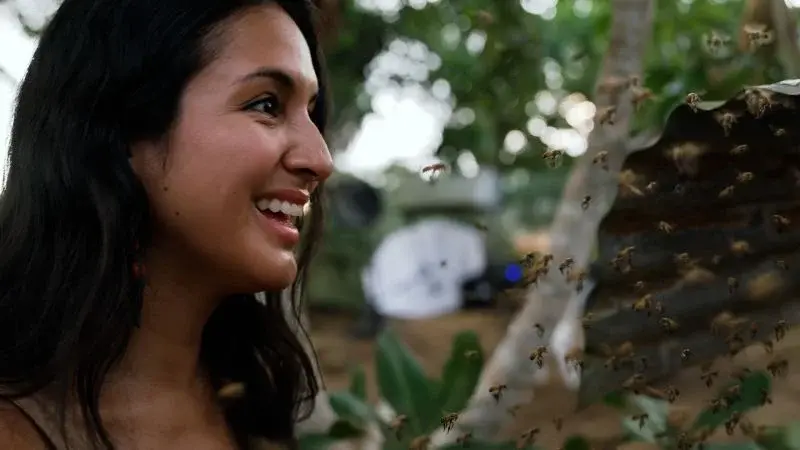
Peru has become the first country to grant legal rights to an insect species. Municipalities in Satipo and Nauta passed the Declaration of Rights of Amazonian Stingless Bees in late 2025 and early 2026. The legislation, driven by biologist Rosa Vásquez Espinoza and Indigenous Asháninka leaders, recognizes the bees' right to exist, thrive, and have a healthy environment. This move aims to protect the 175 species found in Peru from deforestation and pesticides, while supporting Indigenous communities that rely on their honey for medicine and food.
Key points
- The Declaration of Rights of Amazonian Stingless Bees was passed by Satipo in October 2025 and Nauta in January 2026.
- The legislation grants bees the right to exist, thrive, and have a healthy environment free from pollution and invasive species.
- Rosa Vásquez Espinoza, founder of Amazon Research Internacional, was named a 2026 Rolex Awards Laureate for this work.
- The initiative was developed in collaboration with the Earth Law Center and Indigenous groups like EcoAsháninka.
- Two additional municipalities in the Cuzco Region, Pichari and Unión Ashaninka, have also adopted the law.
- No court cases have been filed yet, but authorities are implementing workshops, school curricula, and local markets to support conservation.
Background
This development follows a broader international trend of granting legal personhood to natural entities, such as the Mar Menor Lagoon in Spain (2022) and Peru's Marañón River (2024). It also aligns with recent high-profile environmental advocacy in Peru, including Pope Leo XIV's 2026 visit to the Amazon, where he condemned the killing of environmental defenders and urged protection of Indigenous communities and natural resources.
How outlets are covering it
CNN and Mezha.net emphasize the legal milestone and the collaborative effort between scientists and Indigenous groups. Wallpaper* and freeyork focus on Rosa Vásquez Espinoza's personal journey, her 2026 Rolex Award, and her future goal of creating a multi-country conservation corridor. All sources agree on the core facts but differ in emphasis: CNN highlights the legal mechanism, while Wallpaper* and freeyork highlight the cultural and economic integration of Indigenous knowledge and the long-term sustainability of the project.
Why it matters
This is the first time an insect has been granted legal rights globally, setting a precedent for nature rights movements. It provides a legal framework for Indigenous communities to protect their traditional livelihoods and biodiversity. It also demonstrates how scientific research and Indigenous knowledge can be combined to create enforceable environmental protections, potentially influencing similar laws in other countries.
What to watch
The next step is to implement an action plan for enforcement, including defining penalties for violations like cutting down trees with protected beehives. Espinoza hopes municipal governments will approve these regulations in 2026. She also aims to expand the initiative into a Stingless Bee Conservation Corridor spanning Peru, Bolivia, Colombia, and Brazil. Organizations from 14 countries have already expressed interest in replicating the framework.
- How stingless bees in Peru became the world’s first insects to be granted legal rights CNN
- Peruvian municipalities grant stingless bees legal rights, a first for insects Mezha.net
- Meet Rosa Vasquez Espinoza, a 2026 Rolex Awards laureate setting conservation abuzz Wallpaper*
- Rosa Vásquez Espinoza’s Stingless Bee Research Wins Legal Rights in Peru freeyork
Want the full story? Read the original reporting
Read on CNN