
UK's rarest raptor breeds again as scientists tag chicks for migration tracking
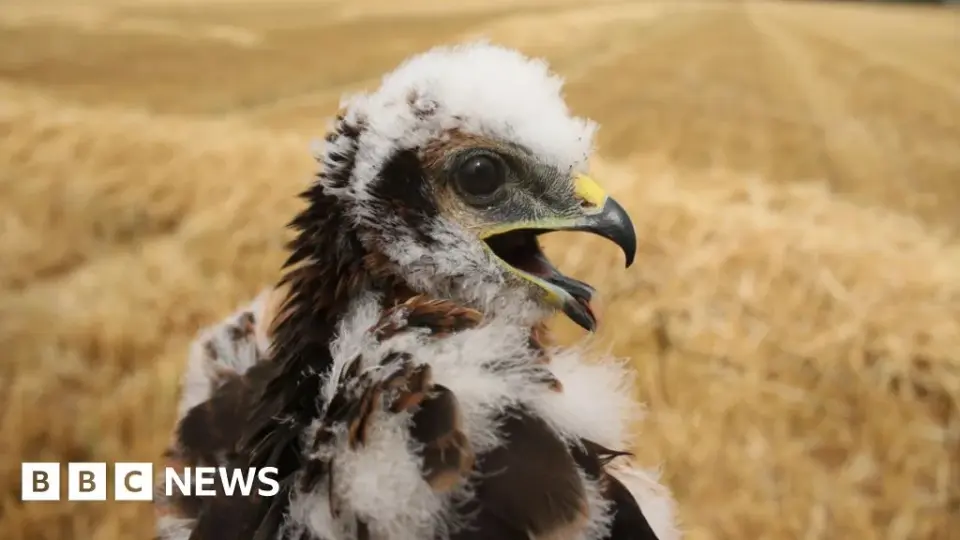
A male Montagu's harrier, known as 'AU', successfully raised six chicks across two nests in England this summer, marking the second consecutive year of breeding for the UK's rarest bird of prey. The Royal Society for the Protection of Birds (RSPB) reported that the 10-year-old male mated with two different females, with each nest producing three young. Conservationists have fitted two of the juvenile females with satellite tags to track their migration to Africa, a first for the species in the UK. This success follows a five-year gap in breeding and a decline from nine successful nests in 2011 to zero between 2020 and 2024. The birds were protected by fences to keep out predators, and farmers were involved in monitoring the nests to prevent accidental destruction by machinery. The return of three juveniles from last year's brood to Britain this summer offers further hope for the species' recovery.
Key points
- A male Montagu's harrier, identified by the leg ring 'AU', bred with two different females, producing six chicks in total across two nests in England.
- This is the second consecutive year of successful breeding for the species in the UK, following a five-year gap with no evidence of successful nesting between 2020 and 2024.
- The RSPB and farmers protected the nests with fences to exclude ground predators like foxes and to prevent accidental destruction by farm machinery during harvest.
- For the first time, two juvenile females were fitted with satellite tags costing £3,000 each to track their migration routes to West Africa and monitor their survival.
- Three juveniles from last year's brood, named 'JJ', 'JP', and 'JO', were recorded in Britain this summer, potentially joining the breeding population if they return next spring.
- The Montagu's harrier was added to the UK Red List in 2021, and numbers have declined from a high of nine successful nests in 2011 to zero between 2020 and 2024.
Background
Montagu's harriers are slender, long-winged raptors that migrate to Africa in winter and return to Europe to nest in agricultural fields over summer. They are the UK's rarest bird of prey, with numbers declining significantly in recent years. The species was added to the UK Red List in 2021, and there was no evidence of successful breeding between 2020 and 2024. The latest breeding success is part of a broader effort by conservationists to protect the species and understand its migration patterns.
How outlets are covering it
The BBC and BirdGuides both report on the successful breeding of the Montagu's harrier in England, highlighting the role of the RSPB and farmers in protecting the nests. The BBC emphasizes the spectacle of the male's feeding behavior and the importance of satellite tagging for understanding migration. BirdGuides provides more detail on the individual birds, including the names of the juveniles from last year's brood and the cost of the satellite tags. Both sources agree on the significance of the breeding success and the need for continued conservation efforts.
Why it matters
The successful breeding of the Montagu's harrier in the UK is a significant conservation achievement, as the species is on the brink of extinction. The satellite tagging of the juveniles will provide unprecedented insight into their migration patterns and survival, which is crucial for developing effective conservation strategies. The involvement of farmers in protecting the nests highlights the importance of collaboration between conservationists and local communities in preserving rare species.
What to watch
The satellite tags will allow conservationists to track the migration routes of the juvenile Montagu's harriers to West Africa and monitor their survival. The return of the juveniles from last year's brood to Britain this summer is a positive sign, and if they return next spring, they could join the UK's tiny breeding population. Conservationists will continue to monitor the nests and work with farmers to protect the birds from accidental destruction by farm machinery.
- UK's rarest bird of prey rears new chicks in secret location BBC
- Polyamorous bird of prey ‘single-handedly’ reviving species The Times
- Britain’s rarest bird successfully rears six chicks in secret location The Independent
- Montagu’s Harrier chicks tagged for the first time in UK RSPB
- Six Montagu's Harrier chicks fledge from two English nests in 2026 BirdGuides
Want the full story? Read the original reporting
Read on BBC