
Short-Necked Oil Beetle Confirmed Breeding in Wales After Decades of Absence
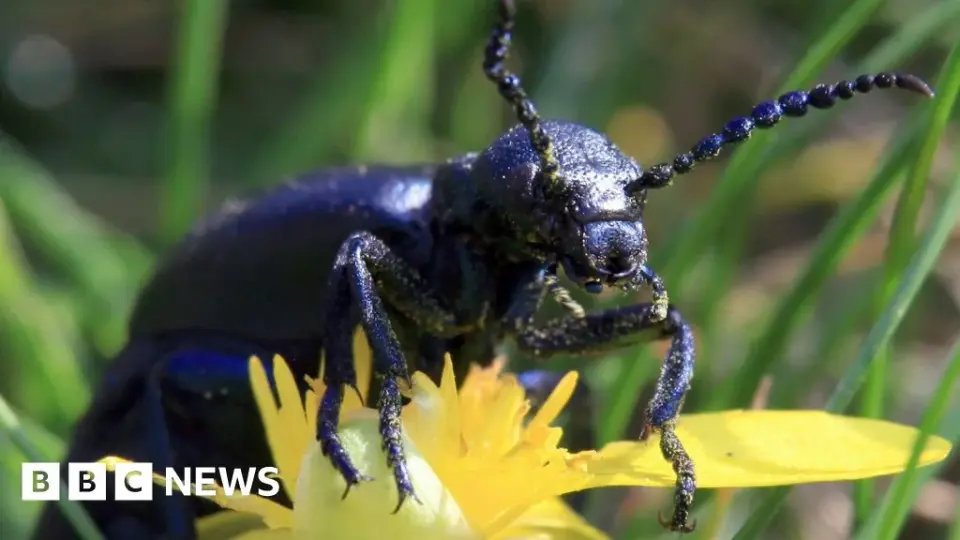
The Short-Necked Oil Beetle has been rediscovered in Pembrokeshire after a 60-year absence, with 2026 surveys confirming active breeding at Castlemartin Range. This marks a significant recovery for a species previously on the brink of extinction in the UK due to habitat loss.
Key points
- Larvae were found at Castlemartin Range in 2026, confirming breeding after only dead adults were seen in 2022 and 2025.
- The species, which secretes an oily substance from its knees when alarmed, relies on solitary bees for its lifecycle.
- Castlemartin is currently the only known site in Wales for this beetle, which is listed as vulnerable on the IUCN Red List.
- The discovery is part of the Natur am Byth flagship species recovery programme, which also protects the shrill carder bee and goldilocks aster.
Background
The Short-Necked Oil Beetle had not been reported in the UK since 1948, with populations rediscovered in Devon in 2006 and various Scottish islands later. Previous surveys in Wales found only dead adults, raising concerns about the species' viability in the region.
How outlets are covering it
BBC and The Guardian emphasize the 60-year gap since the last UK sighting, highlighting the species' near-extinction status. InYourArea and Nation.Cymru focus on the specific success of the 2026 survey in confirming breeding, noting that previous years only yielded dead specimens. All sources agree on the critical role of solitary bees and the specific habitat requirements at Castlemartin Range.
Why it matters
This discovery signals a potential recovery for a nationally rare species and validates the long-term conservation efforts of the Bumblebee Conservation Trust and Natural Resources Wales. It demonstrates that targeted habitat management can support vulnerable species with complex lifecycle dependencies.
What to watch
Conservationists will continue monitoring Castlemartin Range to ensure the beetle population remains viable. The Natur am Byth programme will maintain its focus on the interdependent species sharing this habitat, including the shrill carder bee.
- 'Fascinating' rare beetle found in Wales again after three year search BBC
- Rare beetle that oozes substance from its knees when attacked rediscovered in Wales The Guardian
- Rare hitchhiking creature discovered clinging to life in hidden coastal haven InYourArea
- Patience pays off for rare species in only Welsh location Nation.Cymru
- Rare Oil Beetle Is Breeding Again in Wales After Decades Missing Around Prague
Want the full story? Read the original reporting
Read on BBC