
Switzerland loses nearly 20% of its glacial ice in five years amid record heat
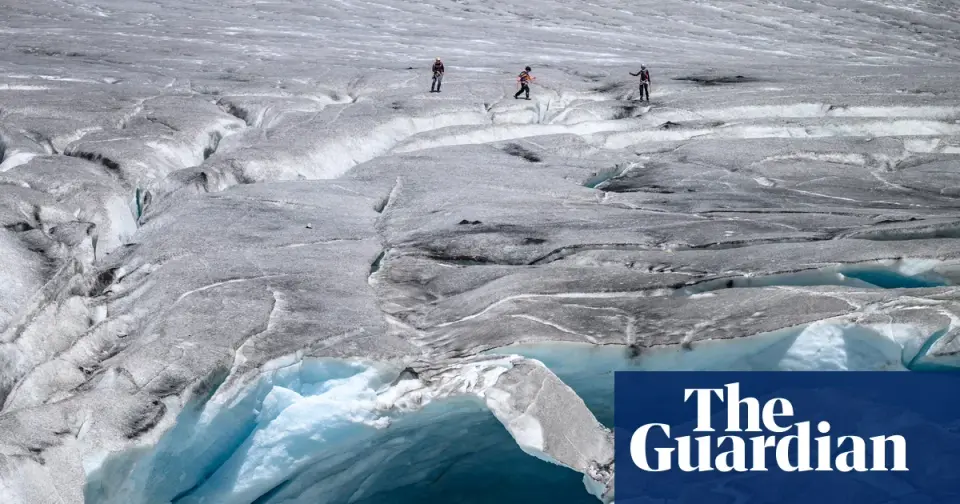
Switzerland has lost approximately 19.4% of its glacial ice since 2021, with a 5.5% reduction recorded in the first eight months of 2026. This rapid retreat, driven by record-breaking heat and low winter snowfall, has transformed many glaciers into barren rock landscapes. Scientists warn that internal ice collapse and reduced water reserves threaten the country's tourism, hydropower, and drinking water supplies.
Key points
- Swiss glaciers lost 5.5% of their ice volume in the 2026 hydrological year, bringing the total loss since 2021 to 19.4%.
- The 2026 summer was the hottest and driest on record since 1864, exacerbating melt rates that nearly matched the 2022 record.
- Glaciers are collapsing from the inside due to internal streams excavating caverns, rather than just retreating from surface heat.
- Between July and September 2026, glaciers lost 2.2 trillion litres of water, equivalent to four times the annual drinking water consumption of Swiss households.
- Smaller glaciers are disappearing entirely, while larger ones are shrinking significantly, impacting tourism and hydropower infrastructure.
Background
Switzerland's glaciers have been under increasing stress in recent years. In August 2026, the melting of the Trift Glacier exposed the remains of two Belgian climbers who had been missing since 1992, highlighting the physical changes occurring in the Alps. This latest report follows a trend of accelerating ice loss, with 2022 previously holding the record for the worst single-year melt. The current data confirms that the pace of retreat is now unprecedented, moving from gradual recession to rapid disintegration.
How outlets are covering it
The Guardian and Al Jazeera both emphasize the dramatic physical transformation of the landscape, describing former glaciers as 'moonlike rock deserts' and noting the collapse of ice from the inside. The Washington Post highlights the unprecedented nature of the losses, noting that some glaciers exceeded the 2022 record. While all sources agree on the severity of the loss, Al Jazeera places greater emphasis on the economic and infrastructural consequences, specifically citing the impact on hydropower and drinking water supplies, whereas The Guardian focuses more on the scientific mechanisms of internal ice collapse. The Washington Post frames the issue primarily as a climate change signal, while Al Jazeera discusses the potential for saving one-third of remaining ice if emissions are rapidly reduced.
Why it matters
The rapid loss of glacial ice in Switzerland has immediate implications for the country's economy, which relies heavily on tourism and hydropower. The reduction in water reserves threatens drinking water supplies and energy production. Furthermore, the accelerated melt rates indicate that the Alps are warming twice as fast as the global average, serving as a critical indicator of broader climate change impacts in Europe. The disappearance of smaller glaciers also increases the risk of natural hazards such as landslides and floods.
What to watch
Scientists project that if emissions are not rapidly reduced, Swiss glaciers could lose more than 90% of their volume by 2100. Even in scenarios with limited warming, significant ice loss is expected. The coming years will likely see further reductions in water supply during summer months, as glaciers become too small to provide adequate meltwater. Continued monitoring will be essential to track the collapse of remaining ice structures and their impact on local ecosystems and infrastructure.
- ‘Explosion of melt rates’: 20% of Swiss glaciers lost in five years The Guardian
- Swiss Glaciers Vanished by Nearly a Fifth in Recent Years, Scientists Say The New York Times
- Switzerland’s glaciers are losing an astonishing amount of ice. See the meltdown. The Washington Post
- How Switzerland lost 20 percent of its ice in five years Al Jazeera
- 'Catastrophic': Swiss glaciers lose fifth of mass in five years Yahoo
Want the full story? Read the original reporting
Read on The Guardian