
US-Iran Conflict Enters New Phase of Sustained Naval and Economic Pressure
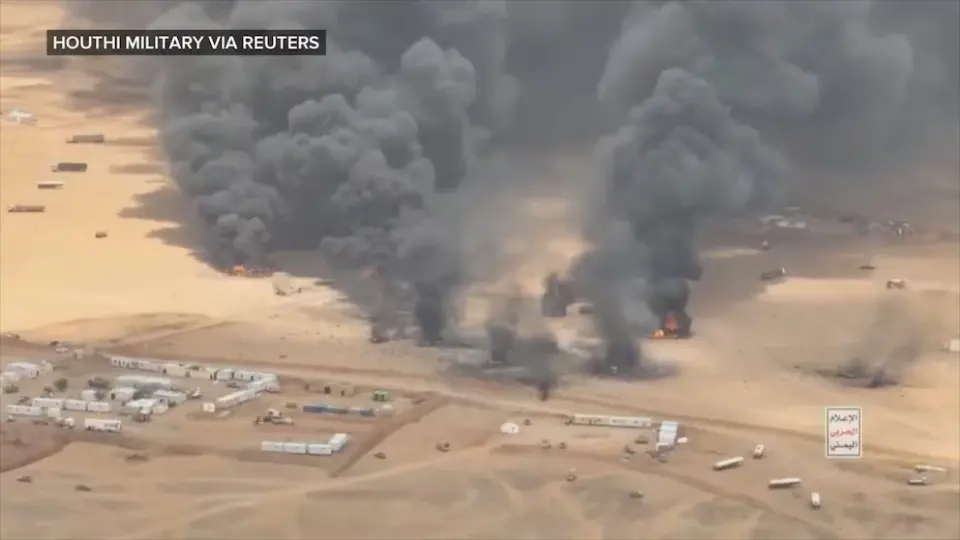
The United States and Iran are engaged in a sustained conflict characterized by periodic military strikes and economic strangulation. US Central Command has destroyed multiple Iranian tankers in response to attacks on US Navy vessels, while Admiral Brad Cooper warned that further IRGC aggression will incur higher economic costs. Analysts describe this cycle of strikes as the 'new normal,' with the US maintaining near-total control of the Strait of Hormuz to choke Iran’s economy. Despite claims of Iranian resilience, US officials assert that Tehran’s military capabilities are significantly degraded, though concerns remain regarding Russian and Chinese support for the regime.
Key points
- US Central Command struck three Iranian tankers on September 5, followed by the destruction of five more on September 8, in direct response to IRGC ballistic missile attacks on US Navy warships.
- Admiral Brad Cooper stated that if the IRGC attacks US ships, the US will impose a higher economic cost by destroying more Iranian vessels, signaling a strategy of escalating retaliation.
- ABC News contributor Mick Mulroy described the current pattern of US-Iran attacks as the 'new normal,' suggesting a prolonged period of intermittent conflict rather than a decisive end.
- Fox News contributor Rebeccah Heinrichs argued that the US has achieved near-total control of the Strait of Hormuz, effectively collapsing Iran’s economy and degrading its military infrastructure.
- Secretary of War Pete Hegseth extended the deployment of approximately 50,000 US troops and 19 warships in the Middle East, according to a Wall Street Journal report cited by Fox News.
- Oil prices approached $100 per barrel following the destruction of Iranian crude tankers, reflecting heightened supply risks in the Gulf of Oman and Strait of Hormuz.
Background
This escalation follows a period of heightened tensions in August 2026, when traffic through the Strait of Hormuz dropped by roughly 90% from pre-conflict levels. In early September, concerns emerged regarding US munitions shortages, with analysts warning that replenishment for systems like Patriot and THAAD would not reach prewar levels until 2026–2031. On September 10, Iran attacked the Saudi-flagged tanker Sidr, killing two Filipino sailors, further destabilizing the region. The current phase of the conflict builds on these events, shifting from sporadic incidents to a coordinated strategy of naval blockade and economic pressure.
How outlets are covering it
ABC News frames the situation through the lens of a new normal, with analyst Mick Mulroy suggesting that periodic attacks are now a standard feature of the US-Iran relationship. Fox News presents a more hawkish view, with contributor Rebeccah Heinrichs arguing that the US is winning by crippling Iran’s economy and military, dismissing critics who claim the regime is growing stronger. Heinrichs emphasizes the success of Operation Epic Fury in degrading Iranian capabilities and asserts that Tehran is acting from a position of desperation. In contrast, the AP News source, though largely obscured by technical code, indicates a dual economic and military approach by the Trump administration to squeeze Iran, highlighting the complexity of the strategy. The sources differ in their assessment of Iran’s resilience: Fox News views the regime as structurally weakened, while ABC News implies a prolonged, unpredictable conflict. All sources agree on the intensity of the current military and economic pressure but diverge on the long-term trajectory and the effectiveness of US strategies in achieving a permanent resolution.
Why it matters
The ongoing conflict has significant global implications, particularly for oil markets and international security. The US strategy of controlling the Strait of Hormuz and imposing economic sanctions aims to force Iran into submission, but the 'new normal' of sustained attacks suggests a protracted conflict. This has led to oil prices nearing $100 per barrel, impacting global energy costs and supply chains. Additionally, the extended deployment of US troops and warships in the Middle East raises concerns about resource allocation and potential escalation. The involvement of Russian and Chinese support for Iran adds another layer of complexity, as these nations may influence the duration and expansion of the war. For the international community, the stability of the Strait of Hormuz is crucial, as it is a key route for global oil shipments. The current situation underscores the risks of prolonged military engagement and the challenges of achieving a diplomatic resolution in a region with deep-seated geopolitical tensions.
What to watch
The US is likely to continue its strategy of periodic strikes and economic pressure, with Admiral Brad Cooper warning of higher costs for further IRGC aggression. The extended deployment of 50,000 US troops and 19 warships suggests a sustained military presence in the Middle East. Oil prices may remain volatile, influenced by supply risks in the Gulf of Oman and Strait of Hormuz. Diplomatic efforts may focus on coordinating with allies like Israel and European nations, while addressing concerns about Russian and Chinese support for Iran. The long-term outcome remains uncertain, with analysts divided on whether the current strategy will lead to a decisive US victory or a prolonged, unpredictable conflict. Monitoring the effectiveness of the naval blockade and the impact on Iran’s economy will be crucial in assessing the trajectory of the conflict.
- Video US-Iran attacks will be 'new normal': Analyst ABC News - Breaking News, Latest News and Videos
- Trump's Iran campaign echoes the post-9/11 'forever wars' Reuters
- Trump turns to a dual economic and military approach in latest attempt to squeeze Iran apnews.com
- Trump’s pressure campaign has Iran reeling. America can’t hesitate now Fox News
- Trump Is Charting a New Course on Iran The Free Press
Want the full story? Read the original reporting
Read on ABC News - Breaking News, Latest News and Videos