
AP Analysis: Iran’s Precision Strikes Cost U.S. Billions, Force Gulf Asset Withdrawal
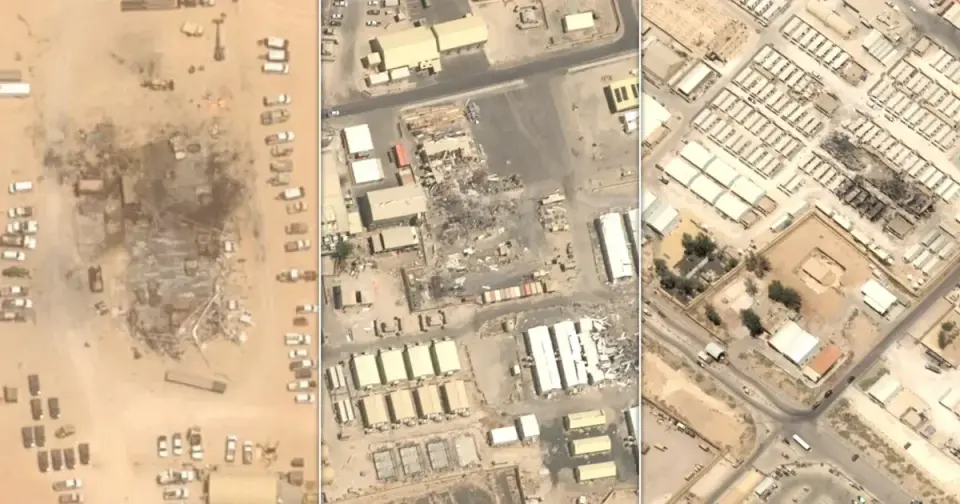
An Associated Press analysis reveals that Iran’s eight-month campaign against U.S. bases in the Middle East prioritized destroying early-warning radar systems before targeting aircraft and living quarters. Through August, over 115 strikes damaged or destroyed structures at 26 sites, causing billions in equipment damage. The attacks have forced the U.S. to relocate critical assets out of the Persian Gulf, raising questions about the future of American fixed infrastructure in the region.
Key points
- AP verified damage at 26 U.S. bases using satellite imagery and interviews with four regional officials, finding over 115 strikes through August.
- Iran initially targeted early-warning radars at Camp Arifjan, Naval Support Activity Bahrain, Prince Sultan Air Base, and Muwaffaq Salti Air Base within the first two days of the conflict.
- A radar in Jordan, one of only 13 globally owned by the U.S. Army and costing approximately $500 million, was reportedly destroyed.
- Kuwait bore the heaviest damage, with Ali Al Salem Air Base struck at least 30 times and Camp Buehring suffering extensive losses to hangars and troop facilities.
- The U.S. has moved aircraft, air defense, and communications systems out of the Persian Gulf, according to two regional officials.
- The Pentagon estimates base damage between $5 billion and $15 billion, a cost excluded from the $47.1 billion total war spending figure reported as of October 16.
Background
This development follows earlier reports in October 2026 regarding the strategic impact of Iranian strikes on U.S. early-warning systems and base infrastructure. Concurrently, the U.S. Air Force has accelerated efforts to replace lost MQ-9 Reaper drones with mass-producible, low-cost alternatives, reflecting a shift toward attritable systems in response to the conflict's hardware losses.
How outlets are covering it
The AP and The Times of India emphasize the strategic degradation of U.S. air defense networks and the subsequent relocation of assets, highlighting the vulnerability of fixed infrastructure. The New York Post, citing the Wall Street Journal, focuses on the escalating financial toll, estimating up to $15 billion in base damage and noting Iran’s improved precision in targeting smaller structures. While the Pentagon asserts that forces are 'well protected' and the military is 'stronger than ever,' RAND analyst Raphael Cohen argues that the conflict serves as a 'wake-up call' regarding susceptibility to cheap drone attacks. U.S. Central Command declined to comment, citing operational security, while the Pentagon’s official statements downplay the extent of the damage compared to the independent assessments.
Why it matters
The sustained damage to U.S. bases and the withdrawal of key assets from the Persian Gulf signal a potential shift in American military posture in the Middle East. The high cost of replacing destroyed equipment, such as the $500 million radars, and the uncertainty regarding future hostilities after the midterm elections create significant strategic and financial risks for the U.S. military presence in the region.
What to watch
President Trump is weighing new strikes against Iran following the midterm elections, while Tehran has vowed major retaliation. The U.S. must decide whether to rebuild its damaged infrastructure in the region or continue to rely on mobile and dispersed assets, a decision that will be influenced by the ongoing cost and effectiveness of Iranian drone campaigns.
- Iran Targeted U.S. Air Defenses Then Hit Aircraft And Buildings On Mideast Bases, AP Analysis Finds HuffPost
- Iran targeted US air defenses then hit aircraft and buildings on Mideast bases, AP analysis finds AP News
- The Methodology Behind the Journal’s Investigation of Damage to U.S. Bases WSJ
- Iran’s boosted weapons capabilities have caused up to $15B in US base damage: report New York Post
- How Iran targeted US air-defence network in the Gulf: Report The Times of India
Want the full story? Read the original reporting
Read on HuffPost