
Australia Charges Dual Citizen for Alleged Russian Espionage in Ukraine
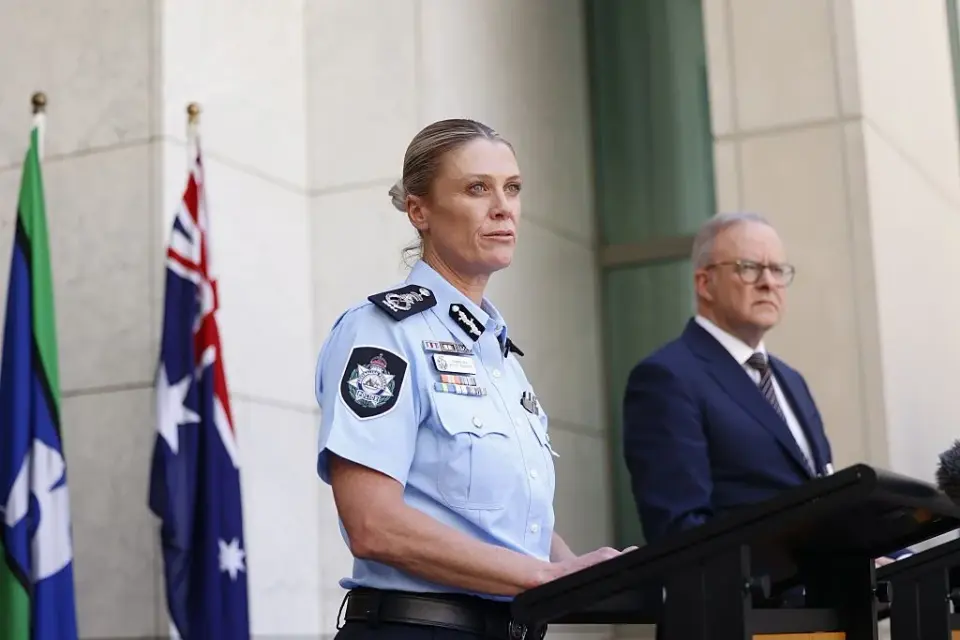
Australian authorities have charged a 27-year-old dual citizen, Vladimir Teslov, with attempting to engage in intentional foreign interference. Teslov is accused of joining the Ukrainian military to access sensitive operational data and passing it to individuals linked to Russian intelligence. If convicted, he faces up to 20 years in prison. This is the first such charge against a Russian-linked individual under Australia’s 2018 foreign interference laws.
Key points
- Vladimir Teslov, a 27-year-old Russian-Australian citizen, was charged by the Australian Federal Police (AFP) with attempting to engage in intentional foreign interference.
- Investigators allege Teslov underwent military-style training in Russia in October 2024 before returning to Australia and maintaining contact with Russian intelligence-linked individuals.
- In May 2025, Teslov allegedly traveled to Ukraine and joined the Armed Forces to gain access to information on military personnel, units, and locations.
- The AFP states Teslov attempted to provide this information to Russian intelligence, creating a risk to Ukrainian military personnel, though no threat to Australia was identified.
- Teslov faces a maximum penalty of 20 years in prison; the case is the first of its kind under Australia’s 2018 foreign interference legislation.
- The Russian Embassy in Canberra stated it had no official notification of the case and was using available channels to establish the circumstances.
Background
This case follows a broader pattern of Russian espionage activities in Australia and Europe. In August 2026, a Russian court convicted Georgy Pirogov for spying for Polish intelligence, and Poland foiled a Russian-backed plot to assassinate a Ukrainian American in Warsaw. Additionally, in 2024, two Russian-born Australian citizens, Kira and Igor Korolev, were charged with attempting to gather state secrets for Russia. Australia has provided approximately $1.8 billion in support to Ukraine since the invasion, coinciding with increased Russian espionage efforts on Australian soil.
How outlets are covering it
The Kyiv Independent and ABC News emphasize the legal significance of the charge, noting it is the first under Australia’s 2018 foreign interference laws. ABC News highlights that Teslov was unemployed and had no security clearance, while the AFP stressed that no threat to Australia was identified. Al Jazeera focuses on the broader context of Russian espionage, linking this case to recent arrests in Russia for Ukrainian intelligence operations. The Russian Embassy, as reported by Al Jazeera and ABC News, denied knowledge of the case, stating it only learned of it through media reports. All sources agree on the core facts of Teslov’s alleged actions and the potential 20-year penalty.
Why it matters
The case underscores Australia’s zero-tolerance stance on foreign interference and its role in countering Russian espionage. It highlights the risks of dual citizens engaging in activities that compromise allied nations’ security, even if no direct threat to Australia exists. The case also reflects the broader geopolitical tensions between Russia and Western nations, particularly regarding support for Ukraine.
What to watch
Teslov’s case is adjourned until October 2, 2026. The AFP and ASIO are conducting extensive forensic examinations of seized electronic devices. There is a possibility of further arrests related to the case. The Russian Embassy is using available channels to establish the circumstances of the case.
- Australia charges man over alleged Russian intelligence plot The Kyiv Independent
- Australia charges man for passing Ukrainian military intel to Russia Al Jazeera
- Man charged with foreign interference had 'military-style training' in Russia ABC News & Headlines – Australian Broadcasting Corporation
- Australia charges man with trying to pass Ukraine military intel to Russia Yahoo
- Australian police charge man accused of attempting to share Ukrainian military intel with Russian agents The Guardian
Want the full story? Read the original reporting
Read on The Kyiv Independent