
Cluster Bomb Barrage and Energy Strikes Hit Kyiv as Peace Talks Stall
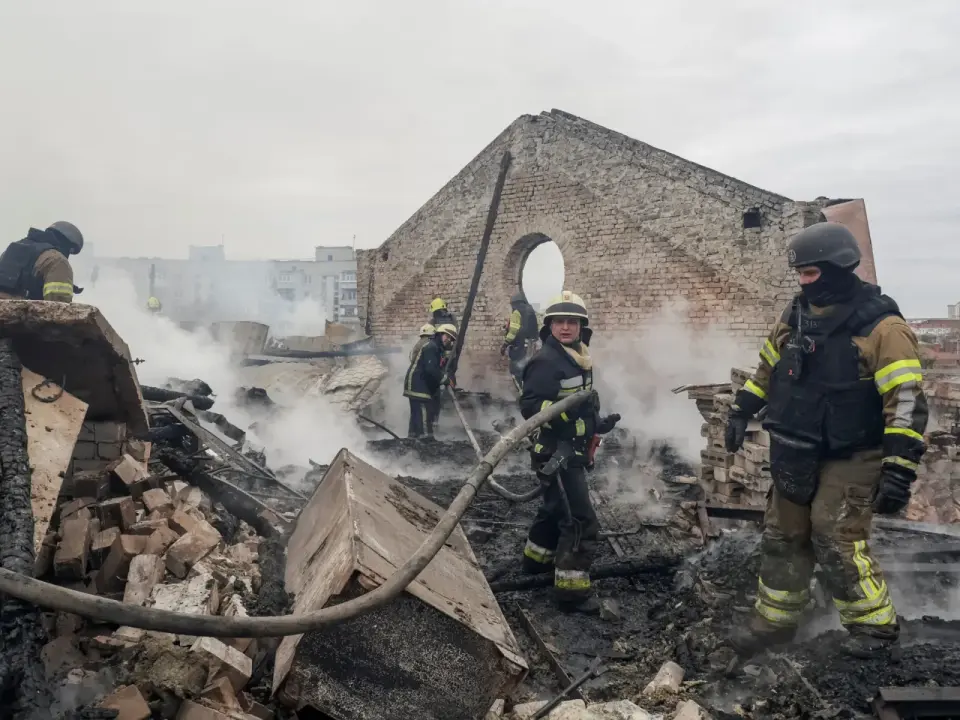
Russia launched a massive overnight barrage on Kyiv using cluster munitions, killing at least four people and injuring dozens, hours after agreeing to resume trilateral peace talks. The attack followed a week of intense strikes on Ukrainian energy infrastructure, which Zelenskyy blamed for civilian suffering. While Ukraine reported net territorial gains in the east, Russia intensified attacks on civilian targets to compensate for battlefield losses. US envoy Steve Witkoff’s praise of Putin as a 'humanitarian' drew sharp criticism from Kyiv, which views the strikes as evidence of Moscow’s lack of genuine intent to end the war.
Key points
- Russia fired 21 ballistic missiles at Kyiv, including three with cluster warheads, killing at least four and injuring 34, including five children.
- Zelenskyy condemned the cluster munitions as deliberate civilian targeting, noting no missiles were intercepted due to a shortage of US Patriot interceptors.
- Ukraine reported net territorial gains of 241 sq km since September, with Operation Vivaldi halting a Russian pincer movement in Donetsk.
- Russia launched over 170 strikes on Ukrainian energy facilities since October 11, despite a US-declared energy ceasefire, leaving over 500,000 people without electricity.
- US envoy Steve Witkoff praised Putin as a 'humanitarian' after the release of American prisoner Stephen Hubbard, drawing sharp criticism from Ukraine and European allies.
- Putin agreed in principle to resume trilateral peace talks after November 10, potentially in Abu Dhabi, but maintained maximalist demands including ceding the Donbas and excluding NATO.
Background
Recent archive coverage highlights a pattern of Russian cluster bomb strikes on Kyiv coinciding with diplomatic engagements, including Witkoff’s meetings with Putin. Ukraine’s Operation Vivaldi has been a key counteroffensive in the east, while US restrictions on Starshield satellite services have hampered Ukrainian drone operations. The energy ceasefire declared by Trump in October has not halted Russian strikes on Ukrainian infrastructure, leading to renewed Ukrainian attacks on Russian energy targets.
How outlets are covering it
Al Jazeera emphasizes Ukraine’s net territorial gains and Russia’s declining military effectiveness, citing high casualty rates. CNN focuses on the diplomatic fallout from Witkoff’s praise of Putin and the lack of progress in peace talks, noting Russia’s maximalist demands. CNBC highlights the impact on energy infrastructure, with over 500,000 people losing electricity, and the failure of the energy ceasefire. AP News underscores the civilian toll and the contrast between Witkoff’s 'humanitarian' praise and the cluster bomb strikes, while noting US-Russia economic cooperation despite European criticism.
Why it matters
The cluster bomb strikes and energy attacks underscore the disconnect between diplomatic rhetoric and battlefield reality, raising doubts about the viability of peace talks. The shortage of US Patriot interceptors and restrictions on Starshield services have weakened Ukraine’s defense, while Russia’s escalation aims to exhaust civilian resilience. The outcome of the November talks will determine whether diplomatic efforts can translate into a ceasefire or if the conflict will continue to intensify.
What to watch
Trilateral peace talks are expected to resume after November 10, potentially in Abu Dhabi, but no date has been set. Ukraine is pressing for immediate delivery of Patriot interceptors and stronger sanctions on Russia. Russia may resume frontal assaults on the 'fortress belt' of Kramatorsk, Sloviansk, and Druzhivka if its current strategy fails. The US-Russia diesel deal and potential G20 summit in Miami could further shape the geopolitical landscape.
- Russia drops cluster bombs on Ukraine as Kyiv consolidates front line Al Jazeera
- Massive strikes hit Kyiv hours after Putin agrees to fresh peace talks CNN
- Russia and Ukraine trade fresh strikes despite renewed push for U.S.-brokered peace talks CNBC
- Russian missiles pound Kyiv as Moscow says over 800 Ukrainian drones downed AP News
- Russia fires 3 waves of ballistic missiles at Kyiv after peace talks, Zelenskyy says ABC News - Breaking News, Latest News and Videos
Want the full story? Read the original reporting
Read on Al Jazeera