
Estonia to Close Road Border with Russia on December 1 Amid Security Tensions
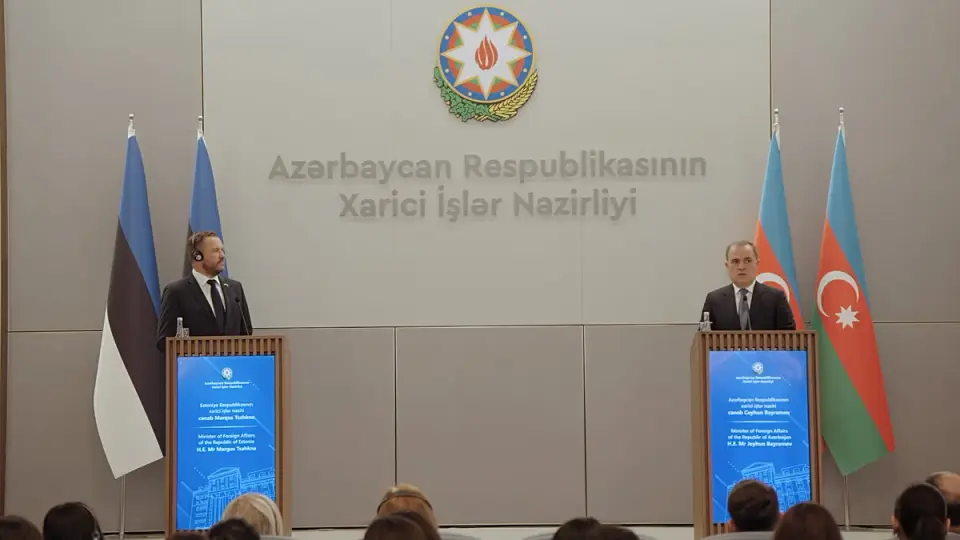
Estonia will close its road border crossings with Russia on December 1, 2026, citing security concerns over Russian sabotage and hybrid threats. Foreign Minister Margus Tsahkna confirmed the move during a visit to Azerbaijan, framing it as a necessary step to secure Europe. The decision follows an alleged Russian GRU-directed arson attempt on Estonian drone maker Threod Systems and comes amid escalating diplomatic tensions, with Moscow warning of 'open war' and accusing Tallinn of 'Russophobia.'
Key points
- Estonia will close all road border crossings with Russia starting December 1, 2026, as confirmed by Foreign Minister Margus Tsahkna in Baku.
- The closure is a response to growing security concerns, including an alleged Russian GRU-directed sabotage attempt against drone manufacturer Threod Systems in Tallinn.
- Russia’s Foreign Ministry has lodged a formal protest, accusing Estonia of 'hostile actions' and warning that the move risks 'open war,' while labeling the policy 'Russophobic.'
- Estonia rejected Moscow’s claims, stating it has never allowed its airspace for Ukrainian military operations and that the closure aims to counter sabotage and sanctions evasion.
- Tsahkna emphasized Estonia’s expanding diplomatic presence in the South Caucasus, opening embassies in both Azerbaijan and Armenia to diversify energy and trade routes away from Russian influence.
Background
Estonia’s decision follows a series of security incidents in 2026, including two attributed sabotage attacks on defense companies and a suspected arson attempt on Threod Systems. The closure mirrors earlier moves by Finland and other Baltic states to tighten border controls. Estonia’s goods exports to Russia have already fallen to roughly one-third of 2021 levels, limiting immediate economic impact, though cross-border commuters in Narva and Ida-Viru County face significant disruption. The move occurs amid broader EU efforts to diversify energy supplies via the Middle Corridor and strengthen ties with the South Caucasus.
How outlets are covering it
Estonia frames the border closure as a necessary security measure to counter Russian sabotage, hybrid operations, and sanctions evasion, with Foreign Minister Tsahkna stating the decision is 'well calculated' to secure Europe. Russia, however, characterizes the move as 'Russophobic' and 'hostile,' with Foreign Ministry officials warning it risks 'open war' and accusing Estonia of tacitly supporting Ukrainian drone flights. Russian lawmakers, including Viktor Vodolatsky, have criticized Baltic states for 'humiliating' Russian minorities, while Estonian officials reject these claims as diversionary tactics. Analysts note that while a near-term peace deal in Ukraine remains unlikely, the closure reflects rising tensions along NATO’s eastern flank.
Why it matters
The closure signals a hardening of Europe’s eastern frontier against Russian hybrid threats, potentially reducing Moscow’s ability to conduct intelligence operations and sanctions evasion. It also highlights Estonia’s strategic pivot toward the South Caucasus for energy and trade diversification, reducing reliance on Russian-dominated routes. The move may influence broader EU policies on border security and energy independence, while escalating diplomatic friction with Russia could have wider implications for regional stability.
What to watch
Estonia is set to close its road border crossings with Russia on December 1, 2026. The government will reassess the restriction after six months but has not guaranteed a reopening date. Rail cargo operations may continue under strict customs controls. Estonia’s diplomatic engagement in the South Caucasus, including its new embassies in Azerbaijan and Armenia, is expected to deepen, with focus on energy security, the Middle Corridor, and visa liberalization with the EU. Russia is likely to continue diplomatic protests and may escalate rhetoric, but no immediate military response is indicated.
- Estonia confirms closure of border with Russia from 1 December Euronews.com
- Moscow accuses Estonia of hostile actions on 'verge of triggering open war' Reuters
- Russian Lawmaker Accuses Baltic States of “Constantly Humiliating” Russians as Borders Tighten UNITED24 Media
- Russia accuses NATO member Estonia of hostile actions ‘on the verge of unleashing open war’ CNBC
- APTOPIX Estonia Russia Border chronicleonline.com
Want the full story? Read the original reporting
Read on Euronews.com