
Ethiopia’s Tigray Conflict Risks Regional Spillover as Federal Forces Advance on Mekelle
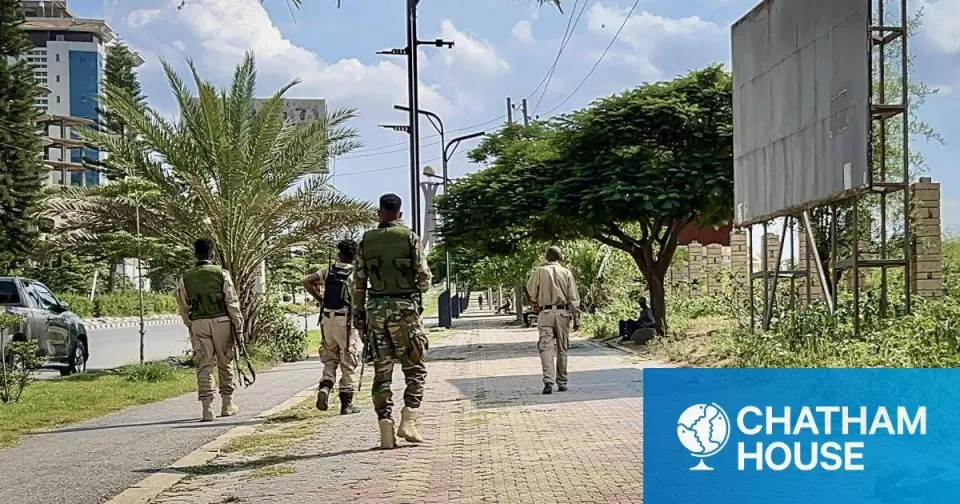
Renewed war in Ethiopia’s Tigray region began on September 23, 2026, when the Tigray People’s Liberation Front (TPLF) seized three national airports and expanded offensives into Amhara and Afar. Federal forces and the Tigray Peace Force are now advancing toward Mekelle, while drone strikes in Addis Ababa signal a shift in the conflict’s nature. The collapse of the 2022 Pretoria Agreement, driven by zero-sum politics and weak implementation, has led to a new rebel alliance called the Alliance for Survival. Although the federal government frames the TPLF as a rogue actor, the conflict risks spilling into Eritrea and Sudan due to cross-border supply lines and mutual accusations of interference. Diplomatic options are limited, with the African Union’s mediation efforts discredited by the TPLF and lacking Western support.
Key points
- TPLF forces seized airports in Mekelle, Aksum, and Shire on September 23, 2026, and expanded ground offensives into Amhara and Afar, capturing parts of Afar but losing Alamata in southern Tigray.
- Federal government forces and the Tigray Peace Force are advancing toward Mekelle, while drone strikes in Addis Ababa and on government airbases have altered the conflict’s dynamics.
- The Pretoria Agreement collapsed in May 2026 when the TPLF reinstated a pre-war legislative council and named Debretsion Gebremichael as regional president, ending the Tigray Interim Regional Administration.
- The TPLF and six other groups, including the Amhara Fano movement and Oromo Liberation Army, formed the Alliance for Survival to oust Prime Minister Abiy Ahmed, though internal tensions and historical grievances threaten cooperation.
- Ethiopia closed its embassy in Eritrea and expelled diplomats, accusing Eritrea of supporting anti-government movements, while Sudan and Ethiopia exchange accusations of supporting rival factions like the Rapid Support Forces and SPLM-N.
- The African Union’s mediation efforts are discredited by the TPLF, and the lack of US or Western support for the AU makes a sustainable resolution unlikely, increasing the risk of regional spillover into Eritrea and Sudan.
Background
This escalation follows the 2022 Pretoria Agreement, which ended the previous Tigray war but failed to produce a durable political settlement. Recent archive coverage highlights a humanitarian crisis, with forced recruitment of young men, civilian casualties in Alamata, and the collapse of essential services in Tigray. The conflict has already spread to neighboring regions, stranding tourists and cutting off internet and banking services, exacerbating an already severe humanitarian situation.
Why it matters
The renewed conflict in Tigray threatens to destabilize the Horn of Africa, with risks of spillover into Eritrea and Sudan. The collapse of the Pretoria Agreement and the formation of a new rebel alliance indicate a shift from localized conflict to a broader regional crisis. Limited diplomatic options and hardening rivalries between Ethiopia, Eritrea, and Sudan could lead to a protracted war, with severe humanitarian and geopolitical consequences for the region.
What to watch
The conflict is likely to continue, with the federal government potentially pursuing bolder options, such as targeting Eritrea, if it perceives external support for the TPLF. The Alliance for Survival may struggle to function due to internal tensions, while the African Union’s mediation efforts remain discredited. Without collective action, the risk of regional escalation into Eritrea and Sudan increases, potentially involving strategic sites like the Grand Ethiopian Renaissance Dam and Eritrea’s Red Sea port of Assab.
Want the full story? Read the original reporting
Read on chathamhouse.org