
EU Prepares 1,600 New Sanctions as Germany Blames Russia for Leipzig Drone Plot
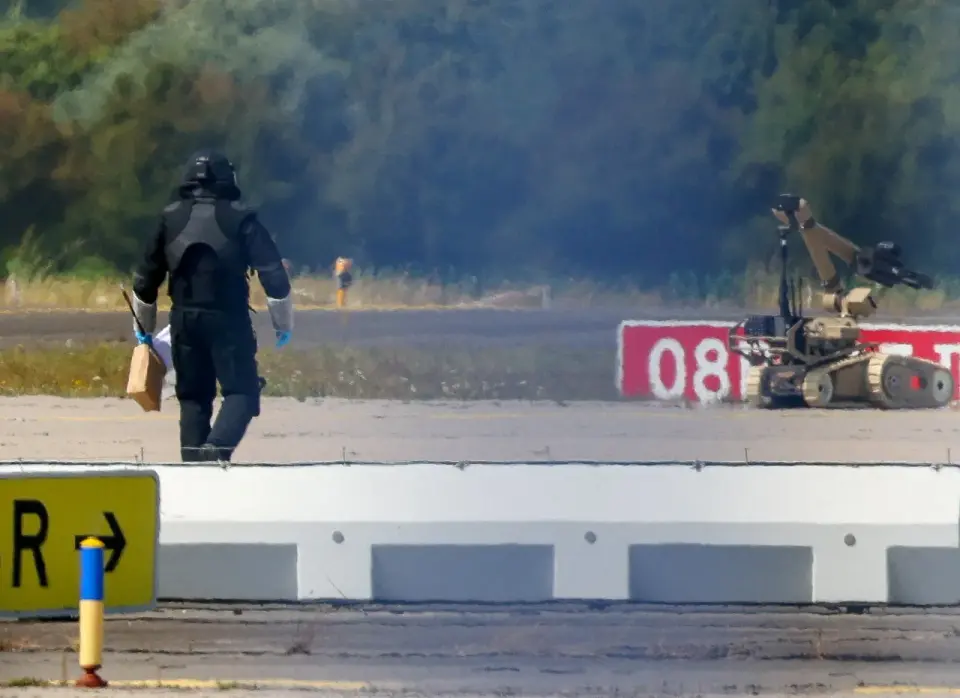
The European Union is preparing to sanction 1,600 additional Russian individuals and entities following Germany's attribution of an August drone attack at Leipzig/Halle Airport to Moscow. EU foreign affairs chief Kaja Kallas labeled the incident 'state-sponsored terrorism' and confirmed that new measures are being drafted to tighten enforcement. Germany has closed the Russian consulate in Bonn and terminated the contract for the Russian House in Berlin, while Russia denies involvement, calling the evidence 'planted'.
Key points
- EU foreign affairs chief Kaja Kallas stated the bloc is moving ahead with new sanctions proposals, targeting 1,600 additional individuals and entities linked to Russia's military sector.
- Germany officially blamed Russia for the August 4 drone incident at Leipzig/Halle Airport, where three drones carrying explosives were found, temporarily disrupting air traffic.
- German Foreign Minister Johann Wadephul ordered the closure of the Russian consulate in Bonn and the termination of the contract for the Russian House in Berlin.
- Russia denied involvement in the attack, with President Vladimir Putin alleging that the evidence had been 'planted' by Berlin.
- The EU is also considering a ban on former Russian military personnel visiting the bloc and tightening visa restrictions for Russian tourists.
Background
This development follows earlier reports in late August and early September where Germany began preparing to attribute the Leipzig incident to Russia. Previous coverage noted that Berlin was planning broad sanctions and countermeasures, including summoning Moscow's ambassador, as part of a broader response to hybrid threats. The EU has already imposed over 3,000 sanctions on Russian officials, oligarchs, and companies since the invasion of Ukraine in February 2022.
How outlets are covering it
Al Jazeera emphasizes the EU's diplomatic and economic pressure, highlighting Kallas's defiant tone and the specific number of new sanctions targets. BBC focuses on the operational details of the attack, noting that the detonator was faulty and that a second drone collided with a cargo aircraft, while highlighting NATO's solidarity with Germany. The Guardian frames the incident within Germany's domestic political polarization, noting that the timing of the announcement coincided with regional elections where the far-right AfD is leading. The AfD criticized the government for a 'double standard' in foreign policy, arguing that the response to the Leipzig attack was disproportionate compared to the lack of consequences for the 2022 Nord Stream pipeline sabotage. German Interior Minister Alexander Dobrindt described the attack as part of a 'well-established pattern of Russian hybrid operations', while Russian officials 'categorically' rejected the accusations.
Why it matters
The escalation signals a shift in European security posture, moving from diplomatic condemnation to tangible economic and diplomatic penalties. The closure of Russian diplomatic and cultural facilities in Germany marks a significant deterioration in bilateral relations. Furthermore, the EU's move to sanction 1,600 additional entities and restrict visas for Russian tourists indicates an attempt to intensify economic pressure without resorting to military means, potentially impacting the war of attrition in Ukraine.
What to watch
The EU is expected to finalize and implement the new sanctions package targeting 1,600 individuals and entities. Germany will likely enforce the closure of the Russian consulate in Bonn and the Russian House in Berlin. The EU may also proceed with a ban on former Russian military personnel and tighter visa restrictions for Russian tourists. Russia is expected to continue denying involvement and may retaliate diplomatically or economically.
- EU eyes more Russia sanctions after failed drone attack in Germany Al Jazeera
- EU to hit back at Russia after drone attack as Germany probes new sabotage cases Reuters
- Russia to close branches of Germany's Goethe-Institut DW.com
- Germany says Russia behind Leipzig airport drone attack BBC
- Leipzig airport attack fallout exposes Germany’s deepening divide over Russia The Guardian
Want the full story? Read the original reporting
Read on Al Jazeera