
Europe Defies 'Yalta' Format as Berlin Summit Secures Ukraine Support
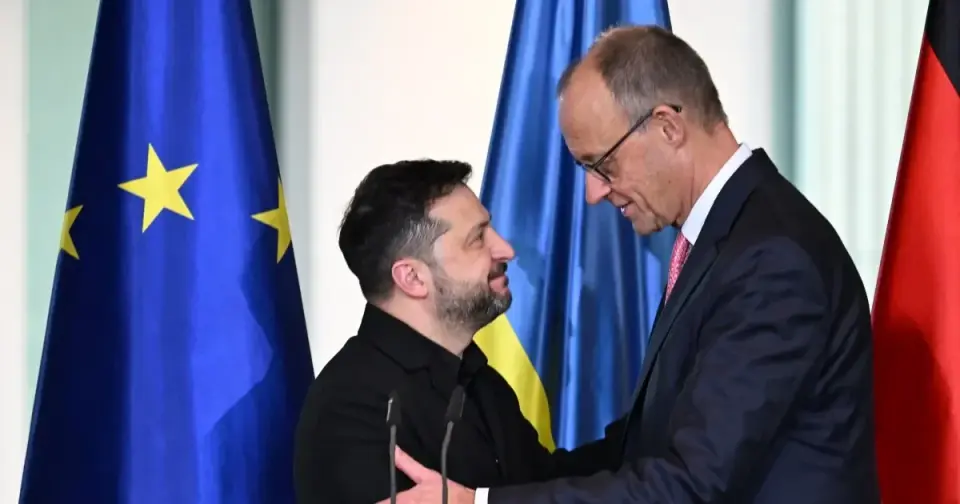
European leaders gathered in Berlin to assert their role in Ukraine peace talks, rejecting a 'Yalta-style' exclusion by the US, Russia, and China. While the EU proposed a 45 billion-euro loan for 2027, a 25 billion-euro funding gap remains. US envoys claimed Moscow is open to Article 5-like security guarantees, but European leaders emphasized that Ukraine must remain central to any settlement.
Key points
- German Chancellor Friedrich Merz hosted the 'Coalition of the Willing' summit in Berlin with over 30 leaders, including Ukrainian President Volodymyr Zelenskyy.
- The European Commission proposed a 45 billion-euro loan for 2027, split between military aid and budget support, though a 25 billion-euro financing gap persists.
- US envoy Jared Kushner stated that Russia appears 'comfortable' with Article 5-like security guarantees for Ukraine, a claim European leaders viewed with caution.
- UK Prime Minister Andy Burnham and French President Emmanuel Macron emphasized that Europe must be involved in negotiations, rejecting the idea that decisions could be made without their participation.
- Zelenskyy prioritized air defense and winter support, noting that recent Russian drone attacks damaged embassies in Kyiv, including those of Austria and the Netherlands.
Background
This summit follows the trilateral meeting between US President Donald Trump, Russian President Vladimir Putin, and Chinese President Xi Jinping in Shenzhen, China. Earlier reports indicated European anxiety that the Shenzhen talks would legitimize Russian aggression or pressure Kyiv into concessions. Previous coverage noted that while US envoys agreed to include Europe in future talks, Moscow had initially resisted this inclusion. The current Berlin meeting aims to solidify European financial and security commitments ahead of potential negotiations.
How outlets are covering it
Al Jazeera highlights the financial strain on Europe, noting the 25 billion-euro gap and the risk that the US might sideline Europe in final settlements. It emphasizes the internal European rifts, with Poland, Hungary, and other nations opting out of certain funding mechanisms. The Guardian focuses on the diplomatic messaging, highlighting Merz’s rejection of a 'Yalta format' and the unified front presented by European leaders. It notes Kushner’s claim that Russia is open to Article 5 guarantees, while also capturing the skepticism of leaders like Poland’s Donald Tusk regarding Putin’s intentions. Both sources agree that Europe is seeking to assert its influence, but Al Jazeera is more critical of the financial sustainability, while The Guardian emphasizes the political solidarity and the rejection of superpower dominance.
Why it matters
The outcome of the Berlin summit determines whether Europe can secure a meaningful role in Ukraine’s post-war security architecture. If the US and Russia proceed without European input, it could undermine the stability of the region and shift the balance of power. The financial commitments made in Berlin will also test the resolve of European nations to sustain support for Ukraine amidst domestic political pressures and economic constraints.
What to watch
US envoys Steve Witkoff and Jared Kushner are expected to meet with European national security advisers to finalize the details of their proposals. European leaders will continue to press for concrete commitments on air defense and financial support. The next round of talks will likely test whether Moscow is willing to engage with the European negotiating team or if it will maintain its maximalist demands. The outcome of these discussions will influence the trajectory of the war and the potential for a peace settlement.
- Far from Trump-Putin meeting, Europe to count cost of Ukraine’s defence Al Jazeera
- Ukraine allies warn ‘Yalta format’ will not bring about peace – as it happened The Guardian
- Kushner says Russia is 'comfortable' with NATO-like security guarantees for Ukraine to end war after Trump talks with Putin PBS
- Zelenskyy Says US Envoys to Brief Allies on Trump-Xi-Putin Talks Bloomberg.com
- Ukraine’s western allies meet in Berlin to counter Yalta 2.0 optics Financial Times
Want the full story? Read the original reporting
Read on Al Jazeera