
Europe Rejects Russian Bid to Redraw Security Map Amid US-Moscow Talks
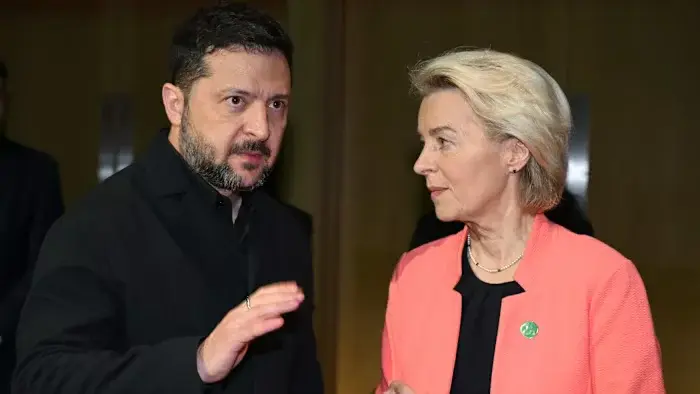
European leaders have firmly rejected Vladimir Putin’s demand to overhaul the continent’s security architecture as a precondition for peace in Ukraine. During meetings in Dublin, European Council President António Costa and EU chief diplomat Kaja Kallas insisted that any discussion of a new security framework must wait until after a ceasefire is secured. This stance contrasts with US envoys Steve Witkoff and Jared Kushner, who met with Putin in Moscow to urge Russia to propose a new security agreement that includes de-escalation steps. While Washington seeks to link the Ukraine peace deal with a broader Europe-Russia security framework, European capitals fear this would cede sovereignty and restore Russian influence. The dispute has intensified pressure on Europe to designate a unified representative for peace negotiations, a decision expected at the European Political Community summit in Dublin.
Key points
- European leaders in Dublin rejected Putin’s demand to redesign Europe’s security architecture before a peace deal is reached, calling it an attempt to undermine sovereignty.
- US envoys Witkoff and Kushner met Putin in Moscow, urging Russia to propose a new security agreement that includes reciprocal de-escalation measures and allows European participation in talks.
- Putin’s camp, including adviser Yuri Ushakov, demanded a ban on NATO expansion and a return to the 1994 NATO-Russia Founding Act military configuration, which Europe views as a threat to national sovereignty.
- Zelenskyy warned that US-Russia discussions on security guarantees are effectively creating a new framework between Europe and Russia without European input, which he called 'strange.'
- European leaders are divided on who should represent the bloc in negotiations, with over 50 leaders meeting in Dublin to resolve this issue and present a unified front.
Background
This dispute follows earlier European resistance in November 2026 to US proposals linking Ukraine peace to a broader Russian security deal, which Brussels feared would cede sovereignty to Moscow. It also occurs amid heightened security concerns, including intelligence warnings in October 2026 about Russian assassination plots against European defense leaders and EU plans for stricter visa rules to counter hybrid threats.
How outlets are covering it
The Financial Times and Bloomberg emphasize the European consensus that security architecture discussions must follow a ceasefire, with Costa and Kallas explicitly rejecting pre-war negotiations. Axios highlights the US strategy of linking the Ukraine peace deal with a broader Europe-Russia security framework, noting that Witkoff and Kushner are pushing Russia to propose 'symmetrical steps' for de-escalation. The Telegraph source was inaccessible due to a security block, so its perspective cannot be assessed. European leaders, including Estonia’s PM Kristen Michal, view the US approach as a 'trap' to force Europe into discussing security before peace, while the US argues that European participation is necessary for any credible security agreement.
Why it matters
The outcome determines whether Europe will be included in shaping post-war security arrangements or excluded from a US-Russia deal that could redefine NATO’s role and Eastern European defense. A failure to present a unified European voice risks ceding influence over the continent’s security to Washington and Moscow, potentially undermining EU and NATO sovereignty.
What to watch
European leaders are expected to name a unified representative for peace talks at the Dublin summit this month. The US will continue to press Russia for a new security proposal, while Europe will likely maintain its stance that security discussions must wait until after a ceasefire is achieved. The next round of US-Russia-Ukraine talks will likely test whether Europe can secure a seat at the table.
- European leaders reject Russian push to overhaul continent’s security Financial Times
- Scoop: U.S. asks Russia to propose new security agreement with Europe Axios
- Britain must deploy troops to Ukraine now, says ex-Nato boss The Telegraph
- Europe Split Over Presence at New Russia-Ukraine Peace Talks Bloomberg.com
- Europe tells Russia: Our security architecture is for us to decide Euronews.com
Want the full story? Read the original reporting
Read on Financial Times