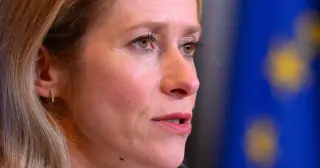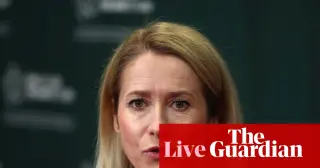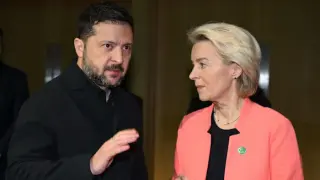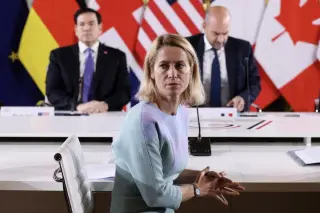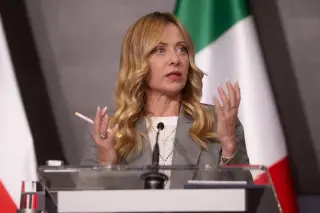
Russia declared EU foreign policy chief Kaja Kallas unacceptable for peace negotiations, warning her participation would derail talks. This follows her exclusion from the official EU negotiating team by leaders in Dublin. While Kallas demands an immediate ceasefire and maximalist concessions from Moscow, some European governments advocate for gradual confidence-building measures, highlighting a strategic divide within the EU.
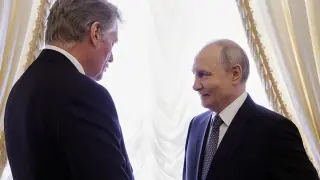
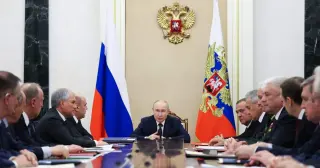
European leaders have settled on a seven-member negotiating team for Ukraine peace talks but remain deeply divided on strategy. While EU chief diplomat Kaja Kallas pushes for a hardline approach demanding immediate Russian concessions, Austria and others favor gradual confidence-building measures. Meanwhile, Vladimir Putin has invited EU representatives to Moscow to clarify their positions, though the Kremlin has not guaranteed a formal seat at the table.
European leaders are alarmed by US proposals to renegotiate Europe’s security architecture, viewing it as a trap that echoes Russian maximalist demands. While Washington seeks a comprehensive deal, Europe insists on a ceasefire first and rejects any role for Russia in defining continental defense. Simultaneously, EU foreign policy chief Kaja Kallas has been excluded from the official negotiating team, highlighting internal divisions over who represents Europe in peace talks.
EU High Representative Kaja Kallas dismissed Russian peace demands as 'absurd' on Monday, arguing Moscow must move first to end the conflict it started. She criticized the Kremlin's tactic of presenting maximalist asks, including full Ukrainian withdrawal from Donbas and NATO retreat to 1997 borders, as a strategy to appear reasonable when they later back down. Although Kallas is not part of the newly formed EU negotiating team, she emphasized the bloc's leverage through sanctions and over €200 billion in frozen Russian assets. The EU has agreed on a team comprising Poland, Germany, Italy, France, and the UK, plus the European Council and Commission, to represent the bloc in future talks. These discussions follow a decision by EU leaders in Dublin and precede a potential meeting between Trump, Putin, and Xi in Shenzhen. While Kallas supports the team's mandate, some foreign ministers remain skeptical of the talks' success, urging increased pressure on Russia instead.
Moscow has signaled it will not block European participation in upcoming Ukraine peace negotiations, marking a significant shift from previous exclusions. Kremlin spokesperson Dmitry Peskov stated that Russia will not dictate who represents the EU, provided their position contributes to peace. European leaders have agreed to send a delegation comprising Britain, France, Germany, Italy, and Poland, alongside EU institutions, for the next round of talks. Ukrainian President Volodymyr Zelenskyy expects Europe to finalize its representative by the end of November, insisting Europe must sit at the same table as the US, Ukraine, and Russia.
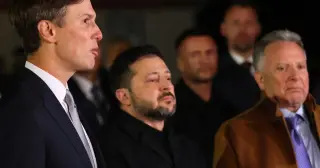
The US is facilitating direct engagement between Russia and Europe to advance peace in Ukraine, according to Jared Kushner. However, European leaders and Ukraine warn that discussing European security architecture before a ceasefire risks legitimizing Russian aggression and weakening NATO.
EU foreign policy chief Kaja Kallas warned that Russia is setting traps in Ukraine peace talks by demanding a total overhaul of European security. While the US seeks a new security agreement with Moscow, European leaders firmly rejected Russian demands to demilitarize the Baltics and force Finland out of NATO. The US has asked Russia to propose new terms that include de-escalation steps, but European officials insist that any security architecture must be negotiated only after the war ends and with full European participation.
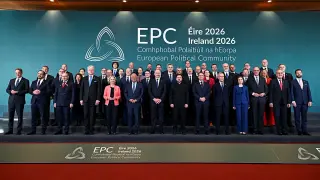
European leaders have abandoned the search for a single 'superhero' negotiator to represent the continent in Ukraine peace talks, instead opting for a team-based approach. Following a summit in Dublin, the EU agreed that a group comprising Germany, France, Poland, Italy, and the UK, alongside European Commission and Council officials, will handle negotiations. This decision follows technical talks in Abu Dhabi where Russia and Ukraine discussed security architecture but excluded Europe. While US envoys urged a unified European voice, internal divisions over sequencing and representation remain, with the Kremlin questioning whether Europe will actually be included in future rounds.
European leaders in Dublin rejected Russia’s push to renegotiate the continent’s security architecture, insisting that a ceasefire in Ukraine must precede any such discussions. While US envoys pressed Moscow to include Europeans in peace talks, Russian negotiators refused to engage with European delegations, citing their support for Ukraine. European officials warned that Moscow’s focus on security is a tactic to divert attention from the war and undermine existing treaties like the Helsinki Accords.
EU leaders in Dublin intended to focus on artificial intelligence, but the agenda was dominated by a dispute over who should represent Europe in Ukraine peace negotiations. While António Costa and Kaja Kallas vie for the role, German and French leaders favor the E3 format. The summit also featured warnings from AI expert Geoffrey Hinton regarding existential risks.
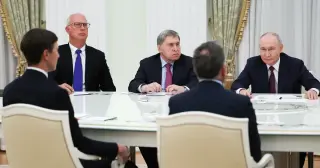
European leaders have firmly rejected Vladimir Putin’s demand to overhaul the continent’s security architecture as a precondition for peace in Ukraine. During meetings in Dublin, European Council President António Costa and EU chief diplomat Kaja Kallas insisted that any discussion of a new security framework must wait until after a ceasefire is secured. This stance contrasts with US envoys Steve Witkoff and Jared Kushner, who met with Putin in Moscow to urge Russia to propose a new security agreement that includes de-escalation steps. While Washington seeks to link the Ukraine peace deal with a broader Europe-Russia security framework, European capitals fear this would cede sovereignty and restore Russian influence. The dispute has intensified pressure on Europe to designate a unified representative for peace negotiations, a decision expected at the European Political Community summit in Dublin.
Estonian Prime Minister Kristen Michal rejected calls to replace EU foreign policy chief Kaja Kallas with a more Kremlin-friendly envoy, insisting that European Council President António Costa and Kallas already hold the mandate to represent the bloc. This stance emerged ahead of a Dublin summit where leaders are grappling with how to engage in US-mediated peace talks, with some capitals fearing Kallas’s hawkish stance hinders diplomacy while others argue Moscow has no say in Europe’s representation.
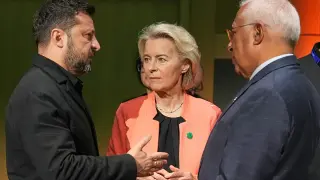
Ukrainian President Volodymyr Zelenskyy has urged European allies to finalize a single representative for peace talks with Russia by November 19, arguing that unity is essential for effective negotiation. While the U.S. supports this move, European leaders remain divided on whether to appoint a new envoy or rely on existing officials like European Council President Antonio Costa and High Representative Kaja Kallas. The debate intensifies as U.S. envoys prepare to meet Russian and Ukrainian counterparts, with Washington emphasizing that European participation is critical for addressing broader security frameworks.
Italian Prime Minister Giorgia Meloni has formally challenged the European Union’s fragmented approach to peace negotiations with Russia. In a letter to European Council President António Costa, she demanded that the bloc agree on a single representative to speak for Europe at a December summit. Meloni argued that uncoordinated individual talks with Moscow undermine European credibility and security. While Costa agreed to raise the issue, the move highlights deep divisions within the EU, with Poland and Finland warning against excluding Eastern Europe from negotiations and opposing any resumption of Russian energy purchases.
Poland is urging European allies to block any US-led peace talks with Russia that exclude Eastern Europe. Foreign Minister Radosław Sikorski warned that Western Europe cannot negotiate security terms over the heads of nations bordering Russia. As trilateral talks resume in Abu Dhabi, Warsaw insists Ukraine must have a say and that a ceasefire must precede peace negotiations. Poland also pledged additional aid for Ukraine's winter energy needs.