
Europe’s fractured peace team faces mandate crisis as Putin invites EU to Moscow
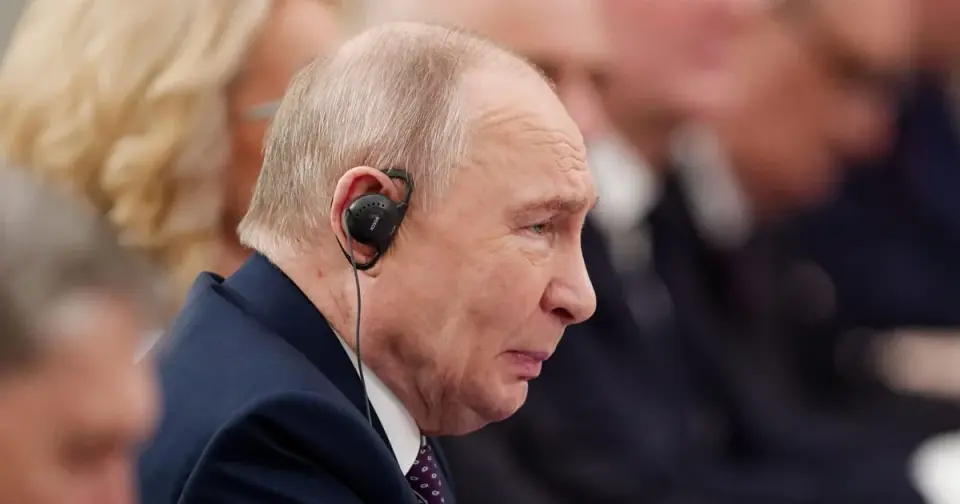
European leaders have settled on a seven-member negotiating team for Ukraine peace talks but remain deeply divided on strategy. While EU chief diplomat Kaja Kallas pushes for a hardline approach demanding immediate Russian concessions, Austria and others favor gradual confidence-building measures. Meanwhile, Vladimir Putin has invited EU representatives to Moscow to clarify their positions, though the Kremlin has not guaranteed a formal seat at the table.
Key points
- EU leaders agreed in Dublin on Nov 13 to a negotiating team comprising France, Germany, Italy, Poland, the UK, and representatives from the European Commission and Council.
- Kaja Kallas advocates for a 'maximum demand' strategy, arguing Europe should present its absolute red lines upfront, a view supported by Baltic and Nordic ministers.
- Austria’s Foreign Minister Beate Meinl-Reisinger proposed a 15-point paper favoring partial ceasefires and confidence-building measures, citing Cold War precedents like the 1975 Helsinki Accords.
- Putin stated in Shenzhen that Russia invited Europeans to Moscow to define their position, adding that the format of future dialogue with Ukraine would depend on this outcome.
- EU officials note that talks may resume in Abu Dhabi in the coming weeks despite ongoing Russian attacks, with some arguing pragmatism requires participation even without a ceasefire.
Background
This dispute follows months of internal EU friction over foreign policy representation, highlighted by the exclusion of Kallas from the lead role in favor of a multi-nation team. Previous tensions included Russia’s missile strikes on Kyiv in October, just hours after agreeing to resume trilateral talks, which undermined trust in Moscow’s commitment to peace. The current mandate debate exacerbates concerns that the EU lacks a unified voice, as member states compete for influence rather than consolidating authority behind a single envoy.
How outlets are covering it
POLITICO highlights the strategic split between Kallas’s hardline stance and Austria’s preference for gradualism, noting that the mandate drafting process is itself contentious. Bloomberg and Ukrainska Pravda focus on Putin’s invitation to Moscow, framing it as a potential opening for dialogue but emphasizing that the Kremlin retains control over the format. Brussels Signal critiques the E5+EU2 structure, arguing that seven leaders cannot speak with one voice and that the exclusion of Kallas reflects a deeper failure of member states to grant political authority to EU institutions. While some outlets view the invitation as a diplomatic breakthrough, others, including EU officials, remain skeptical that Moscow is genuinely committed to peace given ongoing military operations.
Why it matters
The inability to agree on a unified negotiating strategy risks weakening Europe’s leverage in peace talks. If the EU presents a fragmented or inconsistent position, it may cede influence to the US and Russia, potentially resulting in a settlement that does not adequately address European security concerns or Ukraine’s long-term guarantees. The mandate crisis also tests the EU’s capacity for collective foreign policy action in a critical geopolitical moment.
What to watch
EU foreign ministers are expected to finalize the negotiating mandate in Coreper meetings, with Kallas pushing for foreign ministers to retain control over the process. Talks may resume in Abu Dhabi in the coming weeks, with EU negotiators hoping to be included despite the lack of a ceasefire. The outcome of the Moscow invitation will determine whether Europe’s diplomatic engagement leads to substantive dialogue or remains a peripheral role in US-Russia-Ukraine negotiations.
- Europe argued over who would talk to Russia. Agreeing what to say is even tougher. POLITICO.eu
- Putin Says Russia Invited Europeans to Moscow to Discuss Ukraine Bloomberg.com
- Putin says he has invited EU representatives to Moscow to discuss Ukraine Українська правда
- One chair, seven leaders Brussels Signal
- Putin says Russia invited Europeans to Moscow to clarify position on Ukraine talks Reuters
Want the full story? Read the original reporting
Read on POLITICO.eu